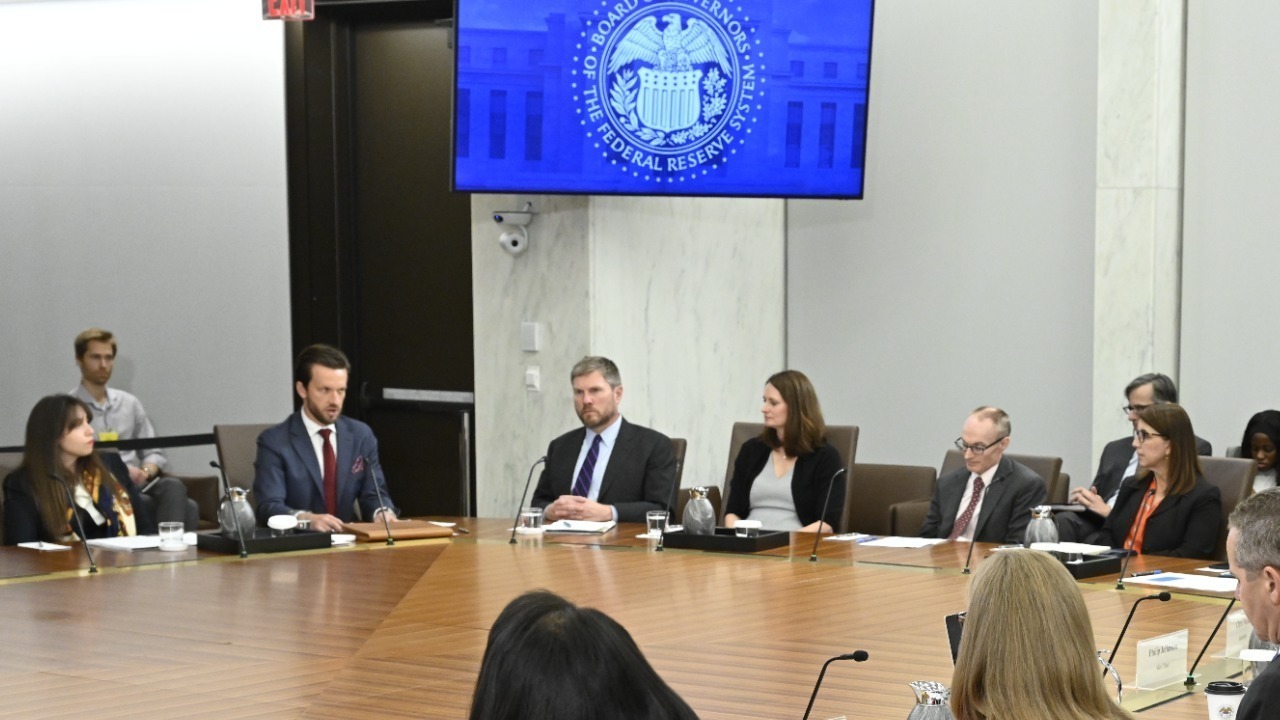
The Federal Reserve is heading into December with a weaker labor market and cooler inflation, a combination that has rapidly shifted expectations toward another rate cut. Investors, businesses, and households are now trying to gauge whether that softer backdrop is enough to overcome lingering anxiety inside the central bank about cutting too quickly.
I see a growing alignment between the data and market positioning that points to lower borrowing costs by year end, even as officials keep stressing that every move remains “data dependent” and the outcome of the next meeting is still a close call.
Jobs are losing steam, and the labor market looks more vulnerable
The most important change since late summer is that the labor market no longer looks unambiguously strong. Payroll growth has slowed, unemployment has edged higher, and the cushion of excess demand for workers that protected the economy earlier in the cycle is thinning out. Official News Releases show that Payroll employment edged up only 119,000 in September, while the unemployment rate changed little at 4.4% in that same September report, a clear step down from the blockbuster gains of 2021 and 2022.
Beneath those headline figures, the pain is not evenly distributed. In the government’s detailed employment report, officials noted that Among the major worker groups, the unemployment rates for adult women rose to 4.2 percent and for Asians climbed to 4.4 percent, while the number of people who were unemployed for less than five weeks increased to 5.9 million in September. Those shifts suggest that layoffs and hiring freezes are broadening out, not just hitting a narrow slice of the workforce, which is exactly the kind of deterioration that tends to make central bankers more cautious about keeping policy too tight.
Inflation is cooling, but not collapsing
At the same time, the inflation picture has become less threatening, giving the Fed more room to worry about jobs. The latest consumer price data show that some of the most stubborn service categories are now rising at a more moderate pace. In the official price index, the index for hospital services increased 0.3 percent over the month, as did the index for prescription drugs, according to the Oct 23, 2025 Consumer Price Index Summary, a far cry from the surges that defined the immediate post‑pandemic period.
Other gauges show a similar pattern of easing, even if the path is not perfectly smooth. Live coverage of recent data releases noted that US wholesale inflation heated up in September, with US wholesale inflation picking up over the 12 months ended in September, but that came alongside signs of cooling in other categories and a broader narrative of normalization after a government data blackout, as highlighted in a What we covered here update. Taken together, the numbers point to inflation that is no longer racing higher, which reduces the risk that a modest rate cut in December would reignite the kind of price spiral the Fed has spent the last two years trying to extinguish.
Fed officials are divided, but the center of gravity is shifting
Inside the central bank, the debate over what to do next has become unusually public. Reporting from mid November described how policymakers are split as inflation and jobs diverge, with The Associated Press noting on Nov 18, 2025 that Fed Chair Jerome Powell was seen leaving the Federal Reserve Board Building in Washing amid an intensifying argument over whether the recent data justify another move. That internal tension reflects the classic trade‑off the institution faces when inflation is easing but unemployment is starting to creep up.
Individual voices on the committee have sharpened that contrast. One of the most vocal advocates for action has been Fed governor Chris Waller, who said on Nov 16, 2025 that he supports cutting interest rates next month because he is more worried that keeping policy too tight will damage the labor market than that inflation will flare back up, even as colleague Philip Jefferson prefers to move more slowly this year, citing inflation concerns. Another influential voice, San Francisco Fed President Mary Daly, argued on Nov 23, 2025 that After consecutive cuts at the Fed’s last two meetings brought rates down to a range between 3.75% and 4% to guard against a downturn, the labor market is now a bigger worry, underscoring how concern about jobs is starting to outweigh fear of sticky prices among some officials.
Markets are betting on a December move, but see real suspense
Financial markets have been quick to respond to that combination of softer jobs and cooler inflation, and the odds of a December cut have surged. One detailed analysis noted that, in a major reversal, the odds of a December interest rate cut have risen to 79% from around 40% earlier in the autumn, according to Key Takeaways published on Nov 25, 2025, after the Fed had already cut rates in September and again in October. That swing captures how quickly investors have embraced the idea that the central bank is now more likely to err on the side of supporting growth than on crushing the last remnants of inflation.
Yet there is still a sense of genuine uncertainty that is unusual for a modern Fed meeting. One report described how Wall Street is on tenterhooks over the Fed’s rare, genuinely suspenseful December meeting, with some traders convinced that the data justify another cut and others arguing that officials will pause to assess the impact of earlier moves, as detailed in a Nov 24, 2025 account of how divided Wall Street has become. The CME FedWatch tool, which tracks the likelihood the Fed will change rates, shows traders expecting the December meeting to be a close call, according to a What do traders expect breakdown published on Nov 23, 2025, reinforcing the idea that even a data‑driven Fed can still surprise markets when the signals are mixed.
Big banks and forecasters are lining up behind a cut
Major Wall Street institutions have been recalibrating their forecasts in real time as the data roll in. Strategists at one large bank shifted their outlook so that a December rate cut is now the base case, with a note on Nov 26, 2025 explaining that By Reuters, the change reflected a weaker growth backdrop and a labor market that no longer looks overheated, and even referencing the number 42 in the context of shifting probabilities. Another influential house, Goldman Sachs, echoed the December view on Nov 24, 2025, expecting the Fed to ease again before year end as the labor market continues to cool and as the probability of a surprise hike sits near zero.
Broader macro forecasters are telling a similar story about the direction of travel. A midyear assessment titled Midyear Economic Outlook described a Widespread Deceleration, arguing on May 27, 2025 that the Global economy will see slower growth in 2025 and 2026 as tighter policy and geopolitical tensions bite, according to in 2025 projections. The Congressional Budget Office has also projected that, in its Sep 11, 2025 outlook, the median interest rate that financial institutions charge each other for overnight loans of their monetary reserves will gradually decline as expected short‑term interest rates fall, a view laid out in its Sep 2025 report, which implicitly assumes that the Fed will not keep policy at restrictive levels indefinitely.
The macro backdrop makes a December cut easier to justify
Beyond the monthly data, the broader economic narrative also favors a modest easing of policy. A recent forecast described how Turning the Corner, Shutdown Ends, Growth Uncertainty Persists, with The US economy entering the final stretch of 2025 amid a mix of fading fiscal support and lingering business caution, according to a Nov 24, 2025 analysis that emphasized how critical Fed decisions are to businesses and policymakers. In that environment, a small rate cut that acknowledges softer jobs and cooler inflation can be framed as insurance against a sharper slowdown rather than a wholesale pivot back to stimulus.
Fed officials themselves have hinted that they see the balance of risks tilting in that direction. One senior policymaker recently argued that The Fed faces conflict between controlling inflation and maintaining low unemployment in 2025, and that Consumers are already feeling the pinch from higher borrowing costs, while also cautioning that the exact timing of any move is anyone’s guess, according to a Key Points summary published on Nov 24, 2025. Another market commentary on Nov 26, 2025 captured the mood with the phrase Weaker job growth and lower inflation, arguing that it is all lining up perfectly for a Fed cut in December and noting that Nvidia is down nearly as investors rotate toward more defensive trades.
Why this meeting feels different
What makes the upcoming decision stand out is how finely balanced the arguments are on both sides. On one hand, the Fed has already delivered two cuts, bringing rates into a 3.75% to 4% range, and some officials worry that moving too fast could undermine the hard‑won credibility they built by fighting inflation. On the other, the combination of slowing Payroll gains of 119,000, unemployment at 4.4%, and rising joblessness among groups such as adult women at 4.2 percent and Asians at 4.4 percent points to a labor market that is no longer overheating and may need support.
As I weigh the evidence, the case for a December cut looks stronger than the case for standing pat, but the decision will ultimately hinge on how officials interpret the latest data in the days leading up to the meeting. With Nov 24, 2025 live blogs chronicling how US wholesale inflation picked up even as consumer prices cooled, and with Nov 26, 2025 forecasts like Turning the Corner, Shutdown Ends, Growth Uncertainty Persists stressing that growth uncertainty persists, the Fed is trying to steer between the risk of doing too little and the risk of doing too much. That is why, heading into December, softer jobs and cooler inflation have not just changed the numbers on traders’ screens, they have fundamentally reshaped the policy debate inside the central bank.
More From TheDailyOverview
- Dave Ramsey says these two simple questions show whether you’re rich or poor
- Retired But Want To Work? Try These 18 Jobs for Seniors That Pay Weekly
- IRS raises capital gains thresholds for 2026 and what’s new
- 12 ways to make $5,000 fast that actually work

Grant Mercer covers market dynamics, business trends, and the economic forces driving growth across industries. His analysis connects macro movements with real-world implications for investors, entrepreneurs, and professionals. Through his work at The Daily Overview, Grant helps readers understand how markets function and where opportunities may emerge.

