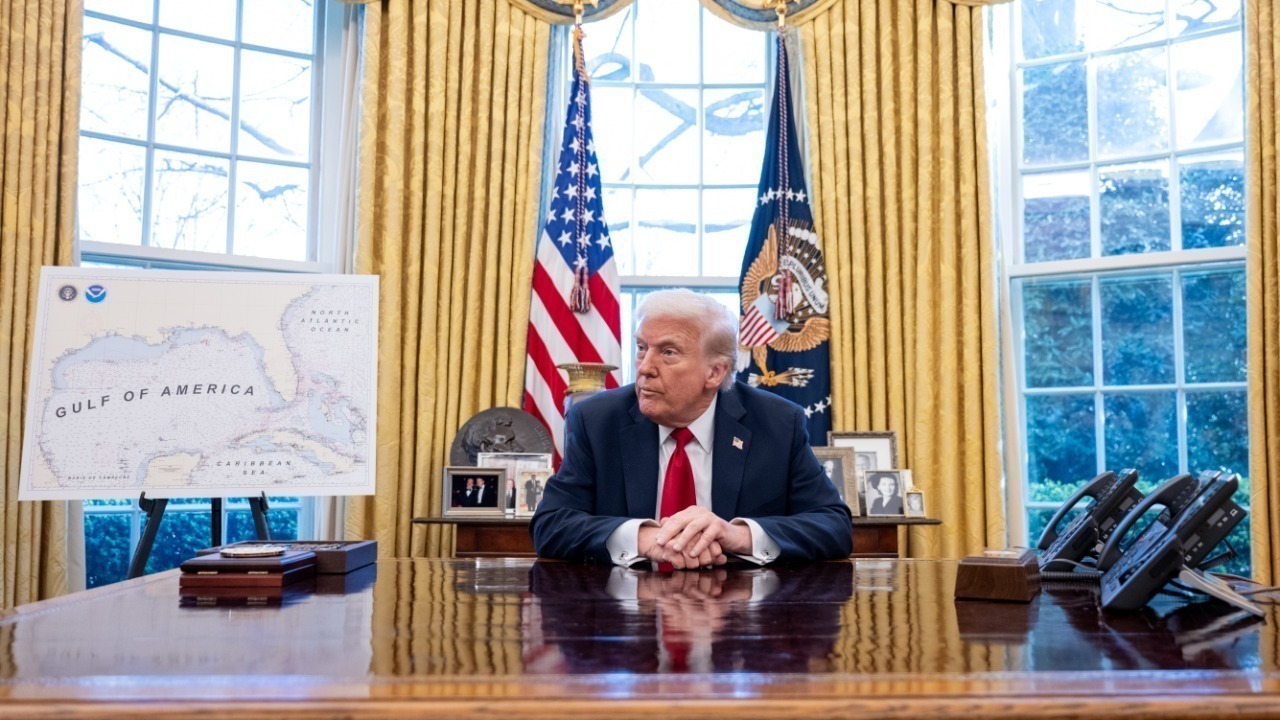
The S&P 500 has delivered a 16% gain in President Trump’s first year back in the White House, a performance that instantly invites comparison with past administrations. That kind of move in a broad benchmark is large enough to matter for retirement savers and corporate boardrooms, yet still close enough to historical norms that it resists easy political spin. To understand what this rally really says about the Trump era, I need to stack it against other presidents’ first years and the longer market record.
Trump’s 16% year in context
By the numbers, the S&P 500’s roughly 16% climb during President Trump’s first year back in office puts him in the upper tier of modern first-year stock market performances, but not at the very top. Reporting on the period notes that the index gained “16% in a year,” underscoring that the move is solidly positive but not unprecedented for the S&P 500. Analysts point out that the gain sits above the historical median return of about 9% for a president’s first year, which means Trump’s market has outpaced the typical opening act without breaking away into bubble territory.
It also matters that this is Trump’s second turn at the job, which gives investors a prior template for how his policies can interact with markets. Earlier coverage of his second-term performance stresses that it “wasn’t a straight line higher,” and that even with three straight years of double digit gains, short term swings remained part of the story, a reminder that political leadership is only one input into stock prices. Commentary on When and why stocks perform well underlines that fundamentals and global conditions tend to matter more than short term political noise, even when the president is a market-moving figure like Trump.
How other presidents’ first years stack up
To see where Trump’s 16% sits historically, I look at a long sweep of first-year returns going back to the 1960s. For Lyndon B. Johnson in 1963, the S&P 500 closed at 72.56 on Nov. 20, 1963 and at 86.28 one year later, a move that translated into a Percentage gain of 18.91%, according to detailed reconstructions of presidential market history. Those figures for Johnson show that Trump’s current rally is strong but still trails some of the standout first years of the postwar era.
More recent presidents offer an even closer comparison. For Joe Biden, who took office in 2021, the S&P 500 closed at 3,851.85 on Jan. 20, 2021 and at 4,482.73 one year later, producing a Percentage gain of 16.38%. That puts Biden’s opening year almost exactly in line with Trump’s current 16% advance, based on the same S&P 500 yardstick. Broader tables of first-year performance, which also track figures for Richard Nixon and other leaders, reinforce the idea that Trump’s latest result is better than average but not historically exceptional, especially when set against periods of rapid post-recession recovery.
Beyond the first year: the Biden handoff and longer cycles
Any judgment on Trump’s market record has to account for the backdrop he inherited. From Biden ( Joe Biden )’s inauguration on January 20, 2021 on through to January 16, 2025, the total return of the S&P 500 (including dividends) was shaped by a powerful rebound from the pandemic shock, a surge in big technology stocks and a burst of inflation that forced the Federal Reserve into aggressive rate hikes. Reporting on that period notes that the index, often shortened to simply 500 in historical tables, delivered a multi year run that left valuations elevated by the time Trump returned, which meant he started his second term with corporate earnings already high and unemployment historically low. That context, laid out in detail in analyses of the economy From Biden to Trump, helps explain why markets were primed for further gains if recession could be avoided.
Longer term studies of presidential market performance also show that what happens after year one often matters more than the initial pop. Historical breakdowns of how the S&P 500 performed in the first year of various administrations, including Johnson, Richard Nixon and Joe Biden, emphasize that strong starts do not always translate into strong four year totals, and that weak openings can be followed by powerful rebounds. The same datasets that record Johnson’s 72.56 and 86.28 levels on Nov. 20, 1963 and 1964, and Joe Biden’s 3,851.85 and 4,482.73 closes on Jan. 20, 2021 and 2022, also track how those presidencies fared as policy, inflation and global shocks evolved, as laid out in the broader presidential series. For Trump, the real test will be whether the current 16% gain marks the start of a durable expansion or a high water mark before growth slows.
What history says about party labels and market returns
One of the most persistent myths in political investing is that one party consistently delivers better stock returns than the other. When I look at long run data on the S&P 500, the picture is more nuanced. A comprehensive review of annual returns since 1957 shows that the index’s performance has varied widely under both Democratic and Republican presidents, with the median one year return under each party clustering around the market’s long term average. The same analysis, which charts the S&P 500’s return in each individual year and highlights the median result under different partisan combinations, underscores that no party ever has complete control over the economy or markets, a point driven home in the long run chart.
That perspective matters when evaluating Trump’s 16% first year. The gain is slightly above the historical median for a president’s debut, as noted in coverage that compares his current performance with the first year of his initial term and with other leaders. Analysts who track these cycles stress that the S&P 500’s behavior is shaped by interest rates, corporate profits and global risk appetite at least as much as by the occupant of the Oval Office. In that sense, Trump’s result looks less like a partisan outlier and more like a continuation of a pattern in which markets tend to rise over time, with the S&P 500 delivering positive returns in a majority of calendar years regardless of which party is in power.
Risks ahead: crash fears, volatility and what investors can control
Even as the S&P 500 climbs, some investors are already asking whether a sharp reversal is looming under President Trump. Market commentators have raised the question of whether a stock market crash is imminent in 2026, noting that valuations are elevated and that the index has performed strongly since Jan. 20, 2025, when Trump returned to office. At the same time, those warnings emphasize that, Though stocks are known for their occasional wild swings, Wall Street has been the superior wealth creator when compared to bonds over long horizons, a point underscored in analyses of whether a crash is imminent. That dual message, caution about short term downside and confidence in long term compounding, is a recurring theme in market history.
For investors trying to interpret Trump’s 16% first year, the lesson from history is to focus less on the president and more on fundamentals and time horizon. Studies of past administrations, from Johnson’s 18.91% first year gain with the S&P 500 moving from 72.56 to 86.28, to Joe Biden’s 16.38% rise from 3,851.85 to 4,482.73, show that strong early returns can be followed by both booms and busts, depending on inflation, earnings and policy choices, as cataloged in the broader presidential tables. Analysts who study When and why stocks perform well argue that diversified investors who stay the course through volatility tend to fare better than those who try to trade every political twist, a view echoed in commentary that notes it “never is” a straight line higher but that long term trends matter more than short term noise, as highlighted in the discussion of Trump’s second term.
More From The Daily Overview

Elias Broderick specializes in residential and commercial real estate, with a focus on market cycles, property fundamentals, and investment strategy. His writing translates complex housing and development trends into clear insights for both new and experienced investors. At The Daily Overview, Elias explores how real estate fits into long-term wealth planning.

