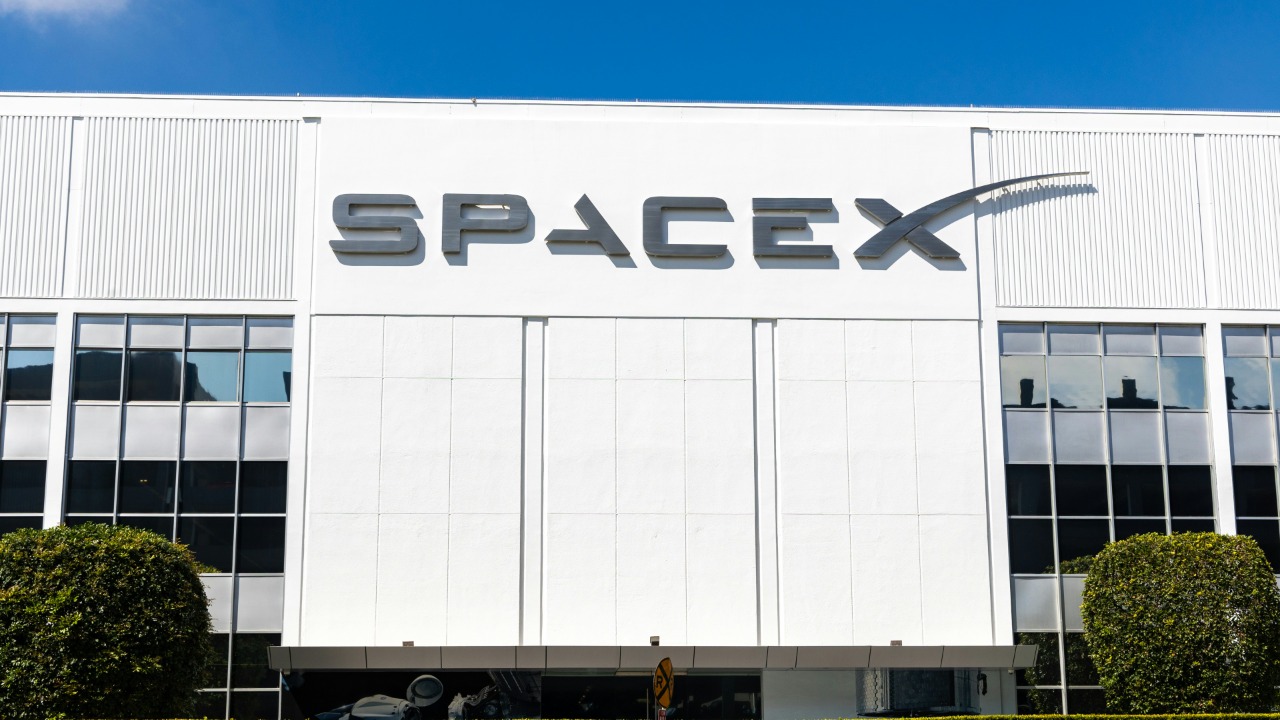
SpaceX is finally moving from rumor to reality on a public listing, and the numbers attached to that debut are unlike anything public markets have seen from a private tech company. At the same time, the potential valuation is so large that it could push Elon Musk’s personal fortune into uncharted territory and make the idea of a trillionaire founder less hypothetical and more like a near term scenario.
As formal steps toward an initial public offering line up with record private valuations and a swelling secondary market, investors are trying to work out what a SpaceX IPO would mean for their portfolios, for the broader space economy, and for the balance of power between public shareholders and one of the most aggressive founders in modern business.
The road to a 2026 SpaceX IPO
The central fact driving the current frenzy is that SpaceX has signaled a concrete timeline to list its shares, rather than leaving investors to guess. Reporting indicates that the company plans a 2026 IPO, shifting the conversation from “if” to “how” and “how big.” Analysts who follow the private markets now treat that target as the base case, even as they caution that market conditions could still nudge the schedule.
Investor-focused research notes that SpaceX has confirmed a target IPO date of 2026 and suggests the company could debut at a valuation of $1.5 trillion, a figure that would instantly place it among the most valuable public companies on earth. Separate coverage of the same plan describes how the company Will IPO and frames the debate around “How Much Is” the firm’s “Stock Worth,” underscoring how central valuation has become to the narrative. Other analysis of how to access the company notes that SpaceX is not yet publicly traded and reiterates that it plans a 2026 IPO, while warning that the timing could still shift with the broader market.
From private rocket champion to record-breaking listing
SpaceX’s path to this point has been defined by a rare combination of technical execution and commercial momentum, which helps explain why the prospective offering is being framed as potentially historic. The company has turned reusable rockets from a speculative idea into a workhorse system, captured a dominant share of the commercial launch market, and built Starlink into a global broadband network that throws off recurring revenue. That operational base is what underpins the eye catching valuation figures now circulating.
Private market platforms that track secondary trades show how investor appetite has steadily repriced the company higher, with one analysis of SpaceX stock detailing how shares have changed hands at successively richer levels as launch cadence and Starlink subscriber counts have grown. A separate report on the coming flotation notes that the company is expected to go public and launch a giant IPO in 2026, describing how the business is already operating at a scale that rivals long established aerospace incumbents. Together, these snapshots show a private company that has outgrown its original funding ecosystem and is now preparing to test its valuation in front of public markets.
How big could the SpaceX valuation get?
The headline number that keeps surfacing in discussions of the deal is a potential market capitalization of $1.5 trillion, a figure that would make SpaceX one of the most valuable public companies on day one. That estimate reflects both the current performance of the launch business and bullish expectations for Starlink’s long term cash generation, as well as optionality around future projects such as deep space missions and point to point travel on Earth.
One detailed breakdown of the offering notes that reporting has pegged a potential market capitalization at $1.5 trillion, arguing that such a debut would instantly rank among the largest in history and vault SpaceX into the top tier of public companies. Another account of the record setting ambitions describes a plan that could raise enough capital to value the company at about $1.5 trillion, crediting a Bloomberg News report as the catalyst for renewed investor focus. At the same time, more conservative estimates point to a potential $800 Billion valuation as SpaceX Initiates Formal IPO Process, illustrating how “The Valuation Hierarchy and Market Diverge” depending on assumptions about growth and profitability.
Formal IPO steps and why SpaceX is going public now
Beyond speculation, SpaceX has started to take concrete procedural steps that typically precede a listing, which is one reason the market is treating the 2026 timeline as credible. Initiating the formal IPO process requires extensive work with bankers, lawyers, and regulators, and it signals that the company is ready to subject its finances and governance to public scrutiny in exchange for access to deeper capital pools and liquidity for long time shareholders.
Specialist coverage of the space industry reports that SpaceX Initiates Formal IPO Process with Potential $800 Billion Valuation, describing how the company is positioning itself within that Valuation Hierarchy even as market views diverge. A separate report on why leadership is willing to make this shift notes that SpaceX is expected to go public and launch a giant IPO in part because the company is doing extraordinarily well and can use the public markets to fund even more ambitious projects. Taken together, these accounts suggest a strategic decision to capitalize on strength rather than waiting for private funding to become a constraint.
Elon Musk’s net worth and the trillionaire threshold
The other number that looms over the SpaceX IPO story is not on the company’s balance sheet but on Elon Musk’s personal ledger. His wealth is already unprecedented in modern markets, and the size of his SpaceX stake means that a successful listing could push his net worth into a range that was once reserved for science fiction. That is why the phrase “trillionaire” has migrated from social media memes into serious financial analysis.
One widely shared snapshot of his finances states that, As of December 21, 2025, Elon Musk’s net worth has reached a historic $749 billion, solidifying his position as the world’s richest individual. Separate investment commentary frames the coming deal in similar terms, asking whether Elon Musk A Trillionaire and arguing that a SpaceX IPO Might Put Him Shockingly Close, especially when combined with his holdings in Tesla Motors, Inc. Another analysis focused squarely on the founder describes how Elon Musk could be a Trillionaire in SpaceX IPO scenarios, highlighting how a listing at the upper end of current valuation estimates would translate into personal wealth that approaches or exceeds twelve figures.
How a SpaceX IPO could reshape Musk’s empire
If SpaceX lists at anything close to the valuations now being discussed, the impact on Musk’s broader business empire will be immediate. A liquid, publicly traded stake in a $800 Billion to $1.5 trillion company would give him more flexibility to raise capital, pledge shares as collateral, or fund new ventures without relying as heavily on Tesla or other holdings. It would also concentrate even more of his net worth in a single, high growth but operationally complex enterprise.
Investor commentary that tracks his portfolio notes that Elon Musk is already the richest person on the planet and that a SpaceX IPO Heats Up the prospect that the deal Might Put Him Shockingly Close to the Trillionaire mark. Another analysis focused on the rocket company itself points out that SpaceX, the rocket company founded by Elon Musk, is seeking to go public in 2026 at a valuation that could, in some scenarios, make him a Trillionaire on paper. For Tesla Motors, Inc. shareholders, that shift could change the dynamics of how Musk allocates his time and capital, even if the electric car maker remains a core part of his identity and fortune.
Investor enthusiasm and the risk of overexcitement
For ordinary investors, the prospect of buying into SpaceX at IPO is both thrilling and fraught. On one hand, the company sits at the intersection of commercial spaceflight, satellite internet, and defense, three sectors with long run growth potential. On the other, the valuation multiples implied by $800 Billion to $1.5 trillion estimates leave little room for operational missteps or slower than expected Starlink adoption.
One overview of how to access the company’s equity notes that SpaceX is not yet publicly traded and walks through whether you can invest in SpaceX in 2025, outlining details and alternatives for those who want exposure before the 2026 listing and emphasizing that the firm plans an IPO but that timing may shift. Another piece that tracks the build up to the deal describes how the SpaceX IPO Heats Up as Musk Inches Toward Becoming a Trillionaire, while also warning that early trading enthusiasm could be followed by a pullback once the initial euphoria fades. For long term investors, the key question is whether the company’s cash flows can eventually justify the price they pay on day one.
Why this could be the largest IPO ever, and Musk’s biggest headache
The scale of the planned offering means that SpaceX is not just another high growth tech listing but a potential stress test for how public markets handle founder controlled giants. A float that values the company at $1.5 trillion would eclipse most previous tech IPOs and instantly create a new heavyweight in indices and thematic funds. That kind of debut would also invite intense scrutiny of governance, disclosure, and the balance of power between Musk and outside shareholders.
One detailed analysis argues that a SpaceX IPO could be the largest public offering of all time and, at the same time, Elon Musk’s biggest headache, precisely because reporting has, thus far, pegged a potential market capitalization at $1.5 trillion and that would make SpaceX one of the most valuable public companies in the world from day one. The same piece notes that such a valuation would force Musk to navigate a more complex regulatory environment and a broader base of stakeholders, even as he tries to preserve the fast moving culture that has defined the company to date. For a founder who has often clashed with securities regulators, that tension could become one of the defining storylines of the post IPO era.
What the IPO means for the broader space economy
Beyond Musk’s personal wealth and SpaceX’s own trajectory, a 2026 listing at these valuations would ripple across the entire space sector. A successful debut would validate the idea that launch and satellite businesses can support mega cap valuations, potentially lowering the cost of capital for smaller players and encouraging more startups to pursue ambitious hardware projects rather than purely software based models. It would also give public market investors a flagship name to anchor space themed portfolios, which until now have relied on a mix of defense primes and smaller, more speculative companies.
Coverage of the coming deal notes that the catalyst for renewed interest in space funds was a Bloomberg News report that Musk‘s rocket company is targeting a 2026 listing that could raise enough to value it at about $1.5 trillion, pushing an obscure fund into the spotlight as investors look for ways to front run the IPO. Another account of the company’s trajectory explains that SpaceX is expected to go public and launch a giant IPO at a moment when the company is doing extraordinarily well, suggesting that its success could set a benchmark for how other space firms are valued and financed in the years ahead.
More From TheDailyOverview

Grant Mercer covers market dynamics, business trends, and the economic forces driving growth across industries. His analysis connects macro movements with real-world implications for investors, entrepreneurs, and professionals. Through his work at The Daily Overview, Grant helps readers understand how markets function and where opportunities may emerge.

