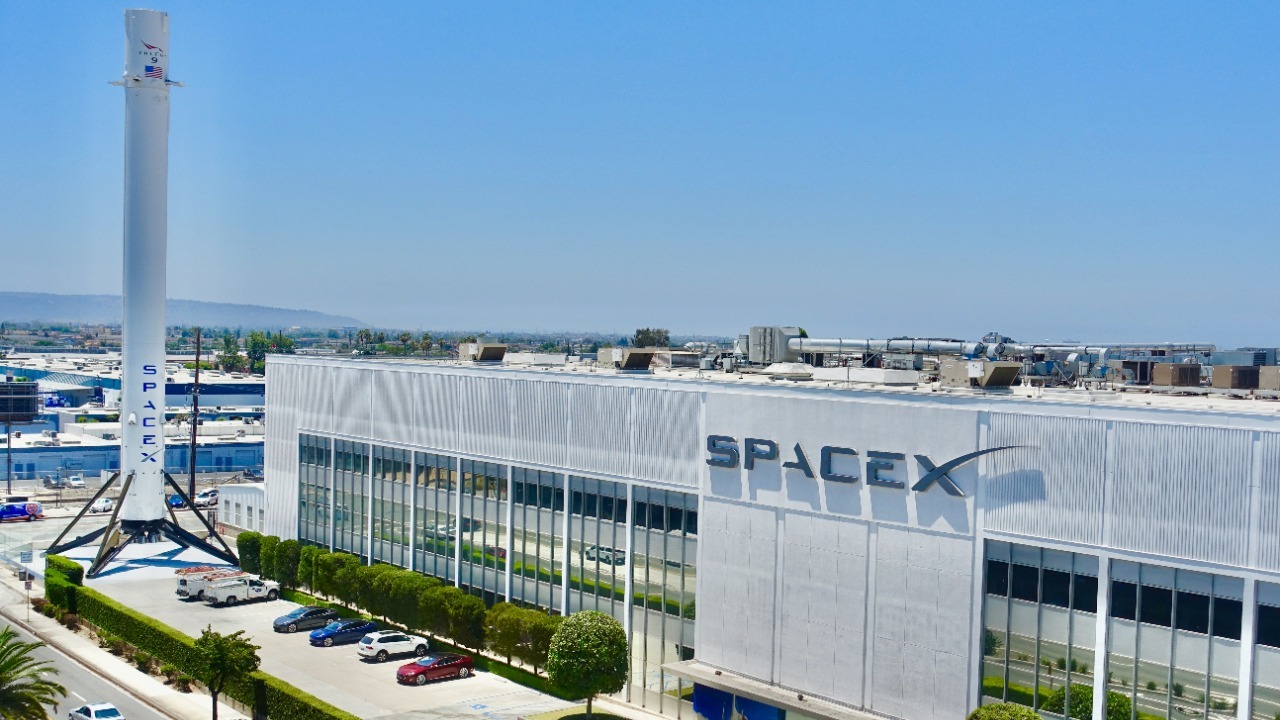
Elon Musk has just fused his rocket company with his artificial intelligence startup in a deal that instantly created one of the most valuable private businesses on the planet. The combined SpaceX–xAI entity is being pegged at $1.25 trillion, a number that would place it in the same valuation league as the largest listed tech giants despite remaining outside public markets. The real story, though, is not only how big this new machine is on paper, but how its structure, revenue mix, and risk profile might justify, or undermine, that trillion‑dollar price tag.
To understand what this merger is really worth, I need to separate headline valuations from underlying cash flows and strategic leverage. SpaceX brings launch, Starlink connectivity, and a proven ability to raise capital at ever higher prices, while xAI contributes cutting‑edge models and a mission to “understand the universe” that now has literal rockets attached. The question is whether this is a financial engineering exercise or the foundation of a vertically integrated space‑and‑AI platform that can grow into its valuation over the next decade.
The $1.25 trillion headline and how the math stacks up
The starting point is the sticker price. Reporting on the deal describes the SpaceX and xAI combination as the biggest merger of all time, valued at $1.25 trillion, with Elon Musk’s rocket maker acquiring his AI venture in a transaction that folds both under a single corporate roof. That figure is not just a vanity number, it effectively sets a reference price for any future fundraising or partial liquidity event, and it signals that Musk and his backers see this as a peer to the largest global tech platforms, not a niche aerospace contractor.
Underneath that headline, the acquisition price for xAI itself is reported at $250 billion, with SpaceX using its own equity to absorb the AI startup rather than paying in cash. That implies that roughly one fifth of the combined $1.25 trillion value is being attributed to xAI, with the remaining trillion‑plus anchored in SpaceX’s existing launch and satellite businesses. In other words, investors are treating xAI as a late‑stage, mega‑unicorn bolt‑on, not the core of the enterprise, even though its technology may ultimately drive a disproportionate share of future growth.
What each side brings: rockets, Starlink, and a universe‑scale AI mission
SpaceX enters this merger already regarded as a colossus in private markets, with recent estimates putting its standalone valuation at about $800 billion, up from $400 billion only a year earlier. That doubling reflects not just a packed launch manifest but also the rapid expansion of Starlink, which has turned a capital‑intensive satellite constellation into a recurring revenue business that can, in theory, scale to tens of millions of customers. When a company can raise capital at those levels, it gains enormous strategic freedom to buy, build, and experiment.
xAI, by contrast, is young but ambitious, positioning itself as an AI lab focused on building systems that can help humanity understand the universe, a mission it lays out on its own company site. Folding that mission into a space and satellite operator creates a feedback loop: Starlink can provide the distributed compute and data pipes for AI workloads, while xAI’s models can optimize everything from launch trajectories to in‑orbit routing. It is not hard to imagine a future where the same AI that plans a Mars transfer orbit is also powering consumer‑facing assistants on Earth, all monetized under one corporate umbrella.
Deal structure, valuation logic, and the trillion‑dollar question
The reported $250 billion price tag for xAI, slotted into a $1.25 trillion merged valuation, suggests that investors are effectively marking up SpaceX’s pre‑deal worth to accommodate the AI asset. Analyses of the transaction describe SpaceX as having acquired xAI for $250, with the combined entity framed as a single platform that unites rockets, Starlink, and AI under one roof, rather than a holding company of loosely related bets. That framing matters, because it implies a synergy premium baked into the valuation, not just a sum of parts.
Other coverage of the merger reinforces that this is being treated as a structural re‑rating of Musk’s space business, with the SpaceX and XAI combo described as the biggest merger of all time and valued at $1.25 trillion. When I compare that to the earlier $800 billion mark for SpaceX alone, it implies that markets are assigning roughly $450 billion of incremental value to the AI integration and future optionality. That is a staggering premium for a startup that is still in its early commercial life, and it sets a high bar for execution.
Can AI really justify the premium? Synergies and skepticism
Proponents of the deal argue that the merger turns SpaceX into a kind of operating system for the orbital economy, with xAI providing the intelligence layer that makes rockets, satellites, and ground infrastructure more efficient and more profitable. Some investor commentary has already labeled the combined group a $1.25T company that could become the world’s leading aerospace and AI platform, a view that treats the valuation as a down payment on decades of dominance rather than a short‑term bet. From that perspective, the premium is less about current earnings and more about locking up the strategic high ground in both space access and AI compute.
Critics are less convinced that the premise will work. One detailed analysis notes that SpaceX’s acquisition of xAI creates a business worth $1.25 trillion but questions whether the underlying logic, which Musk has linked to his own birthday and even a planetary alignment, is grounded in operational reality or personal symbolism. That skepticism, captured in Dan Milmo Glob’s reporting, highlights a key risk: if the merger is driven more by narrative than by clear integration plans, the promised synergies could take far longer to materialize than the valuation assumes.
Regulation, governance, and the Musk factor
Any company worth $1.25 trillion that straddles critical infrastructure and frontier AI will inevitably attract regulatory attention. In the United States, that means potential scrutiny from antitrust bodies such as the Federal Trade Commission and sector regulators who oversee launch licensing and satellite spectrum. The fact that President Trump is already deeply involved in strategic industrial policy, including initiatives like Project Vault, a $12B Strategic Mineral Reserve created by executive order, suggests that Washington is comfortable using national power to shape key supply chains, and a merged SpaceX‑xAI sits squarely in that zone of interest.
Investor commentary that flagged the SpaceX‑xAI merger alongside Project Vault in a “Caught My Eye” roundup underscores how closely this deal is being watched as part of a broader industrial strategy conversation. In that context, the role of President Trump and his administration’s willingness to back large, strategically important private enterprises could be a tailwind for the combined company, but it also raises questions about dependency on political goodwill. A future administration with a different view of Musk’s influence could decide that a vertically integrated space and AI champion needs tighter oversight, a risk that is implicit in the attention given to Project Vault and similar efforts.
More From The Daily Overview
*This article was researched with the help of AI, with human editors creating the final content.

Grant Mercer covers market dynamics, business trends, and the economic forces driving growth across industries. His analysis connects macro movements with real-world implications for investors, entrepreneurs, and professionals. Through his work at The Daily Overview, Grant helps readers understand how markets function and where opportunities may emerge.

