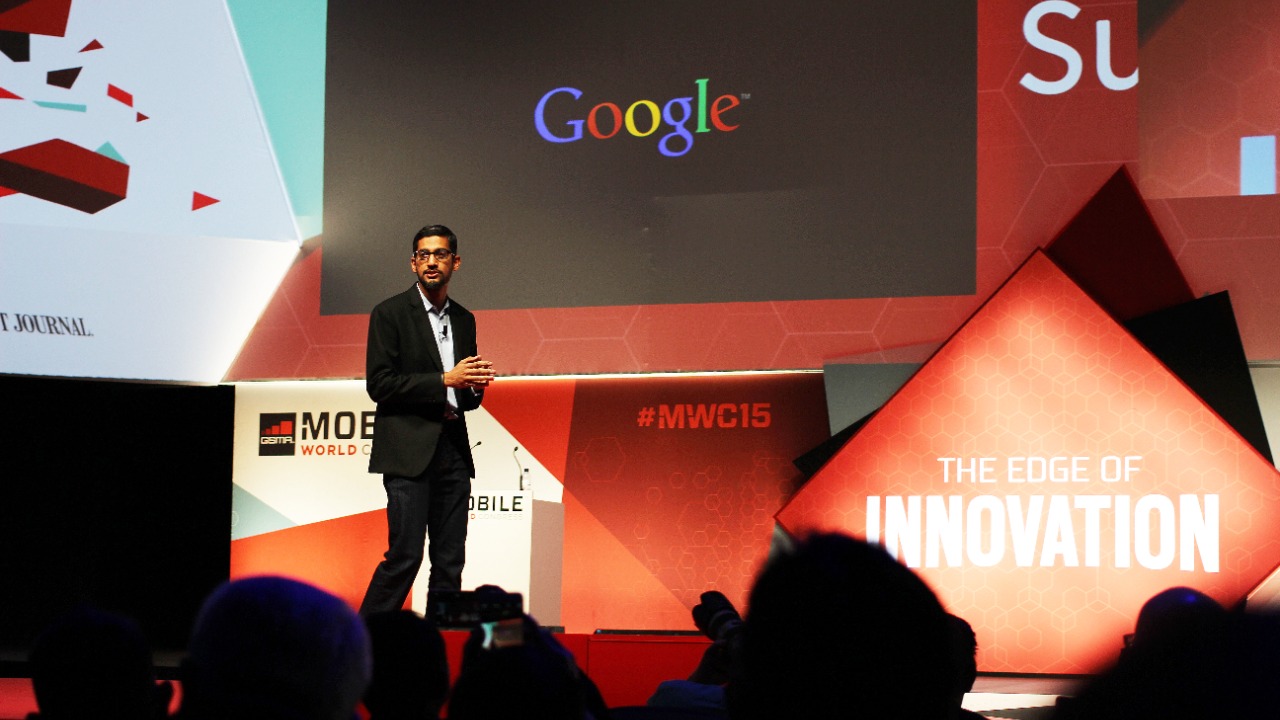
Google CEO Sundar Pichai announced a $15 billion investment to build an AI hub in Visakhapatnam, India, on October 14, 2025, placing one of the largest single corporate bets on artificial intelligence infrastructure outside the United States. The commitment, spanning five years from 2026 to 2030, includes gigawatt-scale data center operations and a new international subsea cable gateway. The deal signals that Google views India not just as a consumer market for AI tools but as a production base for the technology itself, a distinction that carries real consequences for the country’s energy grid, its tech workforce, and the global distribution of computing power.
The announcement comes as governments and regulators worldwide are reassessing how to manage the rapid growth of AI and cloud computing. In India, officials have framed the Visakhapatnam project as a milestone in the country’s digital economy strategy, positioning it alongside ongoing efforts to expand connectivity and local data processing. For Google, the hub is both a capacity play, securing the compute needed for increasingly large AI models, and a political signal that it is willing to embed long-term infrastructure in one of its fastest-growing markets, rather than simply exporting services from U.S. or European data centers.
What $15 Billion Buys in Visakhapatnam
The scale of the investment dwarfs most single-site technology commitments in South Asia. According to India’s official government briefing, the approximately $15 billion will flow between 2026 and 2030, funding what authorities describe as an effort to accelerate the expansion of AI-driven services. The hub’s two headline components, a gigawatt-scale data center campus and an international subsea cable gateway, are designed to work in tandem: the data centers will handle the massive compute loads that training and running large AI models require, while the subsea gateway will connect those facilities directly to global internet backbone routes, reducing latency for users across South and Southeast Asia.
Visakhapatnam, a port city on India’s southeastern coast in the state of Andhra Pradesh, is not an obvious choice compared with established tech corridors like Hyderabad or Bengaluru. But its coastal location makes it a natural landing point for undersea cables, and its relative distance from already-strained power grids in major metros could give Google more room to negotiate dedicated energy supply. The gigawatt-scale label is significant: a single gigawatt can power roughly 750,000 homes, so the data center campus alone will demand an industrial-grade energy footprint that will test local infrastructure in ways India has not previously faced from a single private operator. If fully realized, the complex would instantly rank among the country’s most energy-intensive commercial sites.
India’s Pitch: Cheap Data, Massive Demand
Google’s decision rests on a straightforward economic logic. India offers some of the lowest mobile data costs on the planet and one of the fastest-growing internet user bases, a combination that makes it a prime location for data centers. For a company that needs both cheap bandwidth to serve AI products and a large population to generate training data and revenue, those conditions are hard to replicate elsewhere at the same scale. The subsea gateway adds another layer: by owning a direct international cable landing, Google can bypass some third-party network providers and control the cost and speed of cross-border data flows, a strategic advantage as AI workloads grow more data-intensive and latency-sensitive.
The Indian government has been actively courting exactly this kind of commitment. Union Minister Ashwini Vaishnaw highlighted the Google AI Hub as a major step in the country’s broader push to become a global AI player, according to a statement from the Press Information Bureau. That enthusiasm is understandable: large-scale data center construction typically generates thousands of construction jobs in the short term and hundreds of permanent technical roles afterward, and the presence of a major hyperscaler often attracts secondary investment from cloud service providers, chip designers, and software firms looking to co-locate near compute resources. For Andhra Pradesh specifically, the hub could accelerate the state government’s long-standing ambition to develop Visakhapatnam as an alternative economic center to Hyderabad, which it lost when Telangana split off as a separate state in 2014, potentially reshaping regional competition for high-tech investment.
Energy and Infrastructure Tensions
The most pressing question the announcement leaves unanswered is power. Gigawatt-scale data centers are among the most energy-hungry facilities on earth, and India’s electricity grid, while expanding rapidly, still experiences regional shortages during peak demand months. Google has not publicly detailed how it plans to source the energy for the Visakhapatnam campus, whether through dedicated renewable installations, long-term power purchase agreements with state utilities, or a mix of both. That gap matters because India’s national climate commitments include reaching 500 gigawatts of non-fossil fuel capacity by 2030, and a single corporate consumer drawing a gigawatt or more could either support that goal, if powered by renewables, or complicate it, if it increases demand for coal-fired generation and delays the retirement of older plants.
Water is another factor. Large data centers require significant cooling, and coastal Visakhapatnam offers access to seawater cooling systems, but deploying those at scale introduces environmental review requirements that could slow construction timelines. None of the available reporting from the announcement addresses environmental impact assessments or water usage projections, which means the 2026 start date for investment flows may face regulatory hurdles that have not yet been publicly discussed. These are not hypothetical concerns: data center projects in other countries, including Ireland and the Netherlands, have faced delays or moratoriums precisely because local grids and water supplies could not absorb the additional load without upgrades. How quickly Andhra Pradesh can modernize transmission lines, build out renewable capacity, and establish clear environmental safeguards will determine whether the project proceeds on schedule or becomes a test case for balancing digital growth with resource limits.
What This Means for Global AI Competition
Google’s bet on India fits a broader pattern among major technology companies racing to lock in compute capacity before demand outstrips supply. Microsoft, Amazon, and Meta have all announced large data center expansions in recent years, primarily in the United States, Europe, and the Middle East. By planting a flag in Visakhapatnam, Google is making a geographic diversification play: spreading its AI infrastructure across more regions reduces the risk of being bottlenecked by any single country’s energy costs, regulatory shifts, or geopolitical disruptions. India, as a large democracy with relatively stable trade relations with both Western and Asian economies, offers a hedging position that few other markets can match, particularly for workloads that serve users across the Global South.
For Indian technology workers and startups, the practical impact depends on how much of the hub’s operations and procurement are localized. If Google relies heavily on imported equipment and centralizes most high-end research elsewhere, the Visakhapatnam site could function mainly as a back-end utility, powering products built in California or Zurich. But if the company builds out local teams for AI model deployment, data governance, and region-specific product development, the hub could become an anchor for a broader ecosystem of firms specializing in training data curation, model fine-tuning, and sector-specific AI tools for finance, healthcare, and logistics. Policymakers will be watching closely to see whether the promised AI transformation translates into domestic intellectual property and exportable services, or remains largely confined to infrastructure hosting.
Regulation, Trust, and the Shape of AI in India
The Visakhapatnam investment also lands in the middle of an evolving global debate about how tightly to regulate AI. Around the world, concerns about bias, misinformation, and surveillance have prompted calls for stronger oversight of how large models are trained and deployed. In India, these conversations intersect with long-standing disputes over data localization, platform liability, and content moderation. An analysis by the Associated Press underscores how governments are weighing the economic benefits of AI against the risks of ceding too much control to a handful of global platforms. Hosting a major Google AI hub on Indian soil gives regulators new leverage over infrastructure, but it also deepens the country’s dependence on a single corporate provider for critical digital capacity.
How that trade-off is managed will influence not only India’s digital sovereignty but also the character of AI systems used by hundreds of millions of its citizens. The government’s own framing of the hub, in the official investment announcement, stresses opportunities in sectors like agriculture, education, and healthcare, where localized models trained on Indian languages and datasets could deliver tangible public benefits. Realizing those gains will require careful rules around data sharing, privacy, and algorithmic accountability, as well as investments in public-sector capacity to audit and benchmark AI systems. The Visakhapatnam hub, in other words, is not just a cluster of servers and cables on the coast; it is a test of whether India can translate foreign capital and technical infrastructure into inclusive, trustworthy AI services that reflect its own priorities rather than merely amplifying those of a global tech giant.
More From The Daily Overview
*This article was researched with the help of AI, with human editors creating the final content.

Grant Mercer covers market dynamics, business trends, and the economic forces driving growth across industries. His analysis connects macro movements with real-world implications for investors, entrepreneurs, and professionals. Through his work at The Daily Overview, Grant helps readers understand how markets function and where opportunities may emerge.

