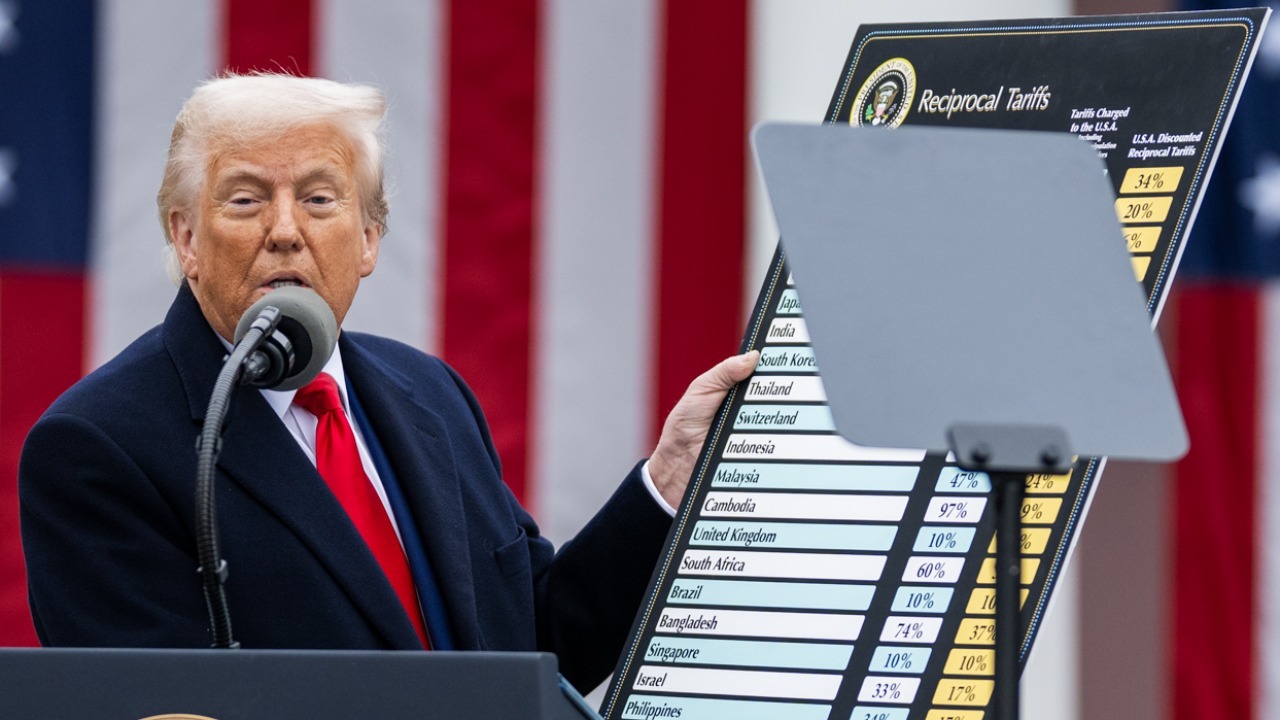
The Supreme Court has pushed its long awaited decision on President Donald Trump’s global tariffs into next week, setting Tuesday as the next chance for a ruling and leaving markets, allies and the White House guessing. The delay keeps intact a high stakes legal and political standoff over the president’s use of emergency powers to reshape trade, even as the court prepares to release other opinions first. With the clock ticking on Trump’s promises of tariff funded dividends at home and escalating tariff threats abroad, the justices’ timing is now part of the story.
The unusual wait for a defining tariff decision
The US Supreme Court has already passed up multiple opportunities to decide whether President Donald Trump’s sweeping tariffs can stand, even after signaling on its own website that an opinion day would offer a first opening for a ruling on the president’s global tariffs. Instead of resolving the challenge, the justices have allowed the case to linger, prompting fresh attention each time the court issues opinions on other disputes while the tariff question remains unresolved. The pattern has turned a technical fight over emergency trade authority into a slow burn drama about how far the court is willing to let a sitting president stretch economic powers in the name of national security, and how long it is prepared to keep the country waiting for clarity on that point.
Earlier this month, the Supreme Court declined to issue a decision on a day when many court watchers expected one, a choice that left the legal challenge to Trump’s tariff policy hanging and, as one account put it, meant the ruling was “postponed again” with uncertainty continuing over whether the tariffs will survive or be struck down. That same reporting underscored that the case goes to the heart of President Trump’s strategy of using trade penalties as leverage while he seeks to return to the White House, and it highlighted how the Supreme Court’s silence has become its own form of message about the stakes of the dispute. The US Supreme Court’s own description of an opinion day as the first chance for a decision on President Trump’s global tariffs, and the subsequent choice not to act, has only sharpened the sense that the justices are treating this as a defining test of presidential power rather than a routine trade case.
Signals from the calendar and what Tuesday could bring
When the Supreme Court announced that Tuesday would be its next opinion day, it effectively told the country that the tariff showdown would not be resolved before then, even as it prepared to release other rulings. The court’s calendar notice that it would issue more opinions Tuesday amid the ongoing wait on tariffs confirmed that the justices are sequencing this case carefully, and it raised the possibility that they are still working through internal divisions over how far to go in blessing or curbing Trump’s use of emergency law. A ruling against the president could sharply limit his ability to rely on emergency authority for trade measures in the future, while a decision in his favor would entrench a powerful tool for unilateral economic action.
Legal analysts have seized on the delay itself as a potential sign that the court is leaning toward upholding Trump’s approach, arguing that the justices may be crafting a broad opinion that preserves presidential flexibility while setting some guardrails. One detailed account framed the Supreme Court’s delay in delivering a verdict on the use of emergency powers for tariffs as a possible sign of a favorable outcome for Trump, and it noted that the case has drawn close scrutiny from investors who see the ruling as a major inflection point for trade policy. Another analysis, also focused on the Supreme Court’s delay in the tariff ruling, described the wait as a potential sign of a victory for Trump and emphasized that the justices’ choice to hold the decision while issuing other opinions has fueled speculation that they are preparing a complex, and perhaps expansive, ruling on presidential authority.
Trump’s legal gamble and the conservative doctrine in play
At the heart of the case is Trump’s decision to invoke emergency law to justify tariffs that reach far beyond traditional trade disputes, a move that has drawn fire not only from his political opponents but also from some conservatives who worry about unchecked executive power. The challenge has focused attention on a conservative legal doctrine that could, in theory, be used to strike down the tariffs by insisting that Congress, not the president, must clearly authorize such sweeping economic measures. According to one detailed account, Trump himself has framed the stakes in stark terms, declaring that “With a Victory, we have tremendous, but fair, Financial and National Security. Without it, we are virtually defenseless against our enemies,” language that underscores how he sees the court’s decision as a life or death moment for his broader strategy of using tariffs under the emergency law.
For Trump, the legal gamble is that the same conservative jurisprudence that has sometimes clipped regulatory agencies could now be turned against his own trade agenda, even as he argues that strong tariffs are essential to both economic strength and national defense. The reporting on how Trump’s tariffs could be undone by a single conservative doctrine makes clear that a loss at the Supreme Court would not just unwind specific duties, it could also narrow the emergency tools available to future presidents of either party. That is one reason the case has become a focal point for legal scholars who see it as a test of whether the court’s conservative majority will apply its principles consistently, even when doing so might undercut a president whose broader agenda many of them have often supported.
Economic stakes, from federal revenue to $2,000 checks
Behind the legal arguments lies a concrete economic story, starting with the revenue the tariffs have already generated and extending to Trump’s promises about how that money will be used. One detailed breakdown noted that the tariffs brought in some $195 billion in revenue, a figure that illustrates why the outcome matters not only for trade flows but also for the federal budget and for companies that have been paying the duties. That same analysis warned that unwinding the tariffs too abruptly could interact with lingering effects of the massive recession the crisis generated, a reminder that the court’s decision will land in an economy still adjusting to past shocks and to ongoing uncertainty about global demand.
Trump has tried to turn that revenue into a political asset by promising direct payments to households, pledging what he has called a tariff dividend to “individuals of moderate income” sometime in 2026, before the midterm elections. One detailed report on whether a $2,000 Trump tariff dividend stimulus check is real explained that, in November, Trump vowed to issue those checks but that key details about eligibility, timing and funding mechanics remain murky based on what his administration has released so far. The prospect of a $2,000 payment funded by tariff receipts has become part of the broader debate over whether the duties are a tax on consumers or a tool for redistribution, and it adds another layer of political pressure to whatever the Supreme Court decides next week.
More From TheDailyOverview

Julian Harrow specializes in taxation, IRS rules, and compliance strategy. His work helps readers navigate complex tax codes, deadlines, and reporting requirements while identifying opportunities for efficiency and risk reduction. At The Daily Overview, Julian breaks down tax-related topics with precision and clarity, making a traditionally dense subject easier to understand.