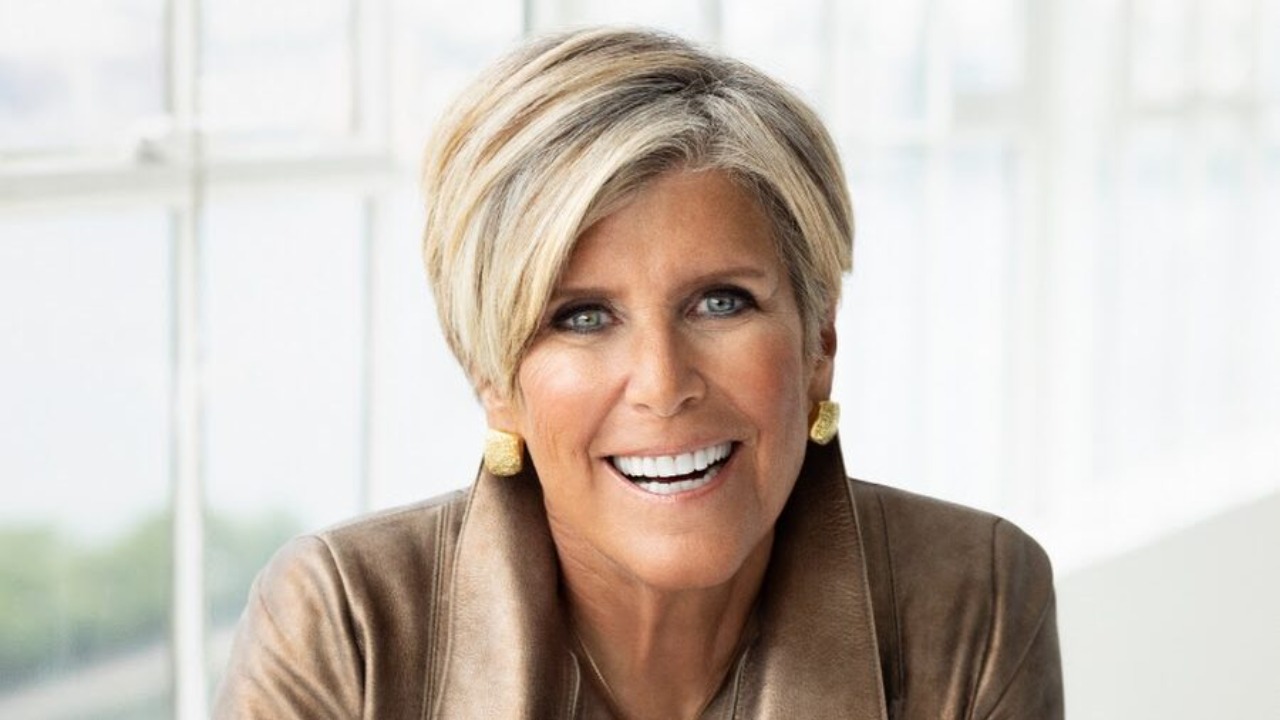
In 2025, the number that once sounded like a fantasy retirement target now looks uncomfortably ordinary. Personal finance expert Suze Orman is warning that $2 million in savings can amount to “chump change” for a long retirement, especially as prices, healthcare bills and lifestyle expectations keep climbing. I want to unpack why that benchmark has shifted so sharply and how someone who feels behind can still build a realistic path to financial security.
The gap between what Americans have and what they will need is widening, but it is not a reason to freeze in panic. It is a call to reassess the math, confront the emotional baggage around money and then use every tool available, from catch-up contributions to smarter spending, to close the distance between today’s balance and tomorrow’s needs.
Why $2 million no longer feels like a fortune
When Suze Orman calls $2 million “chump change,” she is not dismissing the effort it takes to save that much, she is highlighting how quickly that sum can evaporate over a retirement that may last three decades or more. Reporting on Americans’ expectations shows that many people believe their nest egg will cover about 22 years, yet Orman, described as a Personal finance expert and podcaster, argues that a $2 million balance can be surprisingly fragile once market swings, taxes and rising expenses are factored in. Her blunt assessment is aimed at the “average American” who may be underestimating both how long they will live and how much their lifestyle will cost.
That warning is echoed in coverage that spells out how, in 2025, inflation has kept pressure on everyday budgets and turned $2 million into a new headline number rather than a guarantee of comfort. One analysis notes that Why $2 million is the new headline number has everything to do with “sticky” prices and anxiety that savings will not stretch as far as planned in 2025. Another report, published on Jul 10, 2025, asks Do You Really Need $2 Million to Retire in 2025? and concludes that while some households can manage with less if they are strategic, the combination of longer lifespans and higher costs makes that figure a reasonable, if daunting, planning anchor.
The inflation and healthcare squeeze on retirement
The erosion of purchasing power is the quiet force behind Orman’s stark language. Over the past several years, retirees have watched groceries, utilities and housing costs climb faster than the yields on many conservative investments. One detailed explainer on how rising prices affect older savers stresses that Why retirement planning must consider inflation is simple: the same monthly withdrawal buys less every year, and a portfolio that looks large on paper can be hollowed out if it is not invested to at least keep pace with the cost of living. The piece invites readers to Imagine what happens when decades of careful saving collide with a decade of unexpectedly high price increases, and the answer is sobering.
Healthcare is the other major pressure point that turns a seemingly large nest egg into a vulnerable one. A report titled The True Cost of Healthcare in Retirement lays out The Shocking Reality of Healthcare Costs and warns that medical bills can consume a growing share of retirement income as you age. It frames healthcare as one of the largest and least predictable line items in a retiree’s budget, and urges people to Prepare Now to Protect Your Finances before they are most vulnerable. When I combine that picture with Orman’s concerns, the conclusion is clear: a $2 million balance that does not explicitly account for escalating medical expenses is not nearly as safe as it looks.
How Suze Orman says to reset your savings strategy
Orman’s answer to this new reality is not despair, it is discipline. Her core message is that the only way to make any number work is to save more, earlier and more consistently, even if the first steps feel small. In a rundown of her guidance published on Mar 19, 2025, she is introduced with the line “Here are Suze Orman’s top tips for saving for retirement,” and one of the first directives is blunt: Start saving now. She pushes workers to contribute at least 3 percent of their salary as a baseline, then ratchet that percentage higher over time, treating retirement contributions as a non‑negotiable bill rather than a leftover.
Her broader philosophy, highlighted in a feature that notes “Suze Orman: $2M Retirement Savings Is ‘Chump Change’ in 2025,” is to live well below your means today to buy freedom later. That piece, dated Jul 10, 2025, frames her advice under a banner that reads Live Below Your Means as the path to a healthy financial future. It emphasizes that in 2025, when Retirement Savings Is under pressure and Chump Change is how she describes a once‑aspirational figure, the only lever most households truly control is the gap between what they earn and what they spend. Here, Orman is not just scolding, she is offering a framework: shrink lifestyle inflation, automate contributions and treat every raise as an opportunity to boost savings rather than upgrade consumption.
Practical catch-up moves if you feel behind
For anyone looking at their current balance and feeling a wave of panic, the most constructive step is to acknowledge the starting point without shame and then move quickly into action. A guide on catching up, dated Jul 28, 2025, opens with the reminder that Here’s how to get started and urges readers to Acknowledge where you are without judgement. It calls out Guilt, regret and self‑disgust as emotional traps that keep people stuck instead of increasing contributions, and then walks through how to Maximize current contributions, including higher limits for those over 50 who can contribute $8,000 to certain accounts. I see that as a direct complement to Orman’s tough love: the past is fixed, but the savings rate from this paycheck forward is not.
There are also tactical ways to accelerate progress that do not require a six‑figure salary. A list of strategies published on Jun 9, 2025, highlights that You do not always need huge lump sums to move the needle, especially if you Automatically invest your spare change through apps that round up purchases or sweep small amounts into diversified portfolios. The same piece urges savers to Supercharge your retirement contributions by increasing deferrals whenever you get a raise or bonus, and to use workplace plans and individual accounts in tandem. When I connect those ideas with Orman’s insistence on starting now, the picture that emerges is not glamorous but it is powerful: small, automated, steadily rising contributions can meaningfully close the gap, especially for those in their 40s and 50s who still have a decade or more of high‑earning years ahead.
Designing a retirement that fits your real life
Even with a higher savings target, the goal is not to hit an arbitrary number, it is to fund a life that matches your values and constraints. The Jul 10, 2025 analysis that asks whether you truly need $2 million in 2025 points out that some households can retire comfortably with less if they are willing to adjust expectations, relocate or work part‑time. The piece notes that In 2025, the right figure depends heavily on housing costs, debt levels and how much flexibility you have to trim discretionary spending, and it encourages readers to stress‑test their plan with different withdrawal rates and market scenarios. That nuance matters: Orman’s “chump change” line is a wake‑up call, not a universal verdict that everyone must chase the same balance.
At the same time, the article that explains Why $2 million is the new headline number in 2025 underscores that Inflation is still sticky and that many people are underestimating how long they will live and how much they will spend on travel, family support and healthcare. When I weigh that against the healthcare analysis that urges retirees to Protect Your Finances from rising medical costs, and the inflation primer that insists retirement planning must consider persistent price growth, the responsible takeaway is to plan conservatively. That means building in buffers for higher expenses, assuming a long lifespan and using tools like catch‑up contributions, automatic increases and disciplined spending to push your savings as high as your situation allows, even if you never quite reach the $2 million mark that dominates the 2025 headlines.
More From TheDailyOverview
- Dave Ramsey says these two simple questions show whether you’re rich or poor
- Retired But Want To Work? Try These 18 Jobs for Seniors That Pay Weekly
- IRS raises capital gains thresholds for 2026 and what’s new
- 12 ways to make $5,000 fast that actually work

Nathaniel Cross focuses on retirement planning, employer benefits, and long-term income security. His writing covers pensions, social programs, investment vehicles, and strategies designed to protect financial independence later in life. At The Daily Overview, Nathaniel provides practical insight to help readers plan with confidence and foresight.