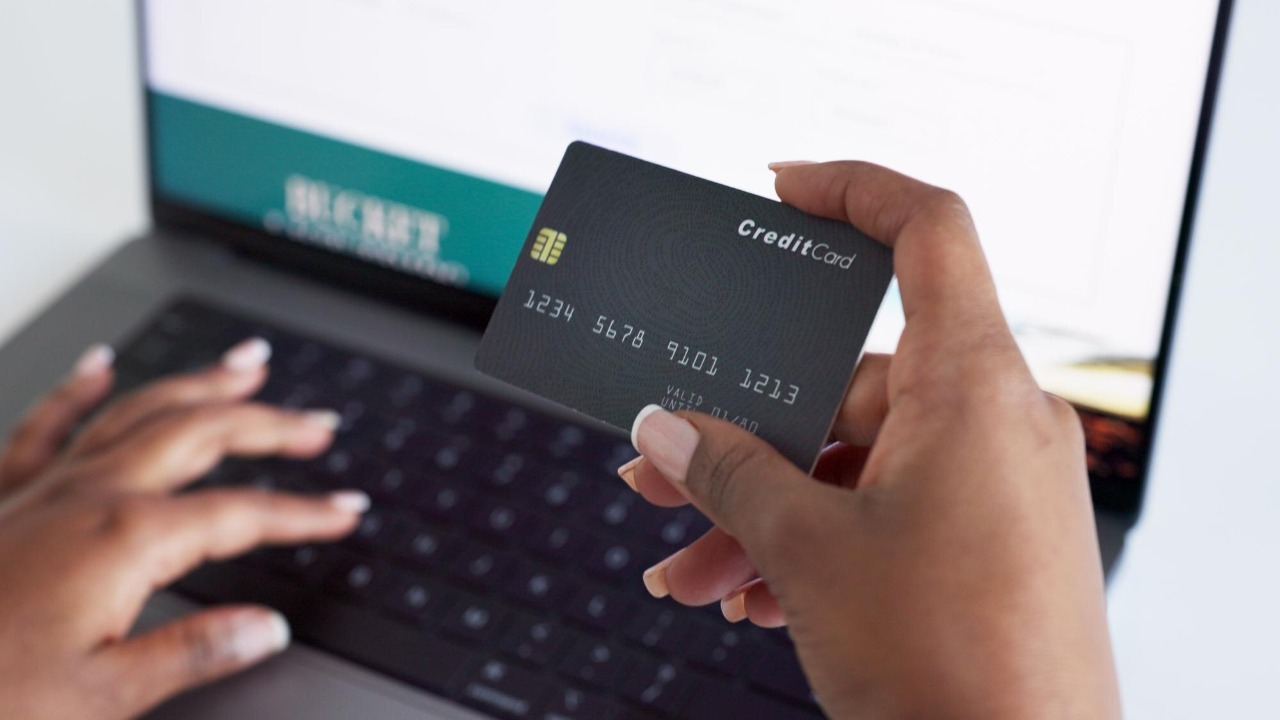
Once a credit card swipe crosses the $5,000 mark, the transaction stops being routine and starts triggering a series of behind-the-scenes checks, score calculations, and banking rules that most people never see. The charge itself might feel like just another tap at the terminal, but on the back end it can affect everything from your credit utilization to how your bank treats your cash and even whether your card is briefly frozen. I want to walk through what really happens after that big swipe so you can use it strategically instead of getting blindsided.
When a $5,000 swipe flips your credit utilization
The first shock of a $5,000 purchase is not the receipt, it is the way your balance suddenly dominates your available credit. If you had a $10,000 limit and were carrying a modest $4,500 balance, a new $5,000 charge would push Your total to $9,500, leaving almost no room on the card and instantly spiking your utilization ratio. That ratio, the share of your available credit you are actually using, is a core ingredient in most scoring formulas, and when it jumps, your score can dip even if you never miss a payment.
Staying under 30 percent of your limit is the typical guideline for avoiding credit score damage, so a single large charge that pushes you close to the ceiling can temporarily drag your profile down even if you pay on time. In practical terms, that means a big swipe right before applying for a mortgage, a car loan, or a new rewards card can make you look riskier than you really are. Reporting on large card balances notes that when Your balance jumps to $9,500 on a $10,000 line, your credit score might take a dip temporarily, especially if you ignore the usual advice about staying under 30%.
How card issuers react when your spending pattern suddenly changes
From the issuer’s perspective, a sudden $5,000 charge is not just a big number, it is a potential fraud signal. If your typical month is a mix of groceries, gas, and streaming subscriptions, then a single luxury travel package or high-end appliance order can look like someone else grabbed your card. When that happens, the bank’s fraud systems often flag the transaction for extra review, and I have seen cards temporarily declined or locked until the cardholder confirms that the purchase is legitimate.
That extra scrutiny is not personal, it is algorithmic. The systems are designed to notice when Your spending jumps far outside your normal pattern and then either send a text, trigger a push notification in the app, or require a quick phone call before the transaction clears. Coverage of large card charges explains that When you suddenly spend way outside your usual range, your card issuer may double-check the transaction or even place a brief hold, which is why it helps to warn the bank before a major purchase or international trip using the tools described in fraud monitoring guidance.
Why a giant charge can be smart, and when it is a trap
Used carefully, a $5,000 swipe can actually work in your favor. If you are buying a used car, replacing a dead HVAC system, or booking a once-in-a-decade family trip, putting the expense on a rewards card can earn a large sign-up bonus, extend purchase protections, and consolidate the cost into a single, trackable bill. Some issuers even offer 0 percent promotional periods that let you spread out the hit without interest, which can be far cheaper than a personal loan or dealer financing if you have a clear payoff plan.
The trap comes when the big purchase is not backed by a realistic repayment schedule. If you only make the minimum payment on a $5,000 balance, interest can quietly turn a one-time splurge into a multi-year drag on your budget. Guidance on large card use stresses that Your card issuer may double-check the transaction and that there are things worth knowing before you put a giant charge on your card, including how interest compounds and what happens if the bank later reverses a payment or a check bounces tied to that balance.
Why credit cards are usually the best tool for big-ticket buys
Despite the risks, I still see credit cards as the safest default for most large purchases, as long as you treat them like a short-term loan instead of free money. Compared with debit cards or cash, credit cards typically offer stronger fraud protections, clearer dispute rights, and built-in benefits like extended warranties and trip insurance. If a contractor disappears, a travel company collapses, or a retailer ships the wrong item, it is far easier to contest the charge on a credit line than to claw back money from a drained checking account.
There is also a structural reason cards are favored for big transactions. Reporting on card economics notes that Credit cards are usually the best payment method for large purchases, even as regulators consider rules that could make them cheaper but also more limited. That same coverage points out that when you are weighing a giant charge on Your Credit Card, especially one above $5,000, you need to understand both the protections and the constraints that come with that line of credit, which is why analysis of how cards could get cheaper but more restricted around $5,000 purchases matters for anyone planning a big swipe.
What banks quietly do with cash deposits above $5,000
The $5,000 threshold does not just matter on the spending side. When you move that much money into your account in cash, the bank’s internal rules and regulatory obligations start to tighten. Cash is treated differently from electronic transfers or checks, and once a deposit crosses certain levels, it can trigger additional verification, reporting, or even temporary holds that keep you from accessing the full amount right away.
Behind the scenes, banks are balancing anti-fraud and anti-money-laundering requirements with customer convenience, which is why a $4,900 cash deposit might clear faster than one just over $5,000. Coverage of deposit practices explains that Cash gets treated differently behind the scenes and that deposits above $5,000 can face stricter rules, including potential delays and extra documentation, which is why it helps to understand why deposits above $5,000 get more attention than smaller amounts.
Why your debit card is the wrong choice in the riskiest places
When a purchase is big enough to hurt if something goes wrong, I avoid using a debit card altogether. Debit pulls money straight from your checking account, so if a merchant double charges you, a fraudster skims your number, or a dispute drags on, you are fighting to get your own cash back instead of arguing over a line of credit. That difference matters even more when the transaction is large enough to wipe out your cushion for rent, utilities, or payroll.
Guidance on card safety highlights several situations where you should never swipe your debit card, including high-risk online retailers, gas pumps with a history of skimmers, and recurring bills that might keep charging after you cancel. One of the biggest traps is Making only the minimum payments on a credit balance while assuming debit is safer because there is no interest, when in reality the urgency to pay down a card bill until it hits zero can be a healthy discipline. Advice on where not to use debit underscores that When you rely on debit in the wrong places, you expose your core cash flow to unnecessary risk, which is why experts flag at least 5 places you should never swipe that card for large or sensitive transactions.
How a big charge ripples through your credit score
Beyond utilization, a $5,000 swipe can interact with other parts of your credit profile in ways that are easy to overlook. If the charge lands on a relatively new card, it can magnify the impact of that new account on your average age of credit. If it pushes you to open another card to juggle balances, it can add hard inquiries and shorten your history further. All of that can matter if you are on the edge of a key score threshold that lenders use to set rates.
Scoring models also watch how quickly you bring a large balance back down. Paying aggressively over the next few statements can help your score recover, while letting the debt linger can keep your utilization elevated and your profile weaker. Reporting on large purchases notes that Credit utilization is a major factor and that another key element is how consistently you pay on time, with a big balance potentially dragging on your credit score, at least temporarily, if you do not manage it carefully. That is why guidance on credit score impact urges cardholders to plan their payoff strategy before they ever swipe for a large amount.
Why timing your $5,000 swipe around statement dates matters
One of the most overlooked levers you have is timing. Your issuer typically reports your balance to the credit bureaus around your statement closing date, not your payment due date. If you make a $5,000 purchase right before the statement cuts and do not pay it down until after, the bureaus may see the full amount and treat you as highly leveraged, even if you clear the balance a week later.
By contrast, if you can schedule the purchase just after a statement closes, then pay a large chunk before the next one, you may keep the reported balance much lower. That can be the difference between appearing maxed out and looking comfortably within that 30 percent guideline. Coverage of large card spending points out that Your balance can jump dramatically with a single transaction and that your credit score might take a dip temporarily, which is why some experts suggest timing big swipes and payments around statement cycles, as illustrated in analyses of what happens when you spend more than $5,000 on your credit card.
Using 0% APR windows to keep a huge purchase from haunting you
If you know a $5,000 expense is coming and you cannot pay it off in a single month, a 0 percent promotional offer can be the difference between a manageable plan and a debt spiral. Many issuers extend introductory periods where new purchases accrue no interest for a set number of months, as long as you make at least the minimum payment and clear the balance before the promotion ends. Used correctly, that window lets you divide the cost into predictable installments without paying finance charges.
The key is to treat the promo like a fixed-term loan, not a license to keep spending. Set a monthly target that will bring the balance to zero before the clock runs out, and avoid adding new charges that you cannot also pay off. Reporting on large card purchases notes that some offers can give you up to 21 months of breathing room on big purchases and that if you want that kind of buffer, you should look at today’s top 0 percent intro APR cards, since a long no-interest window makes big purchases way easier to handle when you plan ahead, as detailed in guidance on 0% intro APR strategies.
More From TheDailyOverview
- Tennessee loses $2.6B megafactory and faces major layoffs
- Retired But Want To Work? Try These 18 Jobs for Seniors That Pay Weekly
- What to do with your pennies after the U.S. stops minting them
- Home Depot CEO warns of a troubling customer trend in stores

Cole Whitaker focuses on the fundamentals of money management, helping readers make smarter decisions around income, spending, saving, and long-term financial stability. His writing emphasizes clarity, discipline, and practical systems that work in real life. At The Daily Overview, Cole breaks down personal finance topics into straightforward guidance readers can apply immediately.
