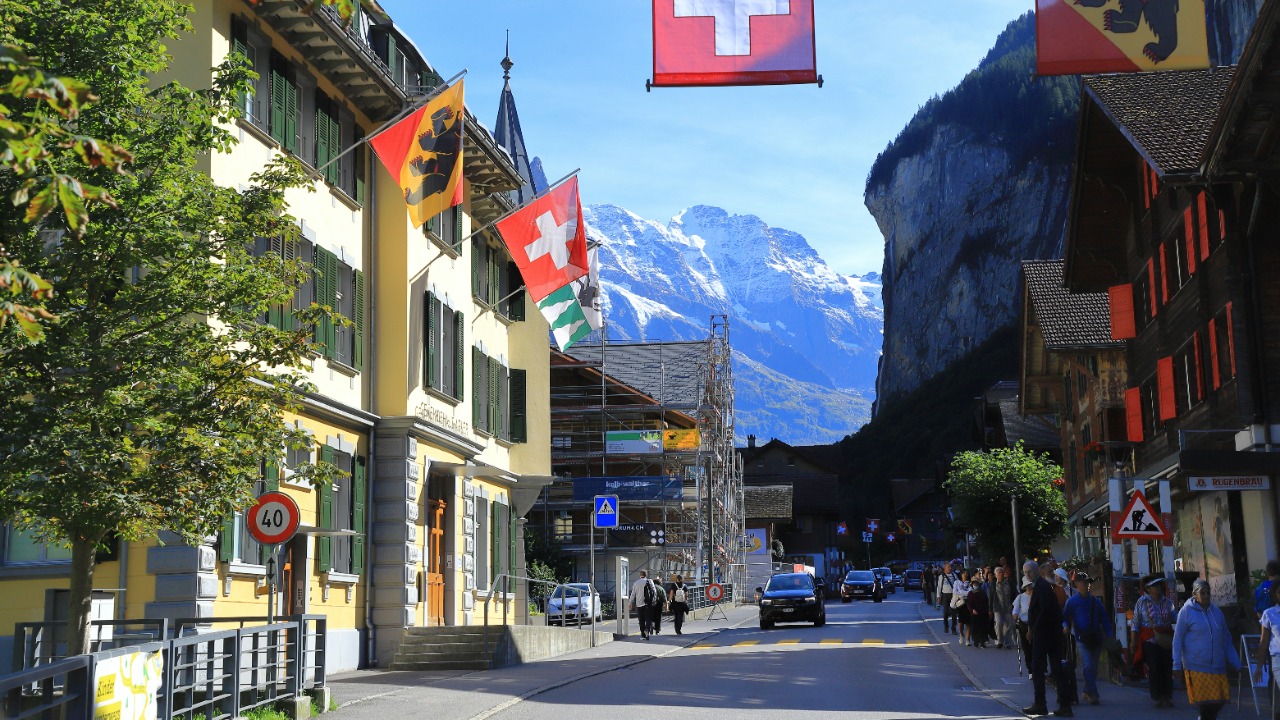
Swiss voters are heading toward a landmark decision on whether to impose a 50% inheritance tax on the country’s richest estates, yet the political and polling signals now point clearly toward rejection. The debate has exposed deep tensions between climate funding, tax justice and the country’s long tradition of low levies on wealth, even as the proposal itself appears destined to fall short at the ballot box.
As the vote approaches, the campaign has become a stress test for how far a nation built on banking secrecy and billionaire-friendly policies is willing to go in the name of redistribution. I see the looming defeat of the measure less as a simple “no” to higher taxes and more as a revealing snapshot of how Switzerland balances its global role as a wealth hub with mounting domestic pressure to tackle inequality and the climate crisis.
The radical proposal on the table
At the heart of the referendum is a plan to levy a 50% tax on inheritances above the very top of the wealth pyramid, a move explicitly framed as targeting billionaires and centimillionaires rather than ordinary families. The initiative’s architects want half of every qualifying bequest above a high threshold to be diverted from private heirs into public coffers, a dramatic shift in a country where fortunes have traditionally passed between generations with relatively light interference from the state. The measure is designed to apply only to the ultra-rich, with the aim of leaving typical family inheritances untouched while still raising substantial revenue.
Supporters have tied the proposal directly to climate policy, arguing that the proceeds should be earmarked for environmental projects and the broader energy transition. Reporting on the campaign notes that the plan envisages a 50% tax on inheritances in excess of $62 million, with advocates saying this could eventually tap into an estimated stock of about 500 billion francs in large fortunes. Earlier coverage of the vote explains that Swiss citizens are being asked whether to place a 50% inheritance tax on bequests and inheritances of the ultra-rich, with the ballot framed as a way to help fight the climate crisis and to test how far the public appetite for redistribution really goes.
Why polls say voters will say no
Despite the bold framing, the numbers suggest the initiative is heading for defeat. A series of surveys has consistently shown that a clear majority of respondents oppose the 50% levy, even when it is described as hitting only the wealthiest households. One early snapshot in mid autumn already indicated that the proposal lacked momentum, with national polling pointing to a solid bloc of “no” voters and only a minority backing the tax. That early chill in public opinion has since hardened into a broad expectation that the measure will fail.
Later research has reinforced that picture. A widely cited poll reported that Three quarters of Swiss voters are expected to reject the inheritance tax on the super rich, a finding highlighted in coverage under the headline Swiss Set to Reject Inheritance Tax on Super Rich, Poll Shows. Another survey, published on Nov 19, 2025, echoed that result, again stressing that Three quarters of Swiss voters were expected to say no to the proposal. Earlier, on Oct 15, 2025, a separate poll described how Swiss voters were likely to reject the proposed tax of 50% on super rich estates, with the research underlining that resistance cut across regions and party lines and that the 50% rate itself was a particular sticking point for many respondents.
How the campaign became a climate fight
What makes this referendum stand out is not only its focus on the ultra-rich but also its explicit link to climate finance. The Youth activists behind the initiative have argued that a 50% tax on inheritances above $62 m is a fair way to tap into accumulated wealth to fund emissions cuts and adaptation, rather than loading the costs onto workers and consumers. In their telling, the climate crisis is precisely the kind of long term collective challenge that justifies drawing on large, largely passive fortunes, especially when those fortunes are often invested in carbon intensive sectors.
Coverage of the campaign explains that the Plan envisages a 50% tax on inheritances in excess of $62 million, with the Youth instigators saying the funds should go to tackling climate change and to easing the burden on lower and middle income taxpayers. Another report notes that This Sunday, 30 November, Swiss voters will decide whether to place a 50% inheritance tax on bequests and inheritances of the ultra-rich, with proponents arguing that the revenue could help fight the climate crisis and support a fairer transition away from fossil fuels. Economists quoted in that reporting stress that similar wealth taxes in other countries have often run into administrative and political hurdles, but they also acknowledge that a targeted levy on very large estates could, in theory, raise meaningful sums for green investment.
Switzerland’s long courtship of the ultra-wealthy
To understand why such a dramatic tax faces an uphill battle, it helps to remember how central wealthy residents have been to the country’s economic model. For decades, Switzerland has cultivated a reputation as a stable, low tax haven for global fortunes, combining political neutrality with strong property rights and a discreet financial sector. That strategy has drawn in billionaires from across Europe, Asia and the Middle East, many of whom have set up family offices, foundations and holding companies in Swiss cantons that compete aggressively on tax rates.
Recent reporting describes how Switzerland has long welcomed the ultra wealthy, noting that a referendum on a new tax has riled them up and sparked warnings about capital flight. One overview of the country’s position in the global wealth landscape points out that Switzerland remains a leading hub for private banking and cross border asset management, even after international pressure forced it to relax some aspects of banking secrecy. Another piece, published on Nov 28, 2025, underlines that Switzerland, long a haven for the ultra wealthy, is now confronting a backlash from some of those same residents as they mobilize against the inheritance tax proposal and warn that it could undermine the country’s hard won status as a safe home for global capital.
Government resistance and elite pushback
The political establishment has not been neutral in this fight. Earlier in the process, the federal government signaled its discomfort with the idea of sharply higher inheritance taxes on the richest households, arguing that such a move could damage competitiveness and prompt wealthy families to relocate. On Dec 13, 2024, Switzerland’s government formally rejected a proposal to jack up inheritance taxes on the super rich, a decision that significantly reduced the chances of any similar measure passing in a national vote. Officials warned that the country’s attractiveness as a business and wealth hub could suffer if the tax environment became too unpredictable or punitive.
That skepticism has been echoed, and amplified, by advisers to the wealthy and by business leaders. In reporting on the referendum, one wealth consultant described the initiative as a potential “Disaster for Switzerland,” warning that some bigger family companies would have a big issue if the 50% levy were introduced and might consider moving their operations or ownership structures abroad. The same coverage notes that the inheritance tax referendum has spooked the Swiss super-rich, with some already exploring contingency plans and others lobbying intensively against the measure. Earlier, when Switzerland’s government rejected the proposed super-rich inheritance tax, it was responding to concerns that wealthy residents would relocate if it was introduced, a fear that continues to shape the broader debate.
What the polls reveal about Swiss attitudes to redistribution
Beyond the immediate outcome, the polling around this vote offers a window into how Swiss society thinks about wealth and fairness. Surveys conducted in Oct showed that while many respondents agreed in principle that the ultra-rich should contribute more, they balked at the idea of a 50% rate on inheritances, seeing it as too blunt and potentially damaging. One poll, highlighted on Oct 15, 2025, found that Swiss voters were likely to reject the proposed tax of 50% on super rich estates, with the research methods explicitly described as a poll of national opinion that captured both urban and rural skepticism.
Later, on Nov 18, 2025, another Poll reported that Three quarters of voters were expected to oppose the measure, reinforcing the sense that the initiative had failed to convince a broad cross section of the electorate. A separate analysis on Oct 14, 2025, summarized by Takeaways by Bloomberg AI, similarly concluded that Swiss voters looked set to reject a new inheritance tax targeted at the super rich after the polling showed limited support. Together, these findings suggest that while there is some appetite for redistribution, especially when framed around climate goals, many Swiss remain wary of policies they perceive as threatening the country’s economic stability or its tradition of cantonal tax autonomy.
The cantonal puzzle and fears of capital flight
One of the most sensitive aspects of the proposal is how it interacts with Switzerland’s complex federal structure. Taxation is not only a federal matter but also a key lever of cantonal autonomy, with regions competing to attract residents and businesses through tailored regimes. Critics of the inheritance initiative argue that a nationwide 50% levy on very large estates would override local flexibility and undermine the delicate balance that has allowed cantons to differentiate themselves. For them, the measure is not just about fairness but about centralization and the risk of eroding a core pillar of Swiss governance.
Analysts quoted in coverage of the campaign stress that cantonal tax autonomy is a major reason why wealthy individuals choose to settle in specific regions, from Zug to Schwyz, and that any federal move to standardize or sharply increase taxes could prompt some to leave. One report notes that Isabel Martínez has pointed out how similar wealth taxes in other countries have often led to relocation by the richest households, and that, given Switzerland’s reliance on mobile capital, the risk of capital flight is taken very seriously. In the same piece, she explains that cantonal tax autonomy is central to the current system, and that layering a 50% inheritance tax on top of existing levies could be seen as a breach of that unwritten contract between the state and its wealthiest residents.
Democracy in action: a crowded ballot and civic duty
The inheritance tax vote is unfolding within a broader exercise in direct democracy that touches on the very nature of civic responsibility. On the same Sunday that voters decide on the 50% levy for the ultra-rich, they are also being asked whether to replace men’s current military service requirement with a compulsory civic duty for all. The proposal would extend obligations beyond conscription to include other forms of national service, with supporters arguing that this would strengthen social cohesion and modernize an institution that has long been central to Swiss identity.
Reporting ahead of the ballot notes that The Swiss will vote Sunday on replacing men’s current military service requirement with a compulsory civic duty for all, with backers saying the change would strengthen the social cohesion that underpins the country’s political model. The fact that such a fundamental question about civic duty is being decided alongside a high stakes tax referendum underscores how Swiss democracy routinely asks citizens to weigh in on both symbolic and highly technical issues. It also highlights how the same electorate that is skeptical of a 50% inheritance tax on the super rich is simultaneously being asked to consider expanding obligations on ordinary citizens, a juxtaposition that may shape how some voters think about fairness and shared sacrifice.
What a “no” vote would mean for Switzerland’s future
If, as the polls suggest, the inheritance tax initiative is rejected, the immediate effect will be to reassure wealthy residents and the financial industry that the country is not about to embark on a radical experiment in redistribution. A clear “no” would likely be read as an endorsement of the existing balance between low taxes, cantonal autonomy and gradual reform, rather than a mandate for sweeping change. It would also spare policymakers from having to design and implement a complex new system for valuing and taxing very large estates, a task that has proved politically fraught in other jurisdictions.
Yet a defeat would not make the underlying questions disappear. The Youth activists who pushed the Plan for a 50% tax on inheritances above $62 m have already succeeded in forcing a national conversation about inequality, climate finance and the responsibilities of the ultra-rich. Coverage of the broader debate notes that Switzerland has long welcomed the ultra wealthy, but that a referendum on a new tax has riled them up and exposed tensions that are unlikely to fade. Another report, titled Swiss Set To Reject Inheritance Tax On Super Rich, Poll Shows, emphasizes that even as Three quarters of Swiss voters are expected to reject the measure, the campaign has highlighted growing concern about how to fund climate action and social priorities in a country where vast fortunes are set to change hands in the coming decades. In that sense, a “no” on this particular 50% levy may mark not the end of the story, but the beginning of a longer, more incremental search for ways to make the tax system reflect shifting public expectations.
More From TheDailyOverview
- Dave Ramsey warns to stop 401(k) contributions
- 11 night jobs you can do from home (not exciting but steady)
- Small U.S. cities ready to boom next
- 19 things boomers should never sell no matter what

Julian Harrow specializes in taxation, IRS rules, and compliance strategy. His work helps readers navigate complex tax codes, deadlines, and reporting requirements while identifying opportunities for efficiency and risk reduction. At The Daily Overview, Julian breaks down tax-related topics with precision and clarity, making a traditionally dense subject easier to understand.

