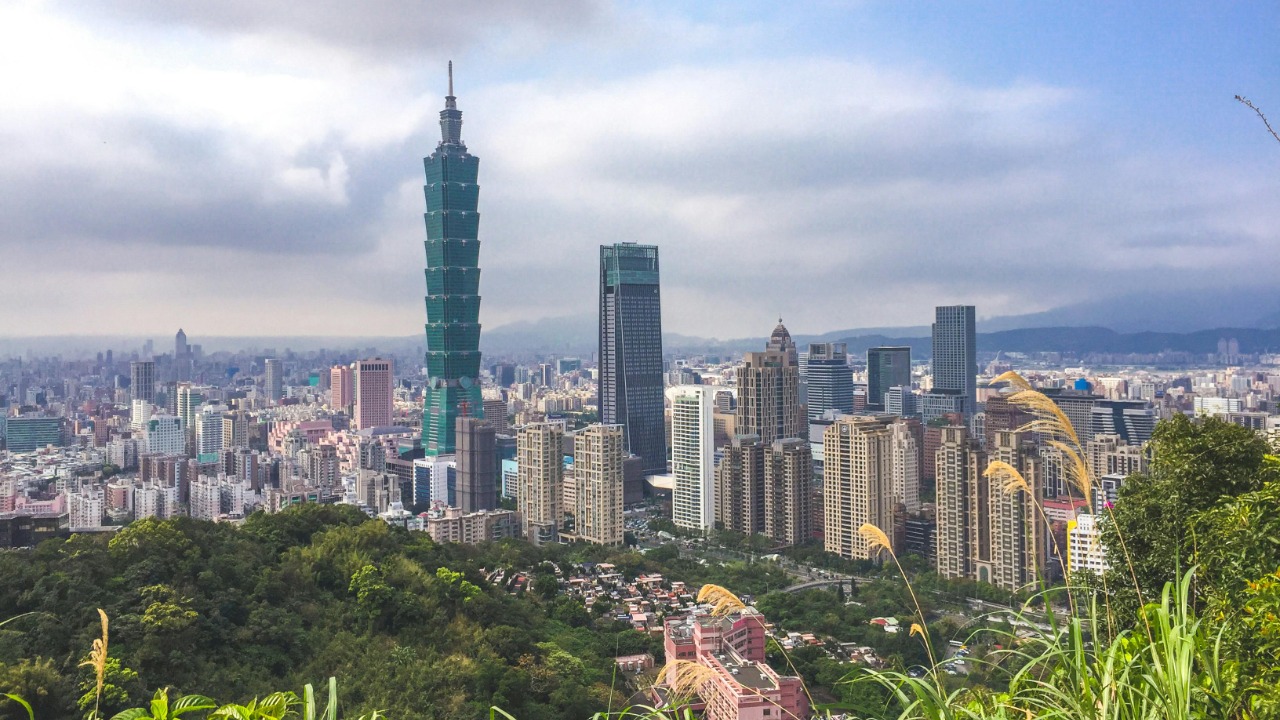
Taiwan’s government has flatly refused to reopen the terms of its recently signed trade agreement with the United States after a Supreme Court ruling limited presidential tariff authority. Vice Premier Cheng Li-chiun told reporters that preferential tariff treatment for Taiwan’s exports, set at 15 percent under the arrangement with Washington, will not change. The comments underscore Taipei’s push to keep the 2026 pact intact as U.S. officials weigh how to manage trade policy under the court’s decision.
What the Agreement on Reciprocal Trade Contains
The Agreement on Reciprocal Trade, signed on February 13, 2026, is formally structured between the Taipei Economic and Cultural Representative Office in the United States and the American Institute in Taiwan, the unofficial channels through which the two sides conduct diplomacy. On the U.S. side, USTR officials emphasized that the arrangement fits within Washington’s broader Indo-Pacific economic strategy. The deal establishes a governance framework with Designated Representatives from the Office of the United States Trade Representative and Taiwan’s Office of Trade Negotiations, giving both sides a standing mechanism to manage disputes and implementation.
The substance of the pact goes well beyond tariffs. According to the treaty text released by Taipei, the ART includes tariff and quota commitments alongside non-tariff barrier provisions covering autos, medical devices, and pharmaceuticals, and it references World Trade Organization standards as a baseline. Taiwan agreed to accept U.S. Federal Motor Vehicle Safety Standards for automobiles and to recognize FDA marketing authorizations for U.S.-manufactured medical devices and pharmaceuticals, according to a fact sheet from the Office of the U.S. Trade Representative. Those non-tariff provisions represent real commercial openings for American exporters in sectors where regulatory barriers have long limited sales and have been politically sensitive within Taiwan’s domestic regulatory agencies.
Taiwan’s 99 Percent Tariff Reduction Pledge
The headline number in the deal is Taiwan’s commitment to eliminate or reduce 99 percent of tariffs on U.S. industrial and agricultural exports. That figure, drawn from USTR’s own breakdown, covers a wide range of goods, from automobiles and heavy equipment to food products including ketchup and peanuts, with many cuts front-loaded into the first years of implementation. In exchange, Taiwan secured preferential access for its own exports to the United States, with tariffs on Taiwanese goods lowered to 15 percent under two separate deals that together anchor the broader economic package.
The agreement is also linked to a separate investment memorandum of understanding that Taipei has said it plans to submit alongside the ART for legislative review. The linkage between the trade deal and the investment MOU means the two cannot easily be separated: renegotiating tariff terms would risk unraveling the energy and chip commitments that both sides built into the broader package. Taiwan’s Executive Yuan has confirmed that the government plans to submit both the ART and the MOU to the Legislative Yuan for formal ratification under Taiwan’s treaty procedures, underscoring its intention to lock the concessions and benefits into domestic law.
The Supreme Court Ruling That Changed the Calculus
The legal trigger for Taiwan’s public insistence on deal stability was a Supreme Court decision that curtailed presidential authority under the International Emergency Economic Powers Act. The ruling struck at the statutory foundation the administration had used to impose tariffs unilaterally, creating immediate uncertainty about whether existing trade deals could be modified or new duties imposed through executive action alone. In response, Ambassador Greer issued a statement stressing that existing commitments under trade agreements “will remain in effect,” and that the administration would rely on alternative legal authorities going forward.
U.S. officials have indicated they will look to other legal authorities for trade actions going forward. The shift matters because some U.S. trade authorities can be used to target specific countries or sectors over alleged unfair practices; in a worst-case scenario, that could increase pressure on sensitive industries tied to the broader U.S.-Taiwan economic relationship. The administration’s public posture is continuity, but the legal ground beneath that posture has narrowed, and Taiwan’s leaders clearly noticed the distinction between honoring signed agreements and using remaining authorities to seek leverage around their edges.
Taipei’s Firm Public Stance
Vice Premier Cheng Li-chiun used a press conference to deliver Taiwan’s position directly. She stated that preferential tariff treatment for Taiwan’s exports would not change, a message aimed at both domestic audiences and Washington policy-makers. The timing was deliberate: by speaking publicly before any formal U.S. request to revisit terms, Taiwan’s government sought to establish that the ART is a settled commitment, not a starting point for further negotiation, and to signal to its own firms that the legal environment for their U.S.-bound exports remains predictable.
That approach carries risk. Taiwan has limited formal diplomatic leverage given its unusual international status, and the ART itself operates through unofficial representative offices rather than embassy-to-embassy channels. But Taipei’s calculation appears to be that the deal’s value to the United States, particularly the chip investment and energy purchase commitments, gives it enough weight to resist pressure. Walking back the 15 percent preferential tariff rate or reopening non-tariff provisions on autos and pharmaceuticals would require Taiwan to accept worse terms on products it already consumes in large volumes, a hard sell for any government facing its own legislature and a public wary of higher import costs.
Chip Investment as Taiwan’s Bargaining Shield
The semiconductor dimension of the deal gives Taiwan its strongest card. The ART was designed in part to secure manufacturing investment commitments, linking Taiwan’s willingness to open its markets to continued access to advanced chipmaking capacity and to new fabs on U.S. soil. That linkage is strategic: the United States needs Taiwanese chipmakers to expand production in America to support its own industrial policy, and Taiwan needs stable, predictable trade terms to justify the capital expenditure those expansions require.
If the U.S. were to push for renegotiation, Taiwan could credibly signal that chip investment timelines and LNG purchase volumes would slow or stall. The January 15 MOU, which preceded the ART by roughly a month, established the quantified purchase figures for energy and the investment framework for semiconductors, effectively weaving security-of-supply concerns into a commercial package. Pulling one thread risks unraveling the other. That structural interdependence is precisely what Taiwan’s negotiators built into the deal, and it is now the main reason Taipei feels confident enough to say no in public even as legal uncertainty rises in Washington.
What Section 301 Could Mean for the Deal
The most consequential risk for Taiwan is not that the ART will be formally reopened but that the administration will use its remaining trade tools to apply indirect pressure. Section 301 investigations allow the USTR to probe whether a trading partner’s practices are unfair, and the semiconductor sector is a politically sensitive area that could draw scrutiny if bilateral friction grows. A Section 301 probe would not technically violate the ART, but it would signal that Washington views the deal as insufficient and wants more concessions, potentially in areas like intellectual property, data localization, or outbound investment screening.
Taiwan’s government has not publicly addressed this scenario, but the logic of its position suggests it would treat any such investigation as a breach of the deal’s spirit. The ART references WTO standards and includes its own dispute governance structure, which means Taiwan could argue that unilateral probes outside the agreement’s framework violate the terms both sides accepted. Whether that argument would carry weight in Washington is another question. For now, Taipei appears to be betting that the political cost of targeting a key security partner’s chip industry would deter aggressive use of Section 301, especially while U.S. agencies are still digesting the Supreme Court’s limits on their IEEPA-based authorities.
Domestic Politics on Both Sides
Behind the legal and economic arguments lie domestic political calculations in Taipei and Washington. In Taiwan, the Executive Yuan must convince lawmakers that the package of tariff cuts and regulatory changes delivers net benefits for workers and consumers. The government has framed the ART as part of a long trajectory of economic opening and reform, pointing to the broader policy continuity visible across official cabinet communications. Legislators will scrutinize sectoral impacts closely, particularly in agriculture and autos, where foreign competition is most visible and politically sensitive.
Washington faces its own constraints. The administration has to reassure Congress that the Supreme Court’s curbs on IEEPA will not leave the United States unable to respond to trade shocks or perceived unfair practices. By emphasizing that trade agreements remain in force while highlighting remaining tools like Section 301, U.S. officials are trying to walk a line between legal compliance and political toughness. Any move to reopen the Taiwan deal would immediately be read by other partners as a sign that U.S. commitments are contingent on domestic court battles, a perception the administration is keen to avoid as it negotiates and implements other regional economic frameworks.
Historical Context and Strategic Stakes
Taiwan’s insistence on stability reflects not only present-day bargaining but also its institutional memory of trade diplomacy. The island’s leadership has repeatedly used economic agreements to reinforce its de facto sovereignty, a pattern visible in the evolution of its governance structures documented in official historical records. Each major trade pact that survives political shocks abroad strengthens the argument in Taipei that careful legal design can insulate the economy from external volatility, even when formal diplomatic recognition is lacking.
For the United States, the ART sits at the junction of economic security and geopolitical competition. The deal’s tariff cuts and regulatory alignments are commercially significant, but the embedded chip and energy commitments are what give it strategic weight. If the agreement holds despite the Supreme Court ruling, it will serve as a case study in how Washington can reassure partners that U.S. trade policy is durable even as courts pare back executive power. If pressure tactics escalate, however, Taiwan’s refusal to reopen terms could become an early test of how far America’s closest economic partners are willing to go to protect their own legal and political red lines in an era of contested trade authority.
More From The Daily Overview
*This article was researched with the help of AI, with human editors creating the final content.

Grant Mercer covers market dynamics, business trends, and the economic forces driving growth across industries. His analysis connects macro movements with real-world implications for investors, entrepreneurs, and professionals. Through his work at The Daily Overview, Grant helps readers understand how markets function and where opportunities may emerge.

