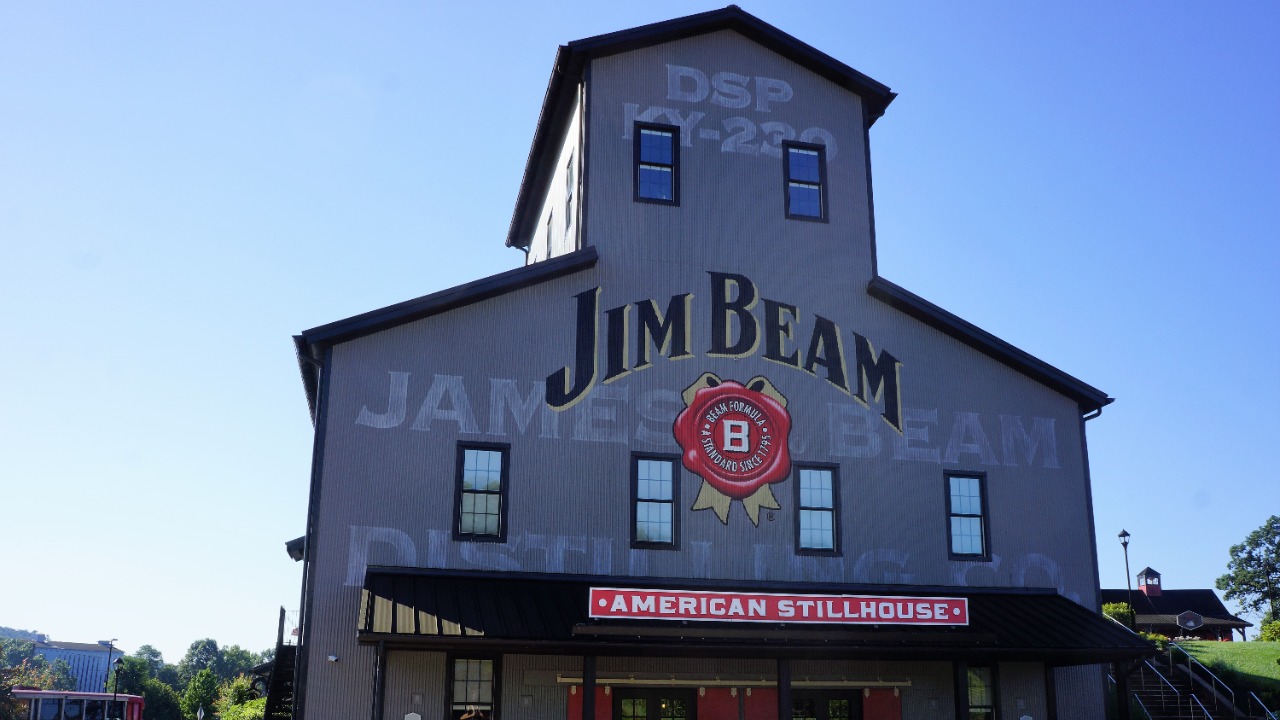
Tariffs that were once sold as leverage in a global trade fight are now colliding with the realities of a $9 billion Kentucky bourbon economy, and Jim Beam is squarely in the blast zone. The company is pausing production at a flagship distillery, rattling Nearly 1,500 jobs tied to the operation and exposing how a policy tool aimed at rivals like China is battering one of America’s most iconic exports. What looks on paper like a temporary shutdown is, on the ground, a stress test for workers, small towns and a supply chain built on long aging cycles and steady foreign demand.
Jim Beam’s parent, Suntory Global Spirits, is framing the move as a sober assessment of oversupply and shifting markets, not a retreat. Yet when a cornerstone producer in Kentucky Bourbon slows its stills, the shockwaves run through farmers, truckers, warehouse crews and the tourism businesses that have grown up around the bourbon trail. The tariff war has turned a once-booming industry into a case study in how quickly global politics can upend local prosperity.
The pause at Clermont and a community on edge
Jim Beam is halting bourbon production at its main Clermont campus in Kentucky for roughly a year, a decision that instantly turned a quiet stretch of central Kentucky into a national economic story. The World famous Kentucky whiskey brand is shutting down the distilling side of the Clermont facility starting Jan. 1, while its Booker Noe distillery in Boston, Kentucky, will keep running to supply some of the company’s needs, a split that underscores how targeted the slowdown is within the broader $9 billion bourbon ecosystem. The company has told local officials that bottling, warehousing and the visitor center at Clermont will remain open, a partial lifeline for a region that has come to rely on bourbon tourism and steady plant work to anchor its tax base and small businesses.
Executives say the pause follows an internal assessment of production levels and demand, with Suntory Global Spirits trying to match aging inventory to a market that has softened under tariff pressure and weaker consumer spending. In a social media statement, the company, owned by Suntory Global Spirits, described the move as a way to “assess” how much whiskey it really needs in the pipeline, even as it pledged to support employees amid the market changes. Local leaders have seized on that nuance, pointing to the nearly 1500 jobs tied to this operation as proof that this is not an abstract corporate optimization exercise but a shock to “real workers, real jobs, real communities” whose livelihoods now hinge on how long the stills stay quiet.
Tariffs, oversupply and a $9 billion squeeze
The immediate trigger for Jim Beam’s production pause is a cocktail of tariffs, oversupply and softer demand that has built up over several years of trade brinkmanship. Retaliatory levies on American spirits in key export markets have raised prices for overseas buyers and slowed shipments of American bourbon, a trend that has hit brands like Jim Beam particularly hard because they invested heavily in export growth during the boom years. Industry groups say Overall exports of American spirits slumped after foreign governments responded to tariffs on China and other trading partners, turning what was once a reliable growth engine into a source of uncertainty just as new barrels from the expansion era were coming of age.
That timing problem is central to the current crunch. Distillers make production decisions years in advance, but tariffs and an affordability crisis at home have undercut demand just as those barrels are ready to bottle. According to CNN and the Kentucky Distillers’ Association, Trade policy has collided with a glut of aging stock and cautious consumer spending, leaving companies like Jim Beam paying taxes on full warehouses while struggling to move product at the pace they expected. Distillers are paying for that supply in Kentucky, where the state charges taxes on aging barrels of spirits, so every extra year a barrel sits unsold adds to the carrying cost and erodes margins that once looked bulletproof.
Jobs “reassigned,” but 1,500 livelihoods in limbo
Company officials and union leaders have worked hard to stress that Employees at the distillery are being reassigned within the company and that Jim Beam plans no layoffs, according to the local union chapter that represents the workers. The Jim Beam union says distillery employees will be moved into roles in bottling, warehousing and visitor operations through at least early 2026, a pledge that has bought the company some goodwill in a state where plant closures often mean immediate pink slips. Bottling, warehousing and the visitor center at the Clermont campus will remain open, and managers have told workers they will rotate shifts and duties to keep as many people on the payroll as possible while the stills are idle.
Yet even without formal layoffs, the anxiety is palpable in the surrounding towns, where Nearly 1500 jobs are tied to this operation when contractors, suppliers and service workers are counted. Local officials describe the shutdown as a body blow to a region that has marketed itself as a bourbon destination, with restaurants, hotels and tour operators built around the steady flow of visitors to Jim Beam’s Clermont campus and other nearby sites like the historic distillery grounds. Community advocates warn that even a temporary pause can ripple into reduced hours, delayed investments and a chill on new hiring, especially if the broader tariff fight drags on and companies remain cautious about ramping production back up.
Kentucky’s bourbon belt and the $9 billion question
The stakes extend far beyond one company campus. A new report estimates that the Bourbon industry has a $9 billion economic impact on Kentucky’s economy, with Kentucky Bourbon producers supporting thousands of jobs and annual salaries and benefits totaling $2.2 billion. That figure captures not just distilleries but also grain farmers, barrel makers, trucking firms and the hospitality sector that has flourished along the state’s bourbon trail, from small tasting rooms to large visitor centers like the one at Clermont. When a flagship brand like Jim Beam hits the brakes, it raises uncomfortable questions about how resilient that $9 billion engine really is in the face of global trade shocks.
Local officials in Kentucky say the sudden move by a famed Kentucky bourbon maker to close a distillery in 2026 is due to issues that lie deep in Kentucky’s $9 billion bourbon industry, not just a single plant’s misfortune. Right now, the industry is dealing with tariffs that have made exports less competitive, an oversupply of aging barrels and shifting consumer tastes that favor ready-to-drink cocktails and tequila as much as traditional straight bourbon. Communities that have invested heavily in bourbon tourism, from Clermont to other hubs like the central Kentucky visitor corridors, now find themselves asking whether the boom years encouraged overbuilding that will be hard to sustain if trade barriers remain in place.
Trade policy choices and what comes next
For all the focus on corporate strategy, the Jim Beam pause is ultimately a story about national trade policy choices landing on local doorsteps. President Donald Trump’s tariff strategy, including levies tied to disputes with China, triggered retaliatory measures that hit American spirits exports just as Kentucky distillers were scaling up. WATCH segments on How tariffs on China are making the holiday season less merry for shoppers have highlighted the consumer side of the equation, but the same dynamics are now squeezing producers who face higher costs, weaker foreign demand and a domestic market where households are cutting back on discretionary spending. Sources highlight factors such as tariff uncertainty, oversupply and demand pressures as a combined drag on the industry, turning what once looked like a one way growth story into a more volatile business.
Looking ahead, I see three levers that will determine whether this is a painful blip or the start of a deeper reset. First, any easing of trade tensions that reduces tariffs on American spirits would immediately improve the export outlook for brands like Jim Beam and other Kentucky producers tied to Suntory Global and similar conglomerates. Suntory Global Spirits plans to keep its visitors’ centers and other distilleries in central Kentucky operating, a sign that it still believes in the long term appeal of Kentucky bourbon even as it trims near term production. Second, domestic policy choices on issues like Kentucky’s tax on aging barrels will shape how costly it is for Distillers to ride out downturns with full warehouses. Third, the industry’s own willingness to diversify products and markets, from premium small batch releases to tourism experiences at places like Clermont, will decide how much cushion it has the next time global politics turn a local success story into collateral damage.
More From TheDailyOverview

Grant Mercer covers market dynamics, business trends, and the economic forces driving growth across industries. His analysis connects macro movements with real-world implications for investors, entrepreneurs, and professionals. Through his work at The Daily Overview, Grant helps readers understand how markets function and where opportunities may emerge.

