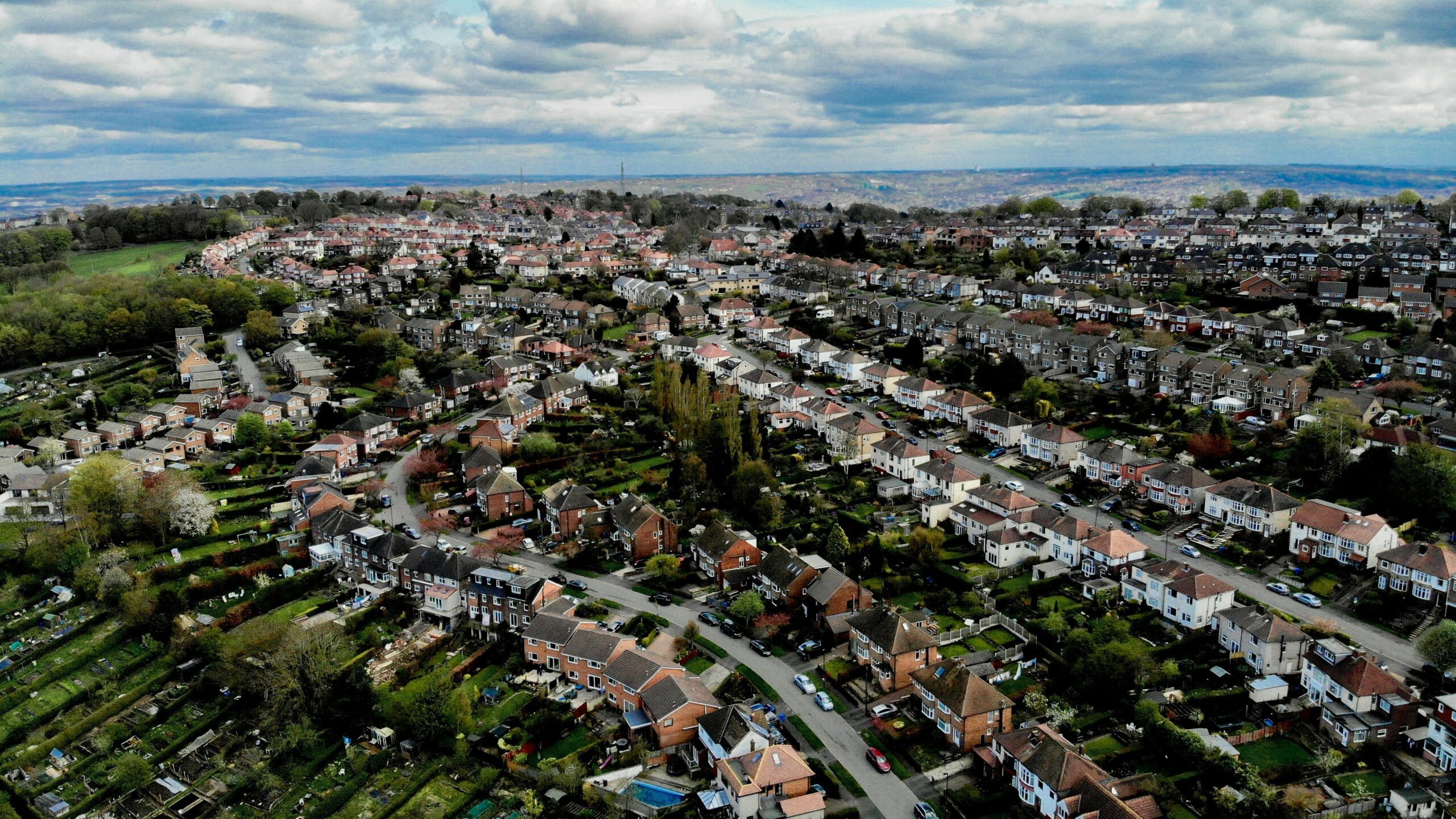
Baltimore, a city long burdened by some of the highest property tax rates in the United States, is now attempting something few major American cities dare: cutting those rates to stabilize a housing market under severe pressure. Mayor Brandon M. Scott announced a three-part property tax relief strategy on February 9, 2026, aiming to lower bills for residents and reverse years of tax-driven housing decline. The move stands in contrast to Chicago’s approach of closing budget gaps without new taxes but also without rate reductions, raising a question about which strategy better serves homeowners stuck in high-tax urban cores.
Baltimore’s Three-Part Tax Relief Plan
For years, Baltimore has carried a property tax rate roughly double that of surrounding Maryland counties, a gap that has driven families to the suburbs and discouraged new residential investment. Mayor Scott’s proposal directly targets that disparity. The three-part property tax relief strategy is designed to lower property taxes for residents and ease their property tax burden, according to the mayor’s office. The structure of the plan, while not yet detailed in full legislative text, signals that Baltimore’s leadership views rate reduction as essential to keeping the city competitive for homeownership.
What makes this approach unusual is its directness. Many cities facing fiscal pressure opt for targeted credits or exemptions layered on top of existing high rates, which can help individual households without changing the broader tax environment. Baltimore’s strategy, by contrast, appears to treat the rate itself as the core problem. If the city follows through, homeowners would see lower bills regardless of income level or age, a structural shift rather than a patchwork fix. That distinction matters for prospective buyers weighing Baltimore against lower-tax jurisdictions in the region.
Why Property Tax Rates Drive Housing Decisions
Property taxes are often the single largest recurring cost of homeownership after a mortgage payment. In cities where rates are significantly higher than nearby alternatives, the math pushes buyers outward. Baltimore has faced this dynamic for decades: a homeowner paying thousands more per year in taxes than a neighbor across the county line has a strong financial incentive to move. The result is a self-reinforcing cycle where population loss shrinks the tax base, which in turn pressures the city to keep rates high to maintain revenue. Mayor Scott’s proposal to ease their property tax burden represents an attempt to break that cycle at its source.
For potential homebuyers, the practical effect of a rate cut is straightforward: the same house becomes cheaper to own on a monthly basis. That shift can pull properties that were previously unaffordable back within reach, particularly for middle-income families who qualify for a mortgage but cannot absorb high ongoing tax costs. It also changes the investment calculus for developers considering new construction or rehabilitation of vacant properties, a persistent challenge in Baltimore. Lower holding costs make marginal projects more viable, which could increase housing supply over time.
Chicago’s Contrasting Fiscal Strategy
While Baltimore is betting on rate cuts, Chicago took a different path when Mayor Brandon Johnson presented his 2026 budget proposal to City Council in October 2025. That proposal closed the budget deficit without new taxes and directed resources toward vulnerable Chicagoans, a stabilization effort aimed at avoiding further fiscal pain for residents already stretched thin. The approach earned credit for fiscal discipline, but it left Chicago’s property tax rates unchanged, meaning homeowners there did not receive the kind of direct relief Baltimore is now pursuing.
The comparison is instructive because both cities face similar pressures: aging housing stock, population loss in certain neighborhoods, and a tax burden that weighs on working-class and middle-income residents most heavily. Chicago’s decision to hold the line on taxes without cutting them reflects a cautious posture, prioritizing budget balance over rate relief. Baltimore’s willingness to propose actual reductions suggests a different theory of the case, one that treats lower rates not as a luxury but as a necessary investment in the city’s long-term housing viability. Neither approach is risk-free, but they represent meaningfully different bets on what urban residents need most.
The Revenue Risk of Cutting Rates
Any honest assessment of Baltimore’s plan must confront the revenue question. Property taxes fund schools, police, fire departments, sanitation, and a long list of city services that residents depend on daily. Cutting rates without a clear plan to replace lost revenue could force painful reductions in those services, potentially undermining the very quality of life that the tax cuts are meant to protect. The mayor’s office has framed the strategy as a relief measure, but the fiscal mechanics of making it work without service cuts remain the central tension in the proposal.
Cities that have attempted similar reductions in the past have sometimes offset the lost revenue through growth: lower rates attract more residents and businesses, which expands the tax base and eventually recovers the revenue at the new, lower rate. That theory works in places where demand is latent and the tax rate is the primary barrier to entry. Baltimore, with its large inventory of vacant and abandoned properties, arguably fits that profile. But the timeline for growth-driven revenue recovery is uncertain, and the gap between cutting rates and seeing new tax base materialize can be years long. During that gap, the city would need to find other ways to balance its books or accept temporary service reductions.
What This Means for Baltimore Homeowners
For current Baltimore homeowners, the most immediate effect of the proposed cuts would be lower annual tax bills. That relief is not abstract. It translates directly into more disposable income each month, reduced risk of tax-sale foreclosure for those on fixed incomes, and improved equity positions for homeowners whose property values have been suppressed by the city’s high-tax reputation. Seniors and long-term residents who have watched their neighborhoods decline while their tax bills remained stubbornly high stand to benefit most visibly.
For prospective buyers, the signal is equally important. A city that is actively working to reduce its tax burden sends a message that it is serious about competing for residents. That message matters in a region where suburban alternatives are plentiful and often more affordable on a total-cost basis. If Baltimore can pair rate reductions with continued investment in public safety and infrastructure, the combination could shift the calculus for families who had previously written off city living. The risk, of course, is that cuts without sustained investment in services could produce the opposite effect, making the city cheaper on paper but less livable in practice.
Two Cities, Two Theories of Urban Recovery
The divergence between Baltimore and Chicago offers a real-time case study in how American cities are thinking about property taxes and housing. Chicago’s 2026 budget proposal reflects a belief that fiscal stability, achieved by closing deficits without new taxes, is the foundation on which housing recovery can eventually be built. It is a conservative strategy in the fiscal sense: hold the line, protect services, and avoid making the problem worse. Baltimore’s approach is more aggressive, treating the tax rate itself as a barrier that must be lowered before meaningful housing recovery can begin.
Neither city has a guaranteed path to success. Chicago’s approach avoids the revenue risk of rate cuts but does little to change the affordability equation for homeowners and buyers facing high annual tax obligations. Baltimore’s plan addresses affordability head-on but introduces fiscal uncertainty that could take years to resolve. The most likely outcome is that both strategies will produce mixed results, with success depending heavily on execution, economic conditions, and whether state and federal policy creates tailwinds or headwinds for urban housing investment.
What is clear is that the status quo has not worked for either city. Population loss, housing vacancy, and affordability pressure have persisted under existing tax structures. Baltimore’s willingness to propose rare property tax cuts represents a calculated gamble that the cost of inaction is higher than the risk of reduced revenue. Whether that gamble pays off will depend on whether lower rates can do what decades of high taxes have not: bring people back to the city and put vacant homes into productive use. The answer will matter far beyond Baltimore, because dozens of other high-tax cities are watching to see if cutting rates can actually rescue a struggling housing market.
More From The Daily Overview
*This article was researched with the help of AI, with human editors creating the final content.

Elias Broderick specializes in residential and commercial real estate, with a focus on market cycles, property fundamentals, and investment strategy. His writing translates complex housing and development trends into clear insights for both new and experienced investors. At The Daily Overview, Elias explores how real estate fits into long-term wealth planning.

