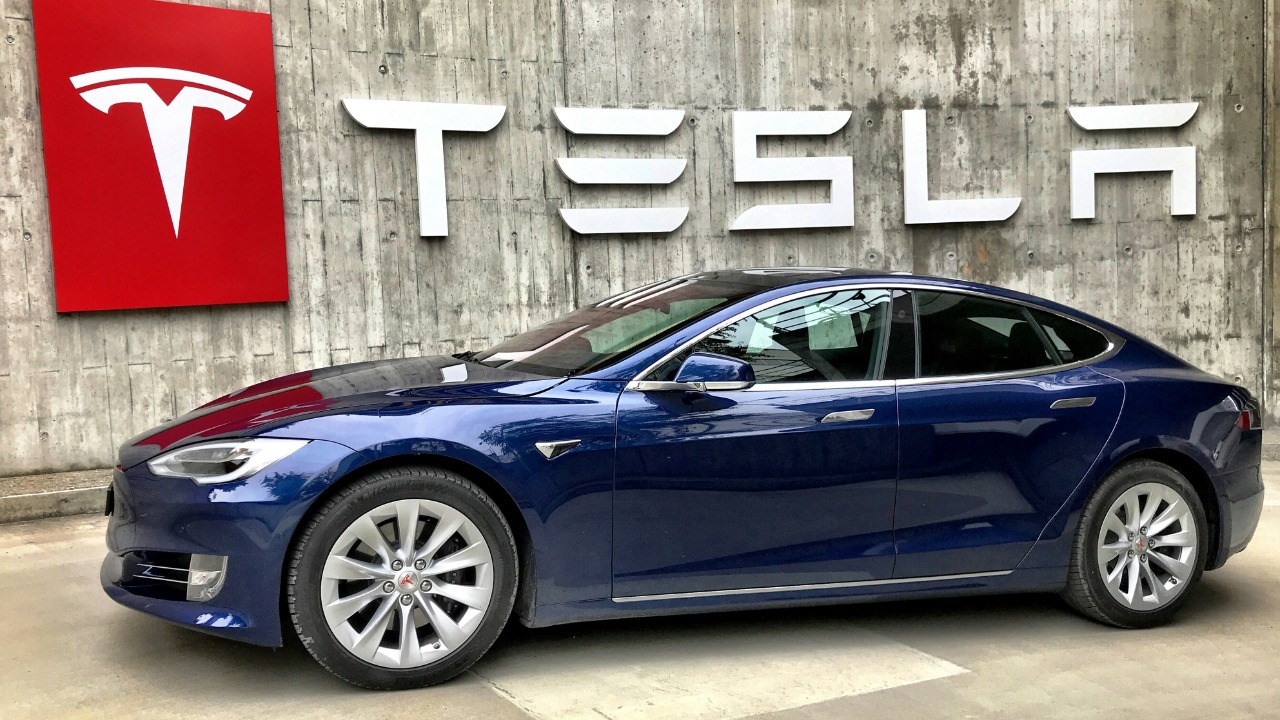
Tesla’s long run as the world’s dominant electric car brand has ended, capped by a second consecutive year of falling sales and a handover of the global crown to Chinese rival BYD. After years of setting the pace for battery-powered vehicles, the company is now confronting slowing demand, tougher competition and shifting policy support that have reshaped the market it once defined.
The dethroning is more than a symbolic blow. It crystallizes how quickly leadership in the electric vehicle business can move toward manufacturers that pair aggressive pricing with dense local supply chains, and it forces Tesla to prove that its next phase of growth will not rely solely on the halo of being first.
The moment Tesla lost the EV crown
The inflection point came as Tesla reported that its global electric vehicle sales declined for a second year in a row, a rare reversal for a company that had been synonymous with growth. On a recent Friday, Tesla on Friday reported a second straight annual drop in deliveries, confirming that the slowdown was not a blip but a trend. That slump coincided with the phaseout of a key federal tax incentive worth $7,500 per vehicle for many buyers, which had helped offset the higher sticker prices that still make many electric models pricier than comparable gas-powered cars.
As those numbers landed, industry trackers concluded that Tesla had finally been overtaken in all-electric sales by BYD, the Chinese manufacturer that has spent years building scale in its home market. One summary of the shift put it bluntly, noting that Tesla has been dethroned and had yielded the EV mantle to its rival to close what was described as a dismal year. Another account captured the investor reaction, describing how Tesla lost its crown as the world’s bestselling electric vehicle maker as customers pushed back against Elon Musk and as the company logged that second yearly decline.
BYD’s surge and China’s strategic edge
While Tesla stumbled, BYD accelerated. The company’s battery-electric lineup, from compact city cars to larger crossovers, has been priced and produced for scale, particularly in China’s intensely competitive market for so-called new energy vehicles. One detailed breakdown noted that BYD officially crushes Tesla in all‑electric sales for 2025, securing what it called the global BEV crown and underscoring how far the balance has shifted. Another tally highlighted that the Chinese group sold 2.26 m battery-powered cars, a figure that left Tesla trailing despite its global brand recognition.
China’s industrial strategy is central to that outcome. Analysts have pointed out that China’s BYD Beats Tesla as 2025’s Top EV Seller in part because of its deep local supply chain, broad model lineup and the political headwinds now facing foreign brands. One report described how the automotive juggernaut has come to dominate China’s highly competitive market for new energy vehicles, a category that includes pure battery cars and plug-in hybrids, and how that dominance is now spilling into export markets as regulatory hurdles are cleared. In that context, Tesla’s loss of leadership is as much about China’s rise as it is about its own missteps.
Policy shifts, politics and the end of easy growth
The policy environment that once turbocharged Tesla’s expansion has become more complicated, particularly in the United States. The gradual removal of the $7,500 federal credit for many of its models has made it harder for the company to keep its cars within reach of mainstream buyers without sacrificing margins. At the same time, political debates over the pace of electrification and the role of Chinese supply chains have intensified, with some investors now weighing how a more skeptical regulatory climate could affect Tesla’s access to future subsidies and infrastructure support.
Those crosscurrents are playing out against a backdrop in which China’s BYD became world’s leading EV maker even as Elon Musk and President Donald Trump loom large in the domestic policy conversation about electric cars, tax credits and autonomous driving. One analysis framed the shift as part of a broader realignment in which Chinese manufacturers gain ground while American policy becomes more contested. In that environment, Tesla’s once straightforward growth story now depends on navigating not only consumer demand but also the evolving stance of Washington toward both EV incentives and China-linked supply chains.
Investor jitters and the Musk factor
Financial markets have been quick to register the change in Tesla’s fortunes. One assessment noted that the company’s latest delivery figures represented its first full‑year sales drop since 2011, and that Provided by Dow Jones Jan data showed Tesla EV sales fall short of Wall Street’s low expectations, with a particular focus on how far reality lagged behind earlier promises. That same report highlighted that the company’s stock reaction reflected not just the miss itself but also doubts about whether its current lineup can reignite demand without deeper price cuts. Another account emphasized that BYD’s battery‑powered car sales surged almost 202 percentage points relative to earlier baselines, underscoring how Tesla now feels pressure from BYD in the EV sales race and how that pressure is being priced into market expectations.
At the same time, investors are still betting heavily on Elon Musk’s ability to pivot the company toward new profit pools, from software to autonomous driving. One summary of the mood captured how, Even with multiple issues buffeting the company, investors are betting that Tesla CEO Musk can deliver on his ambitions to expand robotaxis, energy storage and other ventures. Yet that optimism now coexists with a more sober recognition that the core car business is no longer on autopilot. As one brief put it, The Brief on Tesla’s loss of the world’s top EV maker title has become a shorthand for the company’s transition from hypergrowth story to mature manufacturer facing real competition.
What Tesla’s slide means for the next phase of the EV race
The numbers behind Tesla’s recent performance underline how much work lies ahead. One detailed breakdown reported that Tesla annual sales decline 9% as it’s overtaken by BYD as global EV leader, a drop that would be notable for any automaker and is especially striking for one that had been adding capacity in places like Texas and Germany. Another analysis stressed that China now sets the pace for new energy vehicles, with domestic champions like BYD exporting aggressively while Tesla works to defend its share in markets where it once had the field largely to itself. In that sense, the company’s slide from the top spot is less an isolated stumble than a marker of a new competitive era.
Looking ahead, I see Tesla’s dethroning as both a warning and an opportunity. It is a warning that early technological leadership does not guarantee permanent dominance, especially when rivals like BYD can scale quickly in vast home markets and then move outward. It is also an opportunity for Tesla to prove that it can compete on fundamentals rather than hype, by refreshing its lineup, sharpening its pricing and delivering on long‑promised advances in autonomy and software. As one early summary of the shift put it, Jan may mark the moment Tesla yielded the EV mantle, but the race to define the next decade of electric mobility is only just beginning, and the company still has the scale, brand and technology to shape how that race unfolds if it can adapt quickly enough.
More From TheDailyOverview

Elias Broderick specializes in residential and commercial real estate, with a focus on market cycles, property fundamentals, and investment strategy. His writing translates complex housing and development trends into clear insights for both new and experienced investors. At The Daily Overview, Elias explores how real estate fits into long-term wealth planning.

