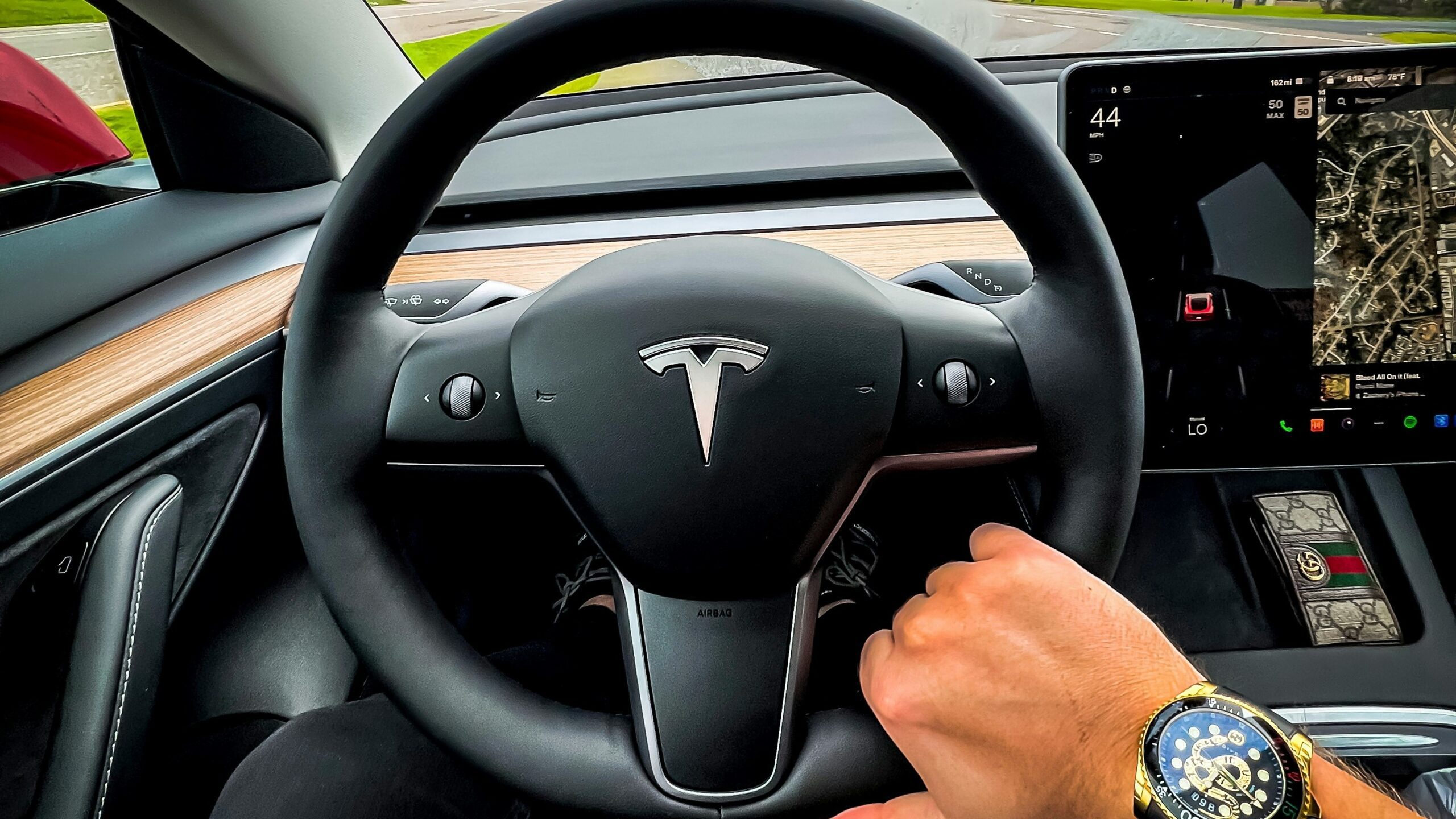
Tesla is no longer just tweaking its cars, it is rebuilding its entire business around artificial intelligence and humanoid robots, and spending like it intends to own the core technology that will power them. The company is pouring tens of billions of dollars into AI infrastructure, robotics hardware, and a new ecosystem of software that it believes will become the “brain” of its future machines. That bet is colliding with a sharp profit squeeze and the end of some of its most iconic vehicles, turning Tesla’s pivot into one of the highest‑stakes experiments in corporate reinvention.
The headline shift is Tesla’s decision to channel billions into AI compute and xAI, even as it shutters the Model S and Model X to free up factory space for Optimus humanoid robots. In effect, Tesla is sacrificing part of its legacy car business to build a vertically integrated AI stack, from data centers and chips to robot bodies and autonomous services, that could define its next decade.
Tesla’s $20 billion AI and robotics pivot
Tesla has signaled that 2026 will be the year it stops treating AI as a side project and starts treating it as the center of the business. The company has told investors that capital expenditures will exceed $20 billion in 2026, more than double its prior guidance, as it accelerates spending on autonomous vehicles and its Optimus humanoid robots. That surge in capex is explicitly framed as a way to speed up deployment of self‑driving systems and robotics, even if those projects contribute little revenue at first, according to its latest guidance.
That spending comes after a bruising year in which Tesla’s Net income fell 46 percent in 2025, even as the stock price remained volatile and competition in electric vehicles intensified. In that context, the company’s choice to double down on autonomy and robots, rather than retreat to its core premium EVs, looks less like incremental strategy and more like a high‑risk reset. As Jan reporting on Tesla’s latest moves makes clear, the company is betting that AI can expand its long‑term premium far more than another generation of sedans or SUVs, even if that means living with thinner margins in the near term while it builds out the necessary infrastructure.
Owning the “brain”: xAI, Dojo and high‑end chips
If Optimus and autonomous vehicles are the body, Tesla wants to own the brain that controls them. Earlier this year the company agreed to invest about $2 billion in xAI, the artificial intelligence startup founded by Elon Musk, aligning its automotive and robotics ambitions with a dedicated AI research outfit. Tesla has described the agreement with xAI as a way to secure access to cutting‑edge models and integrate them deeply into its vehicles and robots, while Musk, who also leads Tesla, has pitched xAI as a direct competitor to other frontier AI labs, according to recent disclosures.
That $2 billion commitment follows a separate decision, reported in Jan, for Tesla to invest another $2 billion in xAI alongside SpaceX, reinforcing how central Musk sees this AI stack to his broader empire. The company is also continuing to build out its in‑house Dojo supercomputer, including a large expansion at the Texas Gigafactory known as Cortex, where Approximately half of the chips are expected to power AI training for autonomy and robotics. The Cortex buildout is designed to complement high‑end accelerators like Nvidia’s H100, giving Tesla a blend of custom and off‑the‑shelf compute that it can tune for its own data and models, as detailed in a Sep analysis of the Texas Gigafactory project that highlighted how central Dojo and Cortex have become to Tesla’s long‑term AI roadmap, especially for Dojo training.
From premium EVs to Optimus and Cybercab
The most visible casualty of Tesla’s AI obsession is its original flagship hardware. Elon Musk has confirmed that Tesla is killing off the Model S and Model X, with their factory capacity to be repurposed for building humanoid robots instead. The company is effectively phasing out two legacy Model lines to free up its Fremont plant for Optimus production, a choice that underscores how it now values robot assembly lines more than low‑volume luxury cars, according to Jan reporting on the shift at Fremont.
At the same time, Musk has recommitted Tesla to its Cybercab program, a planned network of autonomous robotaxis that he says will operate between cities and airports once the software is ready. The company has framed Cybercab as a natural extension of its self‑driving work, with Optimus robots and autonomous vehicles sharing much of the same AI stack and sensor technology. In Jan, Musk described how the same AI that will guide Optimus through factories and warehouses could also power Cybercab fleets, reinforcing the idea that Tesla’s future growth will come less from selling individual cars and more from deploying fleets of intelligent machines, as detailed in coverage of the company’s renewed focus on Cybercab.
Shutting plants to build robots instead
The strategic pivot is not just happening on balance sheets and investor slides, it is reshaping Tesla’s factories in real time. In Jan, reports surfaced of Elon Musk Shutting Down Tesla Car Factory to Manufacture Robots Instead, with the company preparing to halt certain vehicle lines so it can focus on AI and its humanoid robot, Optimus. That shift means some facilities that once stamped out sedans and crossovers will be retooled for robot assembly, a move that could disrupt existing supply chains and workforces even as it opens new roles in robotics manufacturing, according to detailed accounts of the decision to Manufacture Robots Instead.
One of the centerpieces of this transition is Optimus Gen 3, described as the third‑generation humanoid autonomous robot developed by Tesla and the first intended for mass production. Company materials emphasize that Optimus Gen 3 is designed to work in Tesla’s own factories, charging and service centers, and eventually in customer facilities, with the same AI backbone that powers its self‑driving software. In Jan, Tesla executives highlighted how they had laid the foundation for this robotics push in earlier quarters, and how the new generation of Optimus Gen hardware would be built at scale in reconfigured plants, according to a detailed breakdown of the Optimus Gen roadmap.
A “burn the ships” moment for profits and risk
All of this is happening while Tesla’s financials are under pressure, which makes the scale of the bet even more striking. The company has acknowledged that its Q4 2025 profit fell 61% to $840M, even as it held $44.1B in cash on its balance sheet. Analysts have noted that Tesla’s planned $20B robotics and AI spend represents about 21% of its annual revenue, a level of capital intensity that would be aggressive even in a boom year, let alone one where margins are shrinking. In Jan, commentary around these figures framed the strategy as a test of whether Tesla can absorb short‑term pain and then “decide to start making real money” once Optimus and autonomous services scale, as detailed in recent earnings analysis.
Inside the company, the rhetoric around this pivot has been described as a “burn the ships” moment, with leaders arguing that They are now “super focused” on an autonomous and robotics future driven by AI. That language reflects a belief that there is no going back to a world where Tesla is primarily a premium EV maker, and that the only viable path is to push ahead until Optimus and Cybercab become material businesses. As Jan commentary on the strategy put it, the $20 billion pivot to robots is a “profound shift in strategy” that will either cement Tesla as the defining AI robotics platform of the decade or expose the limits of its ability to execute across cars, robots, and data centers at once, a tension captured in recent analysis of the company’s direction.
More From TheDailyOverview
This article was researched with the help of AI, with editors refining and creating the final content.

Grant Mercer covers market dynamics, business trends, and the economic forces driving growth across industries. His analysis connects macro movements with real-world implications for investors, entrepreneurs, and professionals. Through his work at The Daily Overview, Grant helps readers understand how markets function and where opportunities may emerge.

