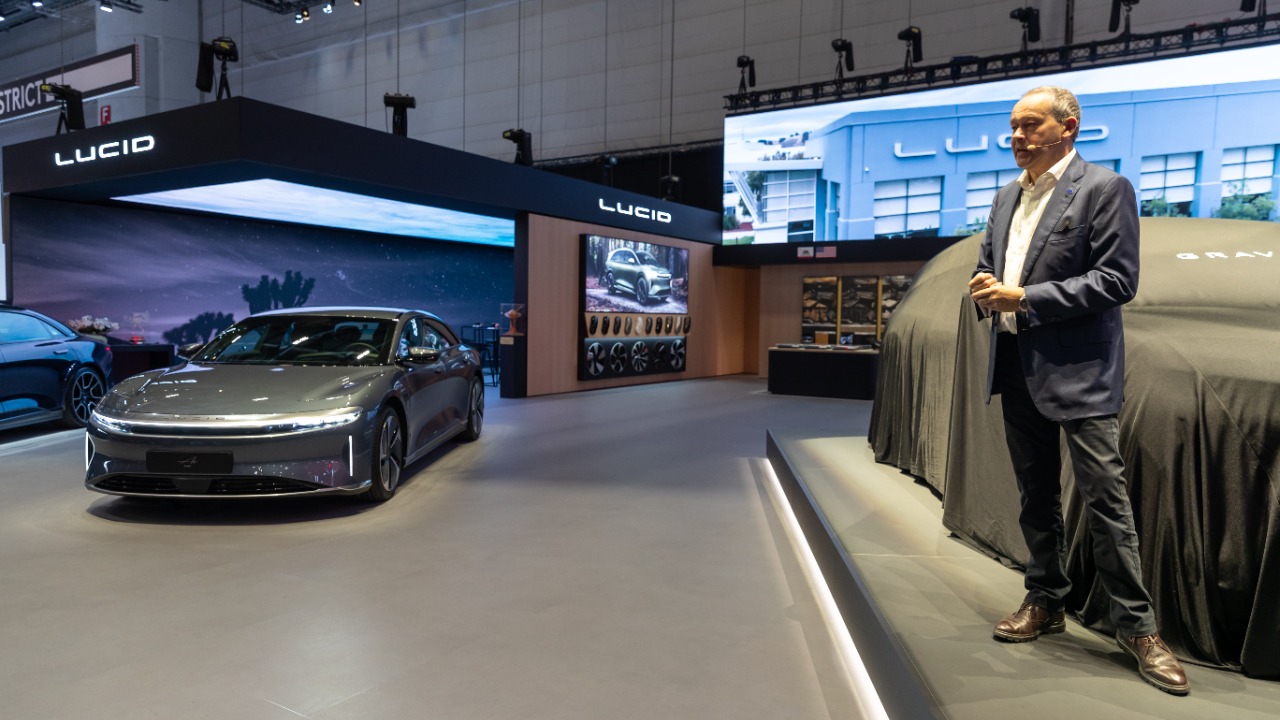
Lucid Group is cutting 12% of its U.S. workforce, a move that will eliminate hundreds of jobs at the electric vehicle startup as it struggles to reach profitability. Interim CEO Marc Winterhoff disclosed the reduction in an internal memo, sparing hourly production workers but targeting salaried and corporate roles. The layoffs land less than a year after a previous round of cuts and signal that even well-funded EV makers backed by sovereign wealth cannot outrun the industry’s punishing economics in a brutal EV winter.
Winterhoff’s Memo Targets Salaried Roles
The cuts, confirmed on February 20, 2026, affect salaried positions across the company while leaving hourly employees in manufacturing, logistics, and quality untouched. In the internal message, Winterhoff framed the reduction as a step toward efficiency and a clearer path to profitability, telling staff the decision “will help position Lucid for long-term success.” Affected employees will receive severance packages, continued benefits, and transition support, though the company has not disclosed the precise dollar cost of this latest round or how it will be reflected in upcoming financial statements.
Lucid reported 6,800 employees at the end of 2024, which means a 12% reduction translates to roughly 800 positions. Winterhoff took over on an interim basis after Peter Rawlinson stepped aside as chief executive alongside the release of Lucid’s fourth quarter and full-year 2024 results. That leadership transition, combined with this new restructuring, suggests the company’s Saudi-backed board is pressing for faster cost discipline rather than the growth-first approach Rawlinson championed, especially as investors scrutinize every dollar of cash burn in a cooling EV market.
A Repeat Pattern of Restructuring
This is not the first time Lucid has turned to layoffs to control costs. On May 24, 2024, the company announced a restructuring plan that eliminated approximately 400 employees, about 6% of its workforce, at an estimated cost of $21 million to $25 million in charges covering severance, benefits, transition support, and stock-based compensation. That plan was explicitly framed as a way to streamline operations and better align resources with the company’s near-term priorities, a message that now echoes in the 2026 memo as management again turns to headcount cuts as a primary lever.
The 2026 cuts are roughly double the 2024 round in percentage terms, jumping from 6% to 12%. And the pattern raises a practical question: if the first restructuring was supposed to right-size the company, why did Lucid need an even deeper cut less than a year after finishing it? One answer lies in the gap between production ambitions and market reality. Lucid’s stated priorities include the Gravity SUV ramp and a midsize platform, both capital-intensive programs that demand cash the company is still burning through. Protecting hourly manufacturing workers while cutting salaried staff hints that Lucid is betting on volume growth from new models to eventually close the margin gap, even as it shrinks the corporate overhead needed to develop those models quickly.
Financial Pressures Behind the Cuts
Lucid’s financial filings underscore how little room for error the company has as it juggles expansion and cost control. In its quarterly report for the period ending June 30, 2024, the company detailed ongoing operating losses and continued cash consumption, highlighting that it remains firmly in investment mode even as the broader EV sector cools. The June 2024 disclosure laid out spending on manufacturing scale-up, product development, and sales infrastructure that must eventually be supported by higher volumes and improved margins.
By the time of its September 30, 2025 filing, Lucid reported that the earlier restructuring plan had been fully executed, with associated costs recognized and headcount reduced accordingly. The company’s third-quarter 2025 report confirmed completion of the 2024 workforce reduction and emphasized ongoing efforts to manage expenses while funding future products. Against that backdrop, the 2026 layoffs look less like a one-off adjustment and more like a continuation of a multi-year effort to bend the cost curve down fast enough to buy time for new models to gain traction in a crowded premium EV market.
Labor Compliance Adds Another Layer of Risk
Lucid’s track record on severance terms has already drawn regulatory scrutiny. Following an earlier reduction in force in May 2023, NLRB Region 32 in Oakland reached a settlement requiring the company to rescind unlawful language in its severance agreements. The settlement addressed provisions that restricted former employees’ rights under federal labor law, including limitations on concerted activity and potential cooperation with regulators, a violation that forced Lucid to revise its separation paperwork and notify affected workers of the changes.
That history puts extra pressure on how the company handles the 2026 layoffs. Winterhoff’s memo promises severance, benefits, and transition support, but the specifics of those agreements will matter. If Lucid repeats the kind of overbroad non-disparagement or confidentiality clauses that triggered the 2023 NLRB action, it could face fresh complaints at a time when public sympathy for displaced workers is already running high. The company has also signaled that it wants to improve gross margins and support long-term growth, language that frames the cuts as strategic rather than reactive, yet any missteps in labor compliance could undercut that narrative and invite additional legal and reputational costs.
The Tension Between Cost Cuts and R&D Momentum
Most coverage of EV layoffs focuses on the immediate job losses, but the longer-term risk for Lucid sits in what happens to its engineering pipeline. By exempting hourly production workers, the company is clearly prioritizing assembly-line output and near-term deliveries. That makes sense if the Gravity SUV and the planned midsize vehicle are close enough to production readiness that they no longer need large teams of engineers and program managers. But if those programs still require significant development work, cutting salaried technical staff could slow timelines and weaken Lucid’s ability to iterate on software, range, and charging performance, key differentiators in the premium EV segment.
The company’s own financial disclosures emphasize the importance of research and development spending to its long-term strategy, even as management looks for places to trim. In the mid-2024 quarterly report, Lucid highlighted substantial R&D outlays tied to new vehicle platforms and advanced technologies, a reminder that innovation is expensive and often front-loaded. The challenge now is to reduce corporate overhead without hollowing out the very teams responsible for the next generation of products. If Lucid can thread that needle (preserving core engineering talent while cutting duplicative or non-essential roles), the 12% reduction may buy it time to reach scale. If not, the company risks entering a vicious cycle of repeated restructurings that erode morale, slow product launches, and make it even harder to escape its current profitability trap.
More From The Daily Overview
*This article was researched with the help of AI, with human editors creating the final content.

Grant Mercer covers market dynamics, business trends, and the economic forces driving growth across industries. His analysis connects macro movements with real-world implications for investors, entrepreneurs, and professionals. Through his work at The Daily Overview, Grant helps readers understand how markets function and where opportunities may emerge.

