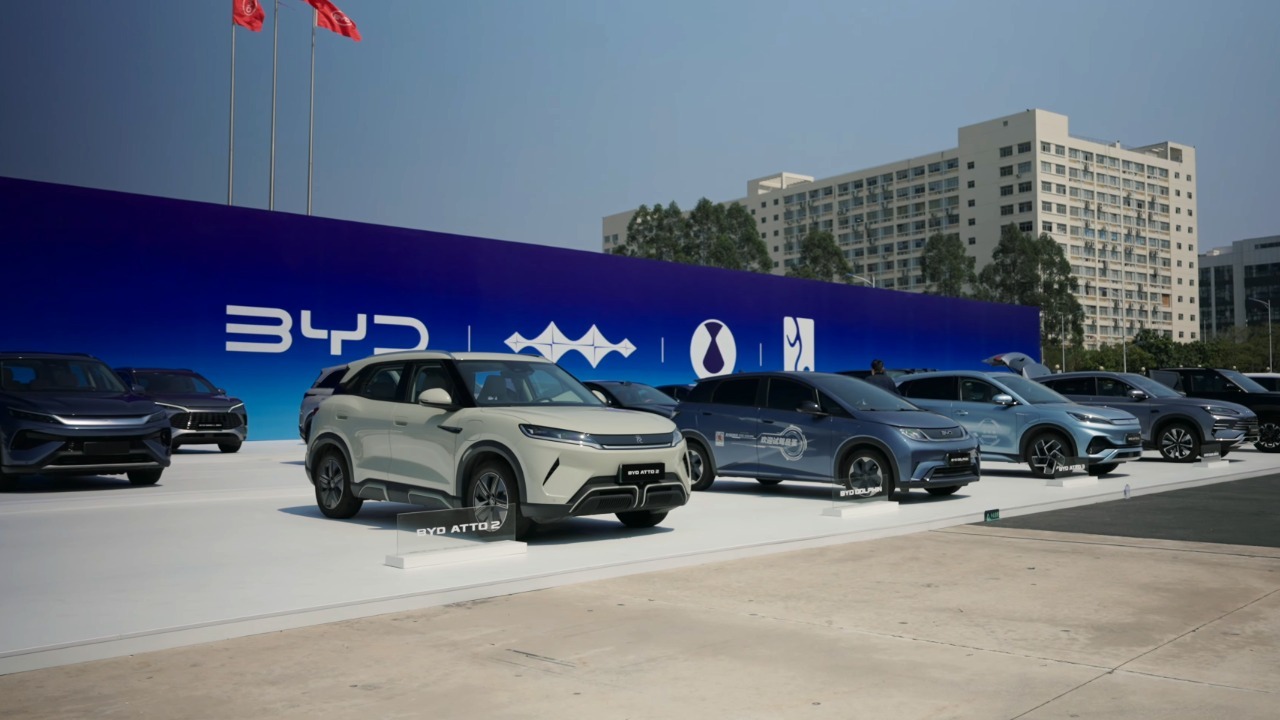
Tesla’s long grip on the electric-car story in Europe has cracked, replaced by a new narrative in which Chinese champion BYD is the growth stock and legacy European brands are quietly reclaiming home turf. The headline drama of Tesla plunging while BYD rockets higher captures a deeper shift in who sets the pace on price, technology, and scale in the region’s battery-electric market. I see a landscape where the “EV king” crown is now contested on three fronts: Chinese scale, European incumbents, and a Tesla that suddenly looks vulnerable rather than inevitable.
Behind the market-cap swings is a simple reality: Europe’s electric transition is still accelerating, but the spoils are being redistributed. Battery-electric vehicles are taking a larger slice of new registrations, yet the brands winning that growth are no longer the same ones that dominated the first wave of adoption. That is what makes the current moment so pivotal for investors, policymakers, and drivers alike.
Europe’s EV boom is real, but the map is being redrawn
The first thing I look at is demand, and on that front Europe is not backing away from electrification. New-car data show that battery-electric vehicles have climbed to a 17.4% market share of registrations, a level that confirms EVs are no longer a niche product but a mainstream choice across the region. Even as overall new car registrations in the bloc edged up only modestly, the share captured by fully electric models kept rising, according to figures from new registrations. That backdrop matters, because it means the current shake-up is happening in a growing pie, not a shrinking one.
Within that expanding market, the competitive hierarchy has shifted from a simple Tesla-versus-the-rest story to a more crowded leaderboard. Across most of 2025, Across most of the year, Tesla and Skoda topped Europe’s monthly BEV standings, with Tesla and Skoda effectively setting the pace in the BEV segment. In November, however, a new leader emerged in the BEV rankings, underscoring how fluid the race has become as more brands push aggressively into fully electric lineups. I read that as a sign that early-mover advantage is fading and execution on pricing, local production, and model mix is now decisive.
Tesla’s European stumble: from segment leader to share donor
Against that backdrop, Tesla’s reversal in the European Union is stark. Data for 2025 show Tesla’s sales in the European Union falling 37.9%, with its market share sliding to just 1.4% of the overall passenger-car market, according to Tesla EU figures. For a company that once defined the aspirational EV in Europe, that kind of contraction is less a blip and more a structural warning that its product cadence and pricing strategy are misaligned with what European buyers now expect.
The weakness is even more striking when set against Tesla’s earlier dominance in specific models. From January to October 2025, the Tesla Model Y remained Europe’s most popular electric car, with 116, 989 units registered, while the Škoda Elroq followed with 71, 148, according to Tesla Model and Elroq data. Yet by the end of the year, the narrative had flipped from runaway success to “Tesla Slips” as BYD “Races Ahead” in Europe’s EV Market, with reports highlighting how Tesla Slips while BYD Races Ahead in Europe’s EV Market. I see that shift as evidence that Tesla’s reliance on a narrow lineup and periodic price cuts is no longer enough to defend share once rivals match its range and undercut its costs.
BYD’s surge: from outsider to global and European “EV king”
While Tesla was ceding ground, BYD was sprinting into the gap. In Europe, BYD’s registrations surged 270% in 2025, with the company achieving over 200% year-on-year growth in Europe during the period, according to BYD’s European data. That kind of compounding growth is what underpins the idea of BYD “soaring 230%” in investor shorthand, and it reflects a deliberate strategy of flooding key markets with aggressively priced models that still meet European safety and range expectations. I read those numbers as confirmation that European consumers are increasingly willing to buy Chinese-branded EVs if the value proposition is strong enough.
The story is even bigger at the global level. The Chinese car giant has overtaken Tesla as the world’s largest seller of EVs, with 2025 data from the two rivals showing that The Chinese manufacturer now leads worldwide, while China remains Tesla’s second-largest market. Video analysis of the shift notes that 2025 was the year China’s BYD overtook Tesla in fully electric vehicle sales, with BYD ending 2025 having sold 2.26 million EVs, according to commentary that cites 2.26 as the key figure. Another widely watched breakdown earlier in Jan framed it bluntly, saying BYD had overtaken Tesla as the number one seller of EVs in the world, a moment captured in a Jan video that underscored how rare it is for Tesla to be knocked off a global perch it has held for years.
Volkswagen and Europe’s incumbents quietly reclaim home ground
Even as BYD grabs headlines, I see Europe’s legacy automakers using the same period to rebuild their own electric credentials. The Volkswagen brand added two new sales titles in 2025, along with being Europe’s overall top-selling brand for the 21st consecutive year, according to The Volkswagen data. Along with that overall crown, Volkswagen also topped Europe’s EV sales rankings, showing that a disciplined rollout of MEB-based models and a broad price ladder can still beat both Tesla and Chinese challengers on their home continent.
More granular EV data reinforce that point. Volkswagen VWAGY, a leading German automaker, achieved a major milestone in 2025 by overtaking Tesla TSLA to become the best-selling EV brand in Europe, a shift highlighted in Volkswagen VWAGY coverage that emphasized how a German incumbent had finally surpassed Tesla TSLA in a region Tesla has dominated for several years. Investors are also watching how BYD BYDDF is overtaking Tesla in specific European markets, with data showing BYD has moved ahead of Tesla in the United Kingdom and Germany, a trend that Investors see as mounting pressure as competition broadens. Put together, these moves suggest that Europe’s EV future will be shaped by a three-way contest among Chinese entrants, resurgent European brands, and a Tesla that can no longer assume default leadership.
What the new “EV king” means for policy, pricing, and the next phase
For policymakers, the rise of BYD and the stumble of Tesla in Europe sharpen long-running debates about industrial strategy and trade. Despite being locked out of the U.S. market, BYD has made significant gains in the rest of the world, with 2025 data showing BYD outsold Tesla in several key regions, according to analysis that begins with the phrase Despite being. That global reach, combined with BYD’s cost advantage from deep vertical integration in China, will intensify pressure on European regulators to balance consumer benefits from cheaper EVs against concerns over domestic manufacturing and strategic dependence on Chinese supply chains.
For consumers and investors, the new hierarchy is already reshaping expectations on price and product. With BYD’s European registrations surging and Tesla’s EU sales dropping sharply, the competitive benchmark for an entry-level EV is no longer a single Tesla model but a crowded field of Chinese and European alternatives. I expect that to keep downward pressure on prices and margins, even as overall EV adoption continues to rise. At the same time, the symbolic dethroning of Tesla as global EV volume leader, captured in multiple Jan and China focused commentaries and in mainstream coverage of how BYD has overtaken Tesla, will likely force Tesla to rethink its European playbook. Whether that means cheaper models, local partnerships, or a renewed focus on software and charging, the era when one company could define the EV market on its own is clearly over.
More From TheDailyOverview
*This article was researched with the help of AI, with human editors creating the final content.

Elias Broderick specializes in residential and commercial real estate, with a focus on market cycles, property fundamentals, and investment strategy. His writing translates complex housing and development trends into clear insights for both new and experienced investors. At The Daily Overview, Elias explores how real estate fits into long-term wealth planning.

