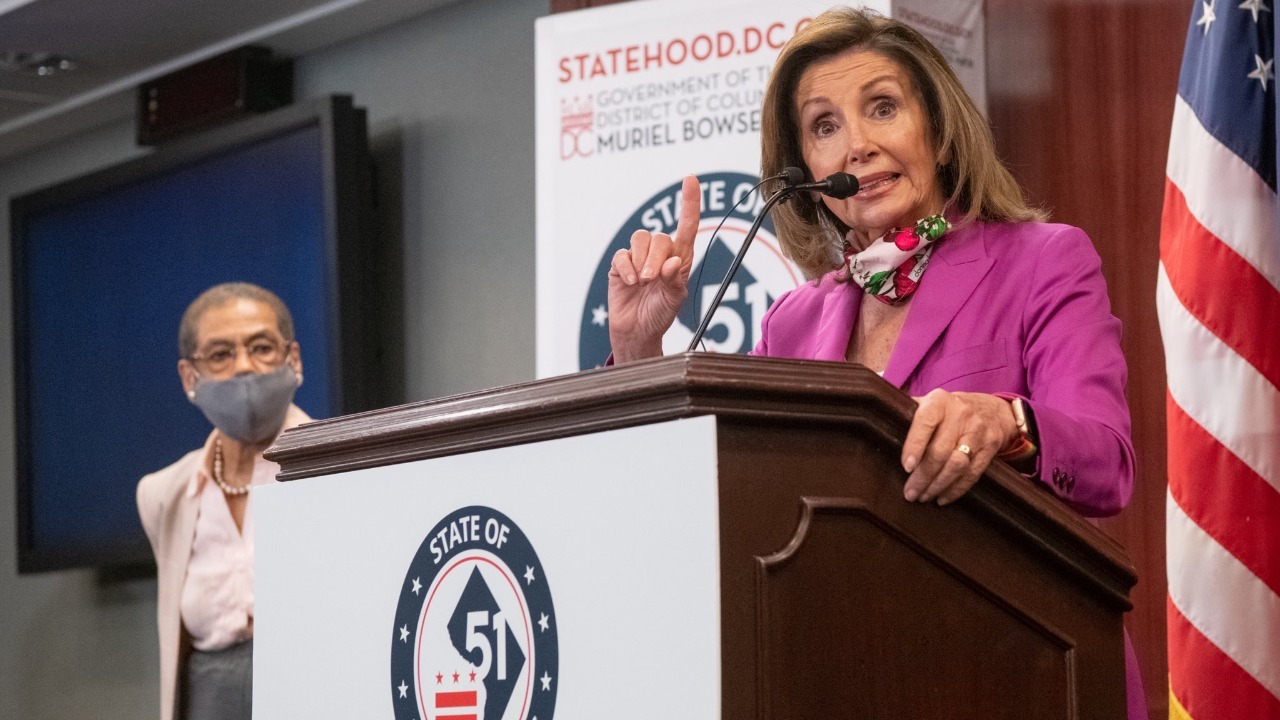
A tech startup named Autopilot has introduced a novel financial tool called the “Pelosi Tracker,” designed to emulate the stock trades of former House Speaker Nancy Pelosi. This innovative tool has already attracted significant attention, with $100 million in inflows since its launch in July 2023. The tracker capitalizes on the public’s fascination with Pelosi’s impressive market performance, which saw her portfolio achieve a 65% return in 2023, far surpassing the S&P 500’s 24% gain. As of October 2023, the tracker has the potential to manage up to $531 million in assets if current trends persist.
The Rise of the Pelosi Tracker
Autopilot’s Pelosi Tracker made its debut in July 2023, offering investors a unique opportunity to replicate the stock trades disclosed by Nancy Pelosi and her husband, Paul Pelosi. These trades are publicly available through filings, allowing the tool to automatically mirror their investment decisions. According to Bloomberg, the tracker has quickly gained traction, managing $100 million in client assets by October 2023. The founders of Autopilot, including Dan Toomey, project that if the current growth trajectory continues, the tracker could oversee as much as $531 million in assets.
The appeal of the Pelosi Tracker lies in its ability to provide investors with a sense of insider access without the associated risks. One investor described the tool as “like having insider access without the risk,” a sentiment that resonates with many who are drawn to Pelosi’s remarkable 65% portfolio return in 2023. This performance has fueled interest and confidence in the tracker, as noted by CNBC.
Pelosi’s Trading History and Performance
Nancy Pelosi’s stock trading activities have been a subject of public interest since 2019, with her trades often scrutinized for their timing and success. Notable transactions include the purchase of 25 call options on NVDA in November 2021, valued between $250,001 and $500,000, as detailed in Congressional disclosures. Her portfolio’s performance in 2023, achieving a 65% return, has significantly outpaced the S&P 500’s 24% gain, with key holdings in tech giants like Alphabet and Amazon, according to Quiver Quantitative.
Despite the impressive returns, Pelosi’s trading activities have drawn criticism and calls for reform. Ethics watchdog Peter Welch has been vocal about the need to end such practices, stating, “It’s time to end this practice,” as reported by The New York Times. This criticism is part of a broader debate on the ethics of congressional trading, highlighting the tension between public service and personal financial gain.
How the Pelosi Tracker Operates
The technical mechanics of the Pelosi Tracker involve scanning Clerk of the House disclosures daily to replicate trades in users’ brokerage accounts. This is achieved through API integrations with major firms like Fidelity. However, the tool faces limitations due to a 45-day disclosure delay for trades. To mitigate this, Autopilot employs predictive algorithms based on Pelosi’s past trading patterns, particularly in sectors like semiconductors.
Autopilot charges a 1% annual management fee on assets under management, which could generate substantial revenue if the tracker reaches its projected $531 million in assets by the end of 2024. This fee structure is designed to align with industry standards while providing a sustainable business model for the startup.
Regulatory Scrutiny and Market Impact
The Pelosi Tracker’s emergence has coincided with increased regulatory scrutiny of congressional stock trading. In 2023, Senator Josh Hawley proposed a bill to ban stock trading by members of Congress, directly referencing Pelosi’s trades. This legislative effort underscores the growing concern over potential conflicts of interest and the need for stricter regulations, as detailed by Senator Hawley’s office.
The market impact of Pelosi’s trades is also noteworthy. For instance, NVDA shares experienced a 2% spike following the disclosure of Pelosi’s 2021 options purchase, as tracked by Yahoo Finance. Autopilot has taken steps to ensure compliance with regulatory standards by registering as a Registered Investment Advisor (RIA) with the SEC in June 2023. This registration ensures that trades are executed post-disclosure, mitigating the risk of insider trading allegations.
More From TheDailyOverview
- Dave Ramsey says these two simple questions show whether you’re rich or poor
- Retired But Want To Work? Try These 18 Jobs for Seniors That Pay Weekly
- IRS raises capital gains thresholds for 2026 and what’s new
- 12 ways to make $5,000 fast that actually work

Grant Mercer covers market dynamics, business trends, and the economic forces driving growth across industries. His analysis connects macro movements with real-world implications for investors, entrepreneurs, and professionals. Through his work at The Daily Overview, Grant helps readers understand how markets function and where opportunities may emerge.