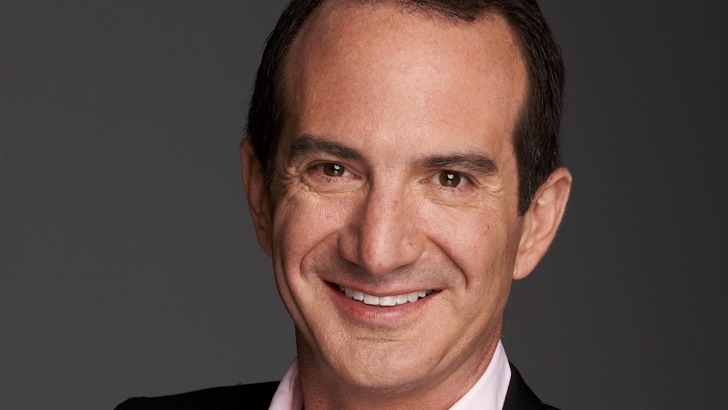
Millionaires are not just saving more money than everyone else; they are following a specific pattern with it. Financial expert David Bach argues that a simple 70/30 rule, paired with a disciplined savings habit, is what separates those who quietly build at least $1 million in wealth from people who never quite get ahead. The idea is less about flashy stock picks and more about a repeatable formula that anyone with income can try to copy.
In this framework, the 70/30 split, combined with a fixed savings rate and automation, turns wealth building into a system instead of a series of guesses. The rule treats investing more like a payroll process than a gamble, and the main difference Bach highlights between many millionaires and almost everyone else is the presence of clear structure rather than access to secret opportunities.
What Bach means by the 70/30 rule
David Bach is described as a financial expert and bestselling author who translates money habits of the wealthy into simple rules for regular workers. In recent comments summarized in a Fortune report, he points to data on how millionaires allocate their investments and says a clear pattern shows up again and again. According to his description, the group he studied tends to keep 70% of their invested money in growth assets such as stocks and 30% in steadier holdings like bonds or similar fixed-income products, an approach he frames as the 70/30 rule that separates millionaires from everyone else.
That framing matters because it shifts the focus away from one lucky trade and toward a long-term asset mix that leans into growth while still keeping a cushion in safer assets. Bach’s argument rests on the idea that this mix is not random but shared behavior among people who have already crossed the millionaire line. He describes the underlying research as “recent data” on millionaire portfolios, though the raw dataset and methodology have not been released publicly, so outside analysts cannot confirm how broad or representative it is. His claim that this 70/30 structure is a common thread among wealthy investors is repeated in coverage that highlights his view of this allocation formula as a key trait that sets many millionaires apart from investors who move money more haphazardly into whatever is popular at the moment.
The hidden power of saving 14%
The asset mix alone does not tell the whole story. Bach is explicit that the millionaires he points to were not just investing; they were also saving at a specific rate. As quoted in the Fortune coverage, “The exact formula they saved [was] 14% of their gross income … and then how they invested the money is key.” In other words, the 70/30 rule sits on top of a savings habit that channels 14% of every paycheck into investments before taxes. For every dollar of gross income, 14 cents go into an investment pipeline, and of those 14 cents, roughly 10 cents head toward growth assets while about 4 cents go into steadier holdings.
By tying the rule to gross income, not whatever is left at the end of the month, Bach is describing a system that forces people to live on the remaining 86% and treat investing as a non-negotiable bill. This 14% figure is presented as the engine behind the millionaire outcomes he describes, because a 70/30 portfolio that receives only occasional contributions will not create the same effect as one that is funded every pay period at a fixed rate. His emphasis on a specific savings percentage also helps cut through vague advice to “save more” by giving workers a target they can plug into a workplace plan or calculator and then combine with the 70/30 allocation year after year.
Automation: the habit that closes the gap
Bach does not stop at the what; he also talks about the how. According to his explanation, the way these millionaires saved that 14% was automation. Rather than relying on willpower each month, they set up systems so that money moved directly from payroll into investment accounts, often through workplace retirement plans or automatic transfers. In his telling, automation is not just a convenience feature but the core behavior that makes the 70/30 rule and the 14% savings rate stick. Once the transfers are in place, the investor is no longer making a fresh decision every payday; the structure runs in the background, and the portfolio grows according to the rule.
This focus on automation appears in both the Fortune piece and in AOL’s summary, which notes that he links consistent saving and investing habits to avoiding problems like running up debt. Automation acts as the bridge between intention and action. Many people say they want to invest more, yet they leave the decision until after every other expense, which means investing often loses the monthly fight. The millionaires in Bach’s account flipped that script by letting payroll systems move money before it could be spent, and by directing new contributions into funds that keep the overall mix near the 70/30 target instead of drifting into whatever asset looks exciting that week.
Why a 70/30 split, not 60/40?
One quiet debate behind Bach’s rule is why his data points to 70/30 instead of the older 60/40 mix that many retirement guides used to promote. He frames the 70% share in growth assets as a defining trait of the millionaire group he studied, suggesting they were willing to keep more of their portfolio in stocks or similar vehicles than the classic template would recommend. That higher share of growth holdings can amplify returns over long periods, especially when combined with steady contributions from a 14% savings rate, but it also means sharper swings in account balances during market downturns.
Because of that trade-off, the 70/30 split is better understood as a description of what many millionaires did rather than a universal setting that everyone should copy. The pattern Bach highlights may reflect the behavior of people who have higher risk tolerance, more stable incomes, or longer time horizons than the average worker. For someone close to retirement or deeply anxious about volatility, a 70% allocation to growth assets might feel like too much, even if his comments suggest it was common among the wealthy group he analyzed. Readers are therefore encouraged to view 70/30 as one possible template, not a mandatory rule.
Where Bach’s thesis leaves questions
There is also a transparency gap in the way Bach’s argument has reached the public. He refers to “recent data” on millionaire portfolios and uses that phrase to support his claim that the 70/30 rule separates millionaires from everyone else, yet the underlying study, sample size, and time period have not been made available for independent review in either the Fortune or AOL coverage. The reporting that relays his comments presents his interpretation of the data rather than charts, tables, or raw figures that outside researchers could test.
This does not mean his conclusion is wrong, but it does mean readers are being asked to accept a strong claim about how millionaires invest without seeing the original evidence behind it. The verified facts are clear: Bach is a financial expert and bestselling author, he has said that the exact formula the millionaires in his sample saved was 14% of their gross income, and he has argued that how they invested that money, using a growth-tilted allocation and automation, is the key difference that sets them apart. Beyond that, there is room for healthy skepticism and adjustment, and readers can treat the 70/30 rule as a working model rather than a proven law.
More From The Daily Overview
*This article was researched with the help of AI, with human editors creating the final content.

Cole Whitaker focuses on the fundamentals of money management, helping readers make smarter decisions around income, spending, saving, and long-term financial stability. His writing emphasizes clarity, discipline, and practical systems that work in real life. At The Daily Overview, Cole breaks down personal finance topics into straightforward guidance readers can apply immediately.
