The race to build artificial intelligence infrastructure has become one of the most expensive industrial projects in history, with trillions of dollars pouring into data centers, chips, and power. Yet the biggest snag is not just the price tag, it is the uneasy gap between how fast companies are spending and how slowly the returns may arrive. That mismatch is starting to test balance sheets, investor patience, and even the physical limits of the grid and chip supply.
I see a pattern emerging across chip makers, cloud giants, and would‑be AI landlords: they are all betting that today’s massive outlays will be justified by tomorrow’s productivity boom, but the timing and durability of that payoff are deeply uncertain. The multitrillion‑dollar buildout is colliding with long payback periods, fragile supply chains, and hardware that may become obsolete faster than the debt used to finance it.
The decade-long J-curve behind “AI factories”
At the heart of the current boom is the idea of the AI data center as a new kind of factory, one that turns electricity and silicon into models and services rather than steel or cars. Capital spending on these AI factories is already running far ahead of the revenue they generate, creating what analysts describe as a decade-long J-curve in which Cumulative AI CAPEX balloons long before cash flows catch up. I view that gap as the core structural risk in the buildout, because it forces companies to finance years of negative free cash flow on the assumption that demand for AI inference and training will remain insatiable.
The upside case is enormous, with projections of trillions in eventual value if these AI factories become as central to the economy as cloud computing or smartphones. Yet the same analysis that highlights the long J-curve also underscores how sensitive the model is to utilization rates and pricing power, especially if customers balk at rising costs or regulators push back on energy use. In practical terms, that means even well-capitalized operators must manage a long stretch where investment in racks, networking gear, and power upgrades vastly exceeds the revenue those assets bring in, a dynamic that magnifies any misstep in forecasting or execution.
Debt, investors, and the Oracle warning sign
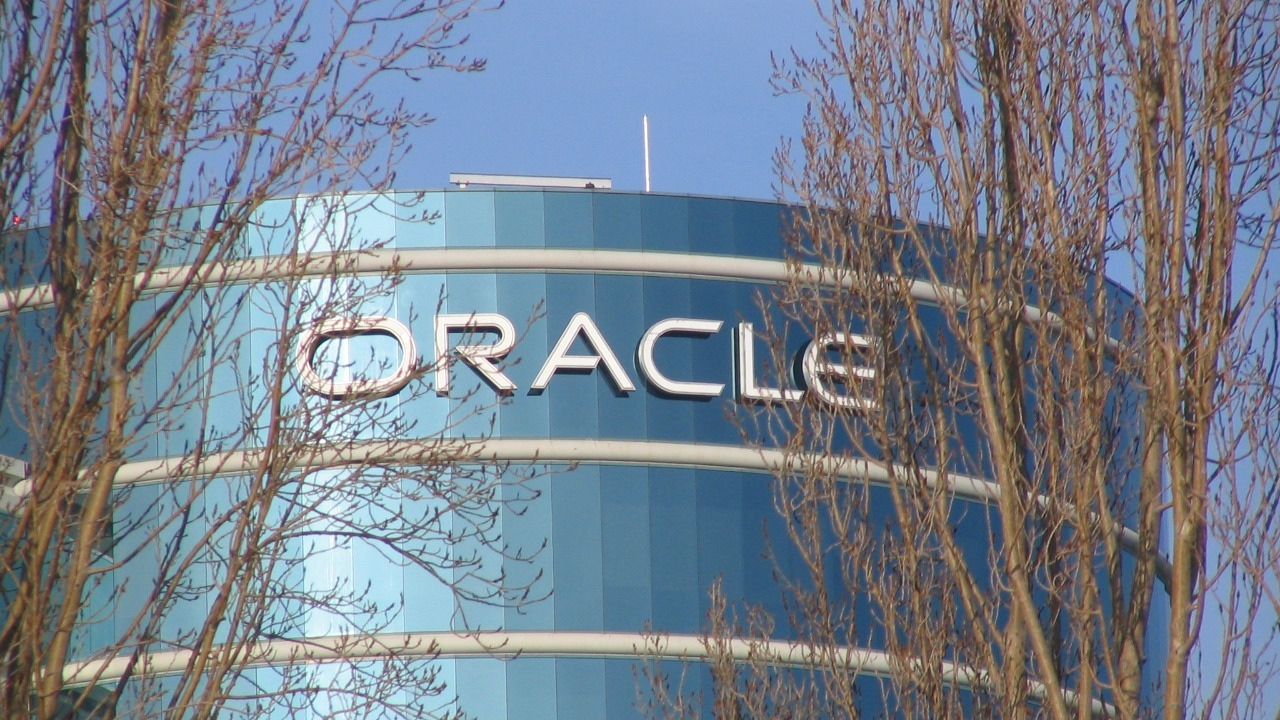
The financing strain is no longer theoretical, and Oracle is the clearest early warning sign. The company has pitched itself as a major AI infrastructure player, but its expansion hit a wall when a key backer pulled back, a move that highlighted how quickly investor enthusiasm can cool once leverage climbs. The retreat was reported after concerns grew over Oracle’s rising obligations and the pace of its AI spending, a shift that was detailed in coverage of Oracle’s AI expansion and the risks around its strategy.
According to a Dec report that cited the Financial Times, the investor’s withdrawal came as scrutiny intensified on Oracle’s balance sheet and the speed of its infrastructure buildout, with According to the Financial Times becoming a shorthand in markets for the shift in sentiment. In its recent second-quarter earnings, Oracle reported revenue of $16.1 billion, a figure that underscored both the scale of its business and the pressure to translate AI promises into concrete growth. I see this episode less as a one-off and more as a preview of what happens when the cost of capital rises or when investors decide that “AI at any price” is no longer a viable thesis.
Hardware churn and the risk of stranded AI assets
Even if financing is available, the physical hardware at the center of the boom is aging faster than the debt that funds it. High-end accelerators are being pushed to their limits by nonstop training and inference workloads, generating intense heat and wearing down components more quickly than in traditional cloud environments. Reporting on the current buildout notes that this relentless utilization is already fueling concerns around an AI bubble, because the hardware may not last long enough to justify its cost if demand or pricing falter.
The pace of chip innovation adds another layer of risk. Subsequent generations of AI chips are rapidly improving in performance and efficiency, which is great for model builders but problematic for anyone who just spent billions on the previous generation. Analysts have warned that if the effective lifecycle of these accelerators is shorter than the period over which they are financed, companies could be left with stranded assets or forced to seek public support. One report noted that if that lifecycle is shorter, a major operator suggested it might need the US government to backstop the debt it is taking on to fund AI infrastructure. I read that as a stark admission that the private market alone may struggle to absorb the risk if hardware churn accelerates.
The competitive dynamics around Nvidia sharpen this tension. Different chipmakers are taking Different approaches to the AI computing problem, with Nvidia’s GPUs competing against custom accelerators and Tensor Processing Units. One issue Nvidia is having right now is that demand for its chips far exceeds supply, which has helped justify premium pricing and aggressive buildouts. Yet that same imbalance raises the possibility that once alternative architectures mature, some of today’s most coveted hardware could lose its edge faster than expected, compressing returns for data center operators who bought at the top of the cycle.
Physical bottlenecks: power, packaging, and scarcity
Beyond balance sheets and chip roadmaps, the AI surge is running into hard physical limits. The rush to construct and energize new facilities has turned data centers and power infrastructure into a growth engine, but it has also exposed what one analysis described as a looming wall of fundamental physical infrastructure scarcity. In practice, that means grid connections, transformers, and reliable generation capacity are becoming as strategic as GPUs, especially in regions where AI campuses are competing with residential and industrial users for the same electrons.
The chip supply chain is facing its own crunch, particularly in advanced packaging, which is essential for stitching together the multi-die designs that power modern AI accelerators. Meanwhile, the industry is working on solutions to solve the problem, but experts warn that these approaches may fall short and that customers will need to lock in long-term relationships with key suppliers to guarantee access. That caution was captured in a detailed look at how Meanwhile the packaging supply chain is being stretched by AI demand. I see this as another structural snag: even if capital is available, the physical capacity to turn that money into working chips and powered racks is not infinitely elastic.
Bubble fears, long-term promise, and the trillion-dollar tension
All of these pressures are feeding into a broader debate about whether AI is in a bubble or simply in the early innings of a long, capital-intensive transformation. Reporting on the current cycle notes that the intensity of spending and hype is fueling concerns around an AI bubble, particularly because the economic benefits are unevenly distributed and often hard to measure. I find that tension most visible in boardrooms, where executives are under pressure to show AI adoption while also justifying rising cloud and compute bills to shareholders who remember the last time tech valuations outran fundamentals.
At the same time, strategists argue that the long-term promise is real, especially as AI moves beyond chatbots into core workflows in finance, healthcare, and manufacturing. One analysis framed this as part of a broader shift in which AI, often associated with top LLM-based tools, could unlock a new wave of productivity if companies learn to harness their data effectively. That perspective, summarized in a piece that began with “Let’s briefly review what we’ve learned” and noted that “Some of the” most powerful applications are still emerging, suggests that the current spending may look more rational in hindsight if AI becomes as embedded in the economy as electricity or the internet.
The snag is that costs are rising faster than many users expected. One detailed breakdown of AI deployment expenses warned that Will Compute-Chip Inflation Keep Outpacing Model Efficiency Gains, noting that NVIDIA’s 2025 chip production is sold out and that prices are being driven higher in a market where supply cannot keep pace with demand. That dynamic threatens to squeeze smaller players and customers who lack the scale or bargaining power of the largest cloud providers. It also reinforces the central tension of the multitrillion-dollar buildout: the upside may indeed be measured in trillions, but the path to get there runs through a long, expensive, and uncertain valley where capital, hardware, and physical infrastructure are all under strain.
In that sense, the biggest snag is not a single bottleneck but the intersection of several: a decade-long investment J-curve, investor fatigue around debt-fueled expansion, rapidly obsoleting hardware, and hard limits on power and packaging. The companies that navigate this period best will be those that treat AI not as a blank check but as an infrastructure business, one that demands discipline on capital allocation, realistic assumptions about hardware lifecycles, and a sober view of how quickly the promised productivity gains will arrive.
Supporting sources: The big wrinkle in the multitrillion-dollar AI buildout.
More From TheDailyOverview

Grant Mercer covers market dynamics, business trends, and the economic forces driving growth across industries. His analysis connects macro movements with real-world implications for investors, entrepreneurs, and professionals. Through his work at The Daily Overview, Grant helps readers understand how markets function and where opportunities may emerge.

