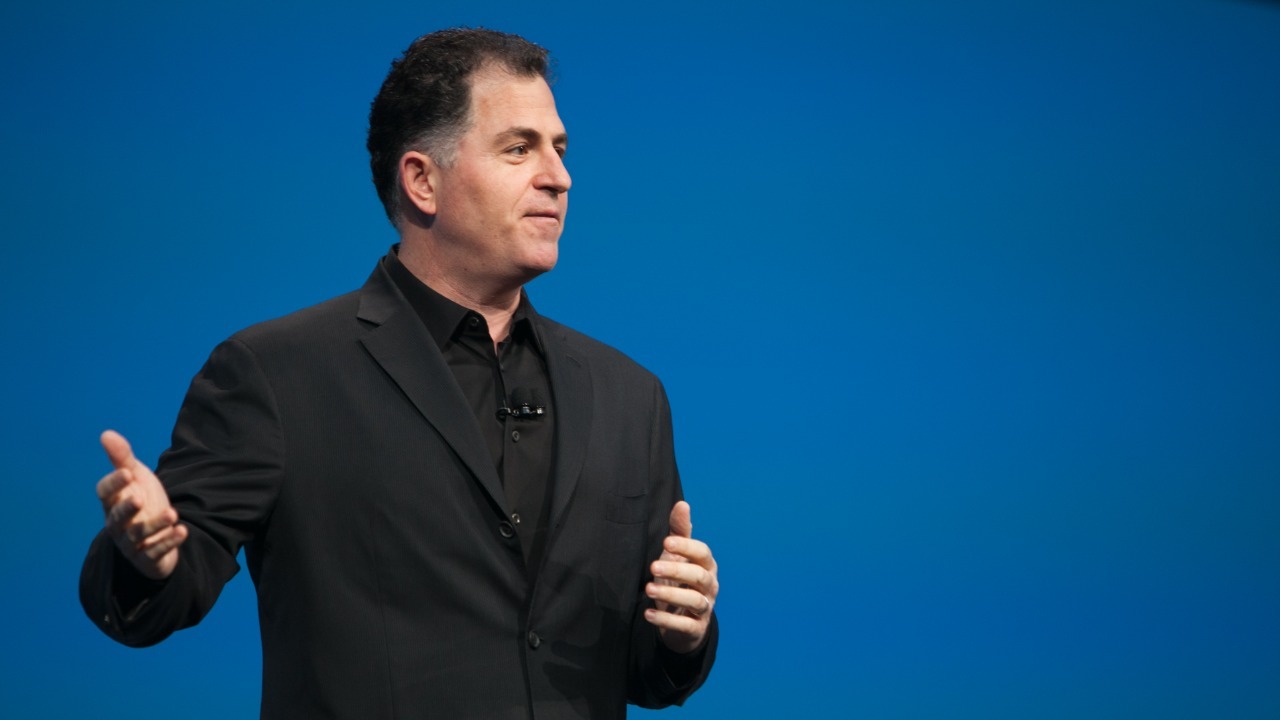
Michael and Susan Dell have just made one of the largest philanthropic bets on children’s wealth in U.S. history, pledging $6.25 billion to seed investment accounts tied to President Donald Trump’s new savings program for kids. The money is designed to turbocharge “Trump Accounts” and, in theory, narrow the wealth gap by giving tens of millions of children a small but early stake in the markets. Whether that promise holds up will depend less on the headline number and more on how the accounts are structured, who can realistically use them, and how much public policy wraps around the private cash.
What the Dell money actually does
The core of the pledge is straightforward: Michael and Susan Dell are committing $6.25 billion to help enroll 25 million children in Trump Accounts, which are investment vehicles meant to build long term savings for kids’ futures. The design is to create some 25 million additional accounts, each with a modest starting balance, so that children can benefit from compounding returns over time rather than starting adulthood from zero. Tech billionaire philanthropy has often focused on education or health, but here the Dells are explicitly targeting asset ownership for the next generation.
Details from the pledge indicate that the Dell money will be used to seed accounts for children 10 and under, with the donation structured so that 25M accounts receive $250 each for a starting investment. That $250 is not meant to cover college or a home down payment on its own, but to act as a catalyst that families, employers, and potentially local governments can build on. Tech leaders have long argued that early access to capital changes life trajectories, and the Dells’ move effectively tries to institutionalize that idea for a large slice of American children.
How Trump Accounts are supposed to work
Trump Accounts are a new type of savings vehicle, created under President Donald Trump as a way to give children a dedicated investment account that grows alongside them. In public remarks, Donald Trump has framed the initiative as a way for parents to save for their children’s future with federal backing and clear rules. The accounts are restricted to low cost diversified funds, which is meant to protect families from high fee products and speculative bets while still giving them exposure to the stock and bond markets.
Program rules, as described in coverage that urges readers to Read more about the fine print, quickly get complicated. Contributions can come from parents, relatives, or employers, and there are caps and income related rules that determine who qualifies for extra support. The accounts can only be used for specific future expenses, such as education, home purchases, or starting a business, and withdrawals before adulthood are tightly limited. That structure is meant to keep the money locked in for long term goals, but it also means families facing immediate financial stress cannot tap these funds, which may limit how attractive the program feels to those living paycheck to paycheck.
The federal seed and the Dell boost
The Trump administration has paired the private philanthropy with a public baseline, promising that every eligible child will receive a one time government contribution. In a statement highlighting the partnership, the White House said that Today, President Donald Trump joined lawmakers to describe a $1,000 government seed contribution that will go into each Trump Account when it is opened. That public money, layered on top of the Dell funded $250, means some children could start life with $1,250 invested on their behalf before any family or employer contributions.
On its own, a $1,250 stake is not transformative wealth, but over 18 years in low cost diversified funds it can grow significantly, especially if parents or employers add even small amounts each year. The Dell family’s pledge is being framed as a “Landmark Dell Gift Supercharges Trump Accounts for America, Kids,” signaling that the administration sees the private dollars as a way to accelerate uptake and political momentum for the program. The combination of federal and philanthropic seeding is unusual in U.S. savings policy, which has historically relied more on tax breaks than on direct deposits into children’s accounts.
Who actually benefits from the new accounts
The central equity question is whether Trump Accounts will meaningfully help children from low income families or primarily reward those whose parents already have money to save. Reporting on the Dell pledge notes that While the funds in the Trump Accounts may help young adults whose families or employers can contribute to them over time, there are concerns about how much children from low income families receive. If the only guaranteed money is the government seed and the Dell funded $250, then the gap between kids whose parents can keep adding to the account and those who cannot may actually widen as the years go by.
Coverage of the pledge underscores that Tech billionaires Michael and Susan Dell have wanted to make a large scale wealth building pledge for a long time, and they see Trump Accounts as the vehicle to do it. Yet the structure still leans heavily on voluntary contributions from families and employers, which are far more common in higher income households and white collar workplaces. Without additional policy levers, such as larger public matches for low income families or automatic payroll contributions for service workers, the program risks becoming another asset building tool that works best for those already closer to the financial mainstream.
Big money, bigger questions about inequality
Philanthropy at this scale inevitably raises questions about power and priorities. Michael and Susan Dell are not new to large social investments, having previously backed efforts to expand digital access, including a partnership where Dell Technologies joined UNICEF USA and others to support a global initiative to connect every school to the internet by 2030 through the Giga project. The Trump Accounts pledge shifts that focus from infrastructure to household balance sheets, betting that a small pot of invested money can change long term outcomes just as much as a connected classroom can.
Other major financiers are lining up behind the concept, which suggests that elite consensus is forming around child investment accounts as a preferred tool for tackling inequality. Reporting notes that Dalio and BlackRock have also provided a funding boost to Trump Accounts, signaling Wall Street’s comfort with a model that channels public and philanthropic money into private investment products. I see a tension here: the accounts may indeed help millions of children build modest wealth, but they also deepen the financial sector’s role in social policy and leave the scale of support contingent on the preferences of billionaires and asset managers.
Will $6.25 billion move the needle?
Whether the Dell pledge “helps” depends on what benchmark you use. On a narrow level, 25 million children receiving a combined $6.25 billion in early investments is a clear positive compared with the status quo of no assets at all. Michael and Susan Dell argue that children who grow up knowing they have an investment account in their name are more likely to stay in school, plan for higher education, and make different choices about work and family, and there is research from other child savings programs that supports that logic. Even if the balances are modest, the psychological effect of ownership and the habit of saving can matter.
On a broader level, however, the Dell money does not substitute for structural changes in wages, housing, or taxation that drive the wealth gap in the first place. A new savings vehicle, dubbed Trump Accounts, can only do so much if parents do not have spare cash to contribute or if market downturns erode balances just as kids reach adulthood. I see the Dell pledge as a powerful pilot of what universal child investment could look like, but its long term impact will hinge on whether policymakers build on it with more robust public funding, stronger protections for low income families, and complementary investments in education and opportunity that make those future account balances truly meaningful.
More From TheDailyOverview

Cole Whitaker focuses on the fundamentals of money management, helping readers make smarter decisions around income, spending, saving, and long-term financial stability. His writing emphasizes clarity, discipline, and practical systems that work in real life. At The Daily Overview, Cole breaks down personal finance topics into straightforward guidance readers can apply immediately.

