The U.S. dollar has lost roughly 10% of its trade-weighted value over the past 12 months, and President Trump is publicly celebrating the slide. That tension between a weakening currency and White House enthusiasm sits at the center of a growing debate about what the drop actually means for American households, including grocery bills and overseas travel plans.
How the Dollar Lost a Tenth of Its Value
The Federal Reserve’s nominal broad dollar gauge, published as the DTWEXBGS index, tracks the greenback against a wide basket of currencies weighted by U.S. trade shares. Comparing a specific date in February 2026 to the same date in February 2025, that index shows the dollar down by roughly 10%. Rather than a sudden collapse, the chart reveals a persistent, stepwise weakening that gathered pace through late 2025 and into early 2026, as investors reassessed U.S. interest-rate prospects and political risk. For Americans, that broad measure is more telling than a single bilateral rate against, say, the euro or yen, because it captures how the dollar is performing against the currencies of nearly all major trading partners at once.
This broad index is built differently from the widely quoted DXY benchmark, which focuses on just six major currencies and overweights Europe and Japan. The Federal Reserve’s foreign-exchange statistics, described in its H.10 methodology, rely on noon buying rates for dozens of partner currencies and periodically revise weights to reflect shifting trade patterns. Daily updates to those rates are published through the Fed’s H.10 data feed, making the broad index a living snapshot of the dollar’s real-world purchasing power. Because it incorporates emerging-market economies alongside advanced peers, it gives a fuller sense of how much the currency’s slide affects the cost of everything from imported machinery to foreign-grown food.
Trump Cheers While Treasury Holds the Line
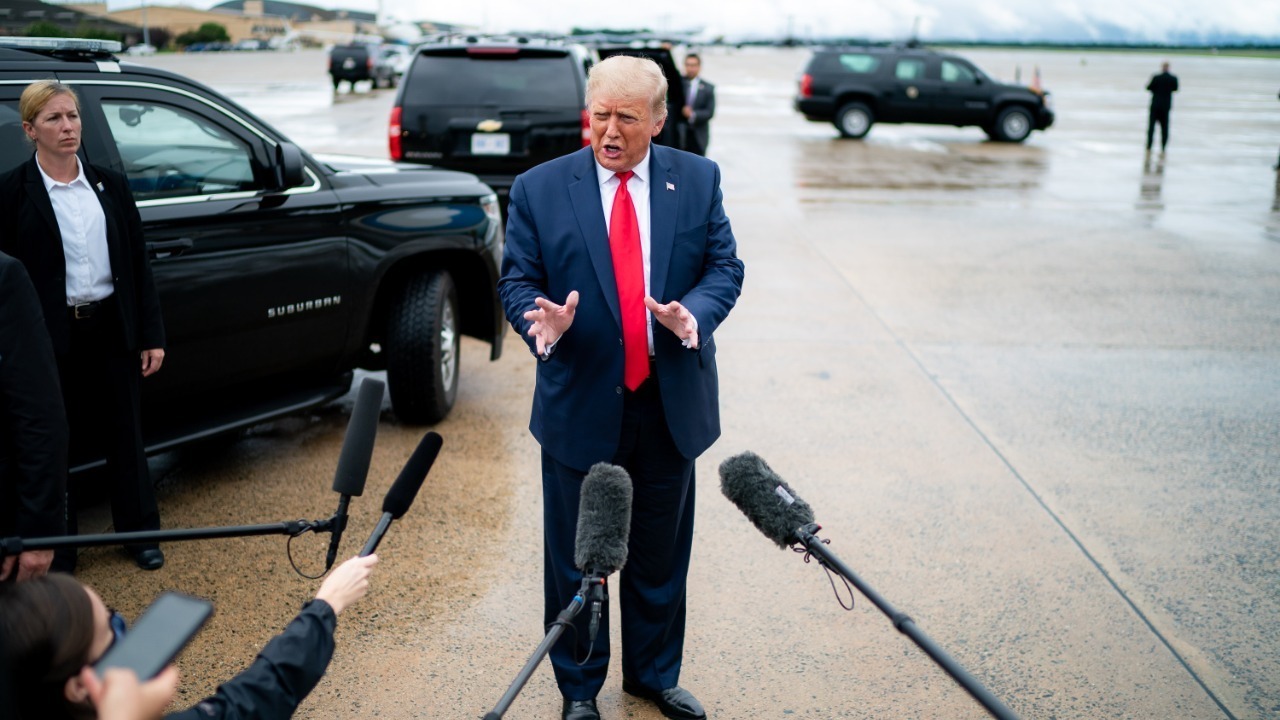
President Trump has been unusually blunt about his comfort with the dollar’s decline. Speaking to reporters before boarding Marine One, he argued that “you make more money with a weaker dollar” and said he sometimes goes to sleep “very happy” when the currency falls, according to a Senate transcript of his remarks. He tied that optimism to export competitiveness, suggesting that a cheaper dollar makes American goods more attractive overseas and can boost factory jobs. In political terms, that framing lets the White House present the currency slide as a tool for rebalancing trade, rather than as a warning sign about investor confidence.
The message from the Treasury Department has been more traditional. Treasury Secretary Scott Bessent told the Financial Times that the administration continues to support a “strong dollar policy,” even as Trump separately called the ongoing depreciation “great.” That split-screen communication has not gone unnoticed in markets. Currency traders watch official statements closely for hints of intervention or shifts in policy doctrine, and inconsistent rhetoric can amplify volatility. At the same time, Treasury’s semiannual report on foreign-exchange practices, highlighted in a related department release, reiterates a commitment to orderly markets and scrutinizes other countries for unfair currency management. The contrast between the president’s cheerleading and his department’s formal posture injects uncertainty into an arena where clarity is usually prized.
Wall Street Is Betting Against the Buck
Institutional investors have largely decided not to wait for Washington to reconcile its mixed messages. A broad survey of global fund managers by Bank of America found they had adopted their most negative positioning on the dollar in a decade, with many respondents expecting further weakness rather than a rebound. Participants cited an unsettled policy backdrop, ranging from tariff threats to unpredictable trade negotiations, as a major reason for trimming dollar exposure. When professional allocators move in tandem, they can reinforce the very trend they fear, as hedging strategies and portfolio shifts put additional downward pressure on the currency.
Derivatives markets echo that story. The Commodity Futures Trading Commission’s weekly Commitments of Traders reports show that speculative positions in dollar-linked futures have tilted more heavily toward bets on depreciation as the slide has unfolded. Hedge funds and other leveraged players have increased net short positions, while some commercial hedgers have locked in rates to protect against further declines. When both survey evidence and futures data point in the same direction, analysts are more inclined to see the move as structural rather than transitory. For households, that matters because a market consensus on a weaker dollar can influence everything from mortgage rates (through expectations about Federal Reserve policy) to the future cost of imported goods and overseas vacations.
What a Weaker Dollar Does to Prices at Home
The most immediate way a falling dollar touches everyday life is through import prices. Research from the Bureau of Labor Statistics on exchange-rate pass-through finds that changes in the dollar do raise or lower the prices U.S. buyers pay for foreign goods, but not one-for-one and not all at once. Highly traded commodities such as oil, metals, and some agricultural products tend to respond quickly, because they are priced in global markets where currency shifts are immediately reflected. By contrast, categories like apparel, toys, and consumer electronics often see more gradual adjustments, as foreign suppliers renegotiate contracts, hedge currency risk, or accept narrower profit margins to avoid losing market share. For consumers, that means the pain of a weaker dollar shows up unevenly. Gasoline and certain groceries may climb first, while other items creep higher over time.
A separate BLS article in the Monthly Labor Review on currency effects in price indexes underscores that exchange-rate moves influence inflation through both direct and indirect channels. Directly, a foreign-made product denominated in euros or yen simply costs more dollars when the U.S. currency buys less abroad. Indirectly, domestic producers who compete with imports may feel emboldened to raise their own prices when foreign rivals become more expensive, narrowing the gap between imported and homegrown goods. Over a year in which the trade-weighted dollar falls about 10%, households can expect higher prices on a broad set of imported items and on some domestically produced substitutes, even if the exact percentage increase on any given product is smaller. The academic caveat is that pass-through is incomplete and staggered. The practical takeaway is that a weaker dollar nudges the overall cost of living higher, especially for families that spend heavily on fuel, food, and imported consumer goods.
Who Wins and Who Loses When the Dollar Drops
Not every American is hurt by a softer currency. Export-oriented manufacturers, farm producers, and some service industries gain a price advantage when selling abroad, because foreign buyers can purchase more U.S. output for the same amount of local currency. That can support employment in sectors tied to global demand and may bolster profits for firms with substantial overseas sales. Multinational companies that earn revenue in foreign currencies but report in dollars also benefit when those earnings are translated back at a weaker exchange rate, mechanically lifting reported sales and income. For regions heavily dependent on manufacturing or agriculture, that dynamic can partly offset the pinch of higher import costs.
On the losing side are households and businesses that rely heavily on imported goods or foreign travel. Families planning vacations abroad will find that hotel stays, restaurant meals, and local transportation all become more expensive in dollar terms when the currency weakens. Small retailers that stock imported merchandise can see their wholesale costs rise, forcing them either to accept thinner margins or to pass increases on to customers. Savers with dollar-denominated assets, such as bank deposits or domestic bonds, also experience an invisible hit, even if their nominal balances do not fall, the global purchasing power of those savings declines. Over time, if the weaker dollar feeds into broader inflation, fixed incomes and wages that do not keep pace will stretch less far, complicating budgeting for retirees and lower-income households in particular.
For policymakers, the challenge is to navigate these crosscurrents without sending contradictory signals that further unsettle markets. A modest, orderly depreciation can help narrow trade deficits and support export industries, especially when it reflects fundamentals like productivity and interest-rate differentials. But a rapid or policy-driven slide risks stoking inflation, undermining investor confidence, and eroding the credibility of official commitments to stable currency management. As the dollar’s recent 10% drop ripples through prices, paychecks, and portfolios, the debate over whether this is a welcome adjustment or a warning sign will hinge less on political rhetoric and more on how quickly those real-world effects show up in Americans’ day-to-day finances.
More From The Daily Overview
*This article was researched with the help of AI, with human editors creating the final content.

Grant Mercer covers market dynamics, business trends, and the economic forces driving growth across industries. His analysis connects macro movements with real-world implications for investors, entrepreneurs, and professionals. Through his work at The Daily Overview, Grant helps readers understand how markets function and where opportunities may emerge.