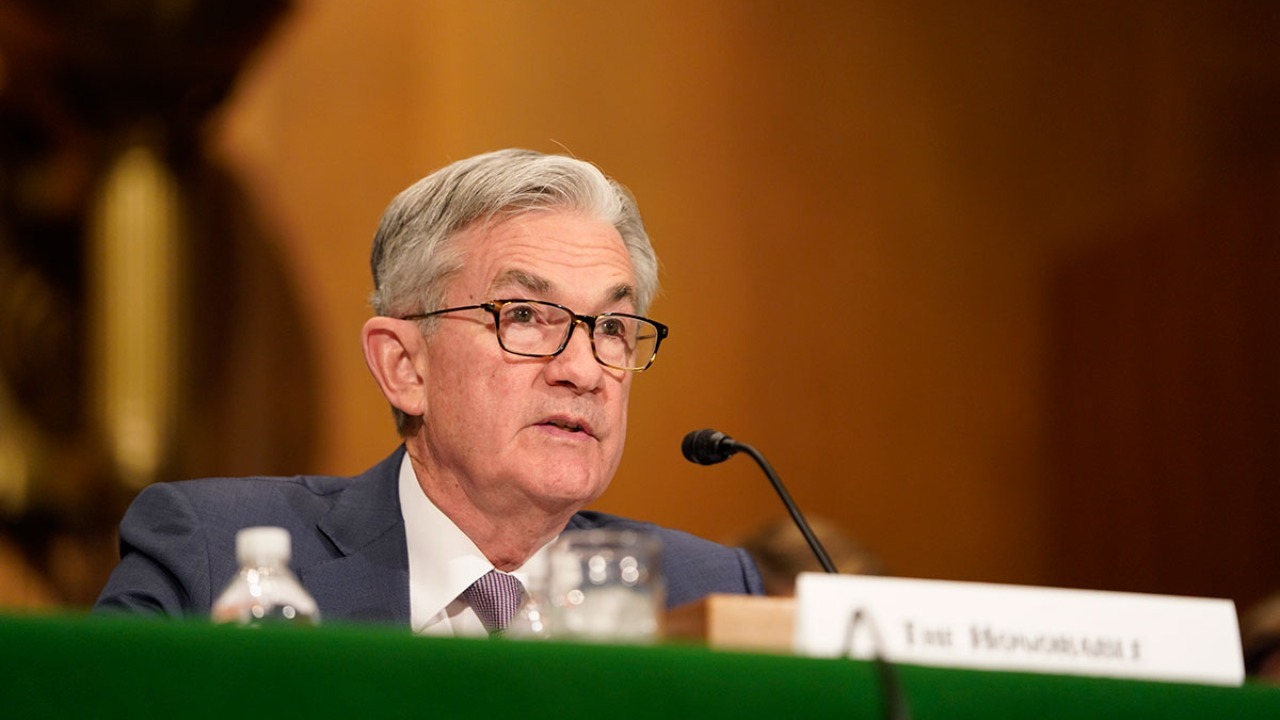
Stubbornly high prices and a cooling job market are pulling the Federal Reserve in opposite directions at the very moment its decisions carry maximum political and economic weight. Inflation is no longer raging, but it is proving sticky enough that cutting interest rates too quickly could reignite the problem, even as hiring momentum fades and households feel the strain. I see a central bank boxed in by conflicting data, forced to choose which risk to tolerate: a renewed price surge or a deeper hiring slump.
That tension is coming to a head as officials prepare for their next policy move, with markets, the White House and workers all looking for different outcomes. The Fed’s own leaders have warned there is “no risk-free path” forward, and the latest numbers on consumer prices, job creation and business activity suggest they are right. The choice is not literally impossible, but it is as close as modern central banking gets.
The Fed’s high-stakes December crossroads
The next policy meeting is shaping up as a stress test of the Fed’s strategy, because the economic signals are no longer pointing in a single direction. Growth has held up better than many expected, yet the labor market is losing some of its heat and inflation progress has slowed, leaving officials to decide whether to prioritize price stability or job security. Markets are already gaming out every word of the coming statement, betting on when rate cuts might begin and how aggressively they might unfold.
Fed officials will meet in Dec for a two day gathering, with their decision scheduled for 2 p.m. Eastern, a moment that will crystallize how they weigh the risk of recession against the danger that easing too soon “risks driving up inflation.” That tension is at the heart of the central bank’s current challenge, as policymakers try to prevent a downturn while still convincing the public that they will not tolerate another burst of price spikes, a balance that has been described as the Fed’s core dilemma in this week’s Fed meeting. I see that decision point as the moment when the “impossible choice” in the headline becomes a concrete set of numbers on a policy statement.
Powell’s warning: no risk-free path
Federal Reserve Chair Jerome Powell has been unusually blunt about the trade offs, signaling that whatever the Fed does next will hurt someone. If rates stay high, borrowers from first time homebuyers to small manufacturers will keep feeling the squeeze. If the Fed cuts too quickly, households that finally saw some wage gains could watch those gains eroded by another round of price increases. In my view, Powell is trying to prepare the public for the reality that there is no painless exit from this inflation cycle.
Federal Reserve Chair Jerome Powell reiterated on Tuesday that there is “no risk-free path” ahead after the latest rate moves, warning that the central bank sees “risks to inflation to the upside and risks to employment to the downside.” That framing, shared in a recent Powell warning, captures the essence of the current moment: the Fed is trying to steer between the Scylla of persistent inflation and the Charybdis of rising unemployment. When the chair of the central bank says out loud that every path carries real danger, it is a sign that the usual playbook of gradual, predictable moves is no longer enough.
Inflation is cooler, but still too hot for comfort
On paper, the inflation story looks far better than it did at the peak of the price surge, but the details show why the Fed is not ready to declare victory. The Consumer Price Index is no longer climbing at the breakneck pace that shocked shoppers in 2022 and 2023, yet the latest readings suggest price pressures are still running above the central bank’s target. For families trying to buy groceries, pay rent or replace a car, “slower inflation” still feels like a steady grind higher.
According to the U.S. Bureau of Labor Statistics, the Latest Numbers show the Consumer Price Index, or CPI, rising by 0.3% in Sep 2025, while the Unemployment Rate stood at 4.4% in the same month, a combination that keeps pressure on the Fed to stay vigilant. Treasury officials have underscored that Inflation remained above the target of 2 percent in the third quarter, noting in Table 2 – Inflation Indicators that the inflation rate was 3.0 percent, a level that still exceeds the central bank’s comfort zone and is documented in the government’s own Inflation Indicators. Independent tallies echo that picture, with one summary putting the current U.S. inflation rate at “About 3%” as of September 2025, a reminder that even after months of progress, About 3% is still above the Fed’s stated goal.
Prices accelerate again just as the job market cools
What makes the Fed’s job harder is that inflation has recently shown signs of reaccelerating at the same time the labor market is losing momentum. That is the classic stagflationary mix central bankers dread: rising prices paired with weakening hiring. I see this as the core of the “impossible” trade off, because the usual tools that fight one problem tend to worsen the other.
Recent data showed that Inflation sped up to 2.9%, the fastest pace in 2025, even as the job market slowed, a combination that revives memories of earlier inflation scares. The CPI data also highlighted that The CPI was being pushed higher by specific categories, including the impact of the highest U.S. tariffs since October 2021, which complicates the Fed’s task because it cannot directly lower tariffs with interest rate policy. When prices are rising for reasons that sit outside the usual demand cycle, the central bank’s blunt tools risk doing more damage to hiring than to the underlying sources of inflation.
Tariffs and supply shocks tie the Fed’s hands
One reason the inflation fight is so tricky this time is that a significant chunk of the price pressure is coming from supply side shocks rather than a simple overheating of demand. When costs rise because of tariffs, shipping snarls or geopolitical tensions, higher interest rates can do only so much. In fact, tightening policy aggressively in response to those shocks can crush investment and hiring without fully taming the underlying price drivers.
Federal Reserve Chair Jerome Powell has been explicit about this dynamic, warning earlier this year that “a tariff is like a negative supply shock” and calling it “a stagflationary shock, which is to say it makes both sides of the Fed’s mandate harder.” That description, shared in detail in his comments on tariffs as a negative supply shock, underlines why the central bank cannot simply lean on its usual models. If tariffs and other supply disruptions are pushing up prices, the Fed faces a cruel choice between tolerating higher inflation for longer or inflicting more pain on workers and businesses to chase a target that is partly out of its control.
Hiring is sinking even as layoffs stay low
On the surface, the labor market still looks relatively healthy, with unemployment low and layoffs limited, but the engine of job creation is sputtering. Employers are not firing workers in large numbers, yet they are also not adding many new positions, a pattern that leaves job seekers with fewer options and slows wage growth. I see this “no hire, no fire” environment as especially dangerous because it can mask underlying weakness until it is too late.
Recent reporting described how jobless claims have sunk to a three year low in what was called a “no-hire, no-fire” U.S. economy, noting that The drop in new claims last week was likely exaggerated by Thanksgiving and that Lots of people who lose jobs around a holiday delay filing, while the number of people already collecting unemployment benefits remains very low historically, but hiring collapses. That combination, detailed in an analysis of jobless claims and Fed reaction, shows why the headline unemployment rate can be misleading. If people are not being laid off but also cannot find new work, the labor market can feel frozen, and the Fed’s usual signals about slack and wage pressure become harder to read.
Private employers are starting to cut
Beneath the surface of low jobless claims, there are clearer signs that hiring is not just slowing but in some pockets actually reversing. Private sector employers, especially in interest sensitive industries, are beginning to shed workers as higher borrowing costs bite into margins and demand. For the Fed, that is a warning that the labor side of its mandate is coming under strain even before inflation is fully back to target.
An ADP report showed that US private employers unexpectedly shed 32,000 jobs in November, a sharp contrast to the steady gains that characterized the earlier recovery and a sign that higher rates are starting to bite. Markets interpreted the weak ADP data as reinforcing growing bets on Fed rate cuts, but from my perspective, it also underscores the bind policymakers face: easing too soon could reignite inflation, yet keeping policy tight risks turning a modest slowdown into a more serious employment downturn. When private employers are already trimming payrolls, the cost of further restraint rises with each meeting.
An economy growing without adding many jobs
One of the strangest features of the current cycle is that overall economic output is still expanding even as job creation stalls. Productivity gains, automation and the rapid adoption of artificial intelligence are allowing companies to do more with fewer workers. That might look efficient on a spreadsheet, but it leaves the Fed trying to interpret an economy where GDP and employment are sending different signals.
Reporting from WASHINGTON described how Keeping the economy on track is becoming an increasingly tenuous task for the Federal Reserve, with TNND noting that the economy is growing without adding many jobs, a pattern that reflects strong output but weak hiring. That dynamic, captured in detail in an analysis of how the economy is growing without adding many jobs, complicates the Fed’s reading of its dual mandate. If growth can continue with minimal hiring, the central bank may feel more comfortable keeping rates higher for longer to finish the inflation fight, but that choice risks leaving would be workers on the sidelines for an extended period.
Weak spending and rising hardship on Main Street
While headline GDP and stock indexes can suggest resilience, the Fed’s own regional surveys paint a more fragile picture on the ground. Consumer spending is softening, manufacturers are struggling to find buyers and signs of financial stress are building in lower income communities. I see this as the human face of the Fed’s dilemma: the longer rates stay high, the more everyday hardship accumulates, even if inflation slowly recedes.
The latest Beige Book style reporting noted that Even with the winter holidays looming, manufacturers are having a hard time finding buyers and warehouses are collecting unsold goods, while export business has been lackluster and hardship is rising in many districts. Those details, summarized in a review of how the Fed’s Beige Book reveals weakening spending, show that the pain of tight policy is not evenly distributed. Households that rely on steady overtime, small retailers that depend on holiday traffic and exporters facing weak foreign demand are all feeling the squeeze, even as aggregate statistics still look respectable.
Politics, personnel and the pressure to pivot
Layered on top of the economic data is a thick layer of political and institutional pressure. With President Donald Trump in the White House and a new Fed chair nominee under discussion, every policy move is being scrutinized not just for its economic impact but for its political implications. I see that environment as another reason the Fed’s choice feels impossible, because any decision will be read through a partisan lens.
Analysts have pointed out that if no change is made to the policy path and a policymaker’s “dot” is still at 3%, “then it is going to look a little strange that you did not dissent,” a reflection of how the internal politics of the Federal Open Market Committee can shape the message the Fed has to send. That observation, made in the context of a discussion about the implications of a new Fed chair nominee, underscores how personnel decisions and the dot plot interact. When inflation is still running at About 3% and the unemployment rate is 4.4%, any shift in leadership or communication can tilt expectations, making it even harder for the central bank to thread the needle between price stability and full employment.
More From TheDailyOverview
- Tennessee loses $2.6B megafactory and faces major layoffs
- Retired But Want To Work? Try These 18 Jobs for Seniors That Pay Weekly
- What to do with your pennies after the U.S. stops minting them
- Home Depot CEO warns of a troubling customer trend in stores

Grant Mercer covers market dynamics, business trends, and the economic forces driving growth across industries. His analysis connects macro movements with real-world implications for investors, entrepreneurs, and professionals. Through his work at The Daily Overview, Grant helps readers understand how markets function and where opportunities may emerge.

