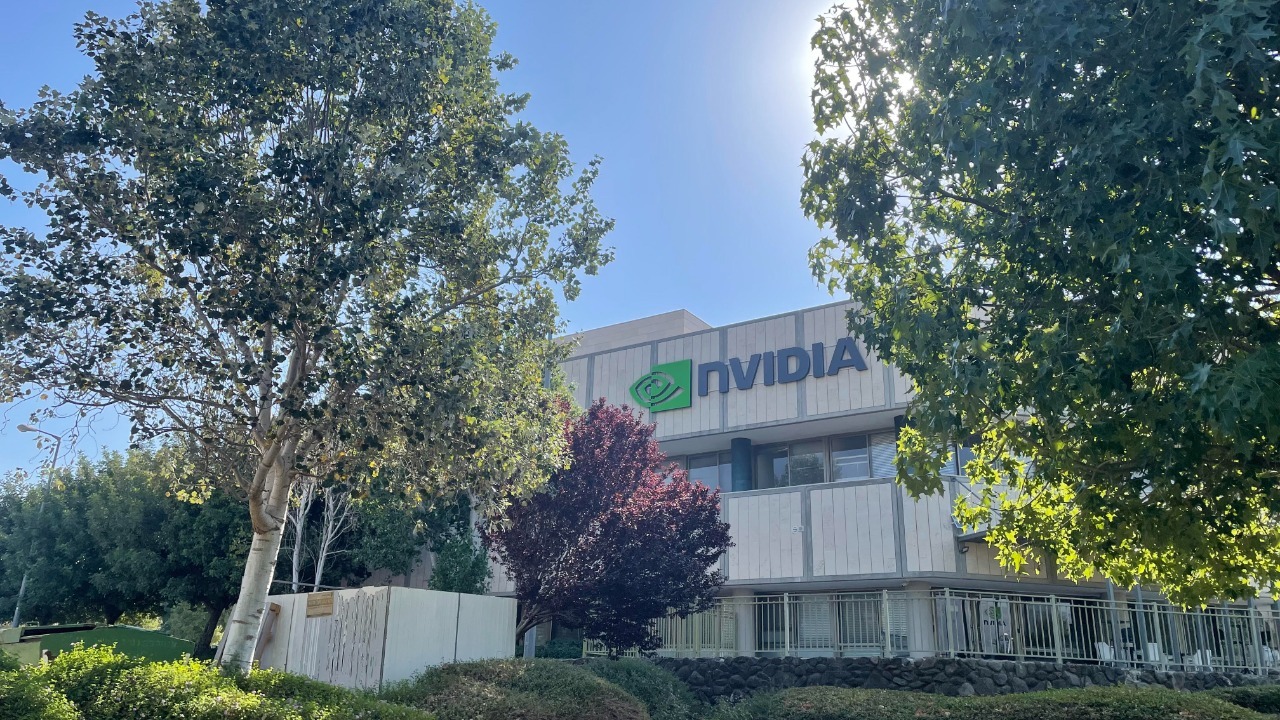
The race to a $10 trillion market value is no longer a distant thought experiment. With artificial intelligence reshaping corporate balance sheets and investor expectations, the question is shifting from whether any company can get there to which one will arrive first. The obvious candidates are the familiar mega caps, but the current leader in this race is not the consumer brand most people interact with every day.
Based on today’s market hierarchy and the economics of the AI boom, I see one company sitting in pole position, with others forced to chase from behind. The first $10 trillion giant is likely to emerge from the infrastructure powering AI rather than from the apps and devices riding on top of it, and that is where the current market data points most clearly.
The market cap leaderboard has a new king
The starting point for any $10 trillion conversation is simple: who is already closest. Recent market data shows that NVIDIA is now the largest company in the world, with a market cap of $4.46 trillion, putting it well ahead of the other household names that once defined the top of the market. That figure alone means NVIDIA is already almost halfway to the $10 trillion mark, a threshold that only a few years ago seemed reserved for the most optimistic long‑range forecasts.
What makes this shift so striking is how it has reordered expectations around long‑dominant consumer platforms. For years, investors assumed that the first $10 trillion company would be a smartphone or cloud titan, the kind of business that sells hundreds of millions of devices or subscriptions through polished storefronts like Apple or global e‑commerce hubs. Instead, the crown has moved to a chip designer whose core products sit deep inside data centers, invisible to most consumers but central to the AI systems that now drive corporate spending and market enthusiasm.
Why NVIDIA’s AI economics point toward $10 trillion first
Market leadership alone does not guarantee a straight line to $10 trillion, so I look next at what the AI cycle is doing to NVIDIA’s fundamentals. One detailed analysis of the AI boom notes that NVIDIA would need a 135% gain from its current valuation to reach a $10 trillion market cap, supported by 62% revenue growth and a 63% operating margin to justify that move on earnings power rather than pure speculation. Those specific figures, drawn from a Quick Read on the AI inflection, frame the scale of performance investors are implicitly betting on.
Crucially, NVIDIA is not starting from a cold stop. Analysts at William Blair estimate that the company already controls between 85% and 90% of the AI chip market, a level of dominance that is rare even by tech standards and that helps explain its recent growth trajectory. When one supplier effectively owns the core silicon for training and running large AI models, it captures not only outsized margins but also the pricing power to sustain them as long as demand outstrips capacity.
How fast could NVIDIA actually get there
Once I factor in both market share and current valuation, the timeline becomes the next critical question. Some AI‑focused projections argue that if the current cycle continues without a major market downturn, NVIDIA could plausibly reach a $10 trillion valuation in 2 to 3 years, essentially by extending the same kind of explosive demand that has already re‑rated the stock. That scenario, outlined in a forward‑looking assessment of whether NVIDIA will be the first to hit the mark, assumes that AI infrastructure spending remains the top capital priority for hyperscale cloud providers and large enterprises.
Other forecasts take a slightly longer view, suggesting that NVIDIA could become a $10 trillion company in 2030 if it maintains its current grip on AI chips and continues to translate that into high revenue growth and profitability. That outlook, which also leans on the 85% to 90% market share estimate from William Blair, effectively builds in some normalization of growth while still assuming AI remains the defining technology platform of the decade. In both cases, the common thread is that NVIDIA’s path is grounded in existing dominance rather than a hypothetical future product.
Why Apple and Amazon may not be first despite their scale
Any discussion of the first $10 trillion company has to reckon with the incumbents that already dominate consumer tech and retail. Apple was the first U.S. company to reach a $2 trillion valuation, a milestone it hit on August 19, 2020, and it doubled that mark in roughly two years as the iPhone, Mac, and services ecosystem continued to expand. That history, highlighted in an analysis of whether Apple’s trajectory offers a template for NVIDIA, shows how quickly a dominant platform can compound once it reaches escape velocity.
Yet Apple’s growth engine today looks more incremental than transformational, built on annual device refresh cycles and steady services expansion rather than a new technology wave on the scale of AI. A similar tension exists at Amazon, which combines global e‑commerce, logistics, and a leading cloud platform under one roof. Some market watchers argue that While Microsoft and Nvidia are solid bets to reach a $10 trillion market cap, another big technology player will get there first: Amazon (NASDAQ: AMZN), a view captured in a detailed prediction that Amazon will lead Wall Street’s race. That thesis leans on Amazon Web Services, advertising, and retail scale, but it still lacks the kind of near‑monopoly economics NVIDIA currently enjoys in AI chips.
The surprise is that the “infrastructure” name is now the favorite
For years, the default assumption was that the first $10 trillion company would be a consumer‑facing brand that people interact with daily on their phones, laptops, or shopping carts. The surprise today is that the leading contender is a company whose products most users never see, even as they rely on them every time they query an AI assistant, stream a recommendation‑driven show, or use a generative design tool. NVIDIA’s ascent to a $4.46 trillion valuation, confirmed in the Key Takeaways of the latest market cap rankings, reflects how the market now values the picks and shovels of the AI gold rush more highly than the prospectors themselves.
From my vantage point, that is why NVIDIA currently looks like the most credible candidate to be the first $10 trillion company, even if the timing remains uncertain and the path will almost certainly be volatile. The combination of a 135% upside gap to the target, 62% revenue growth, a 63% operating margin, and an 85% to 90% share of the AI chip market creates a rare alignment of scale, profitability, and structural advantage that Apple, Amazon, and other giants are struggling to match in their own segments. Unless those dynamics change, the next historic valuation milestone is more likely to be set inside a data center rack than on a retail shelf or smartphone screen.
More From TheDailyOverview

Grant Mercer covers market dynamics, business trends, and the economic forces driving growth across industries. His analysis connects macro movements with real-world implications for investors, entrepreneurs, and professionals. Through his work at The Daily Overview, Grant helps readers understand how markets function and where opportunities may emerge.

