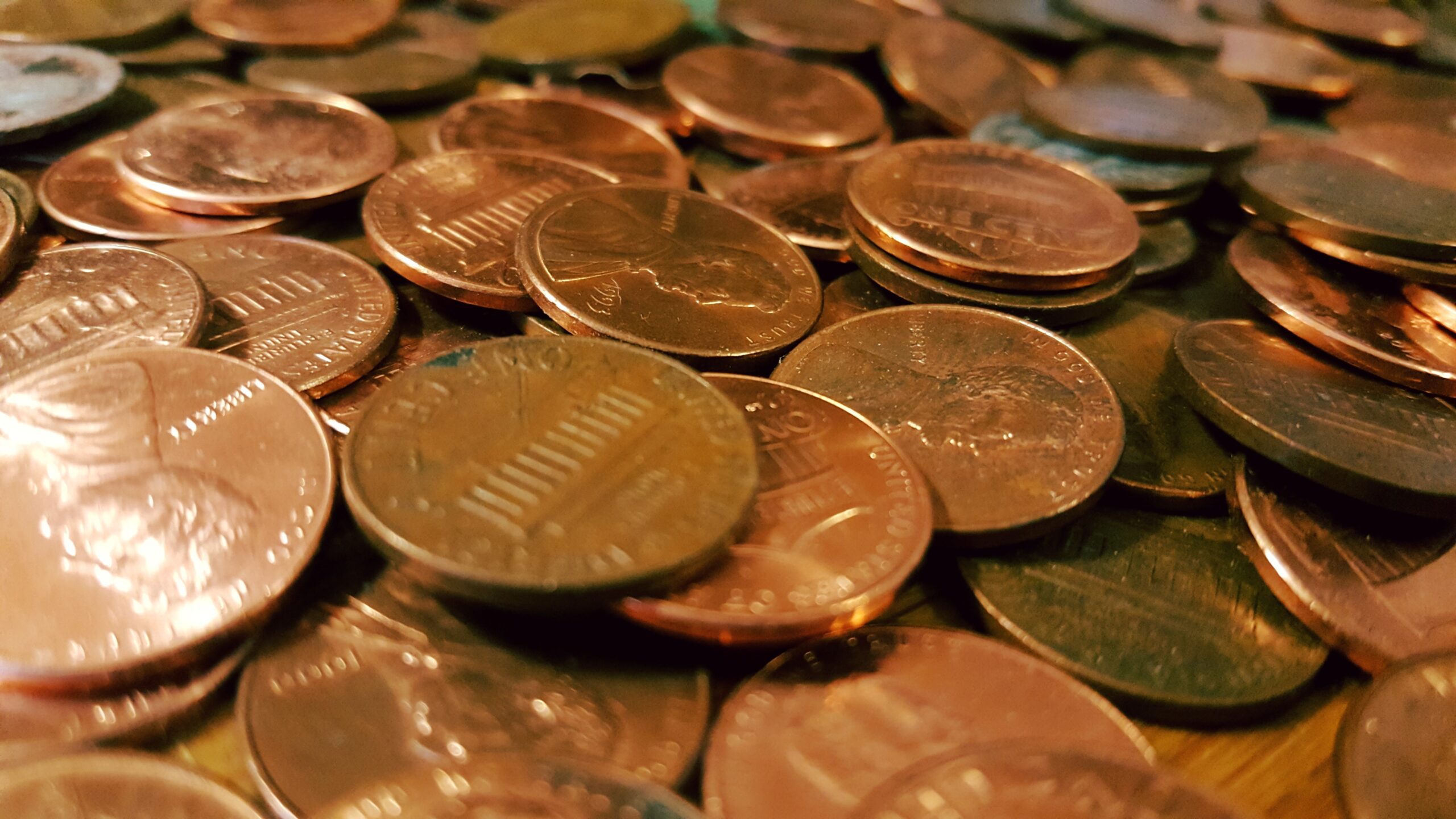
The U.S. Mint stopped producing pennies in November 2025, ending a 232-year run for the one-cent coin. The decision, driven by production costs that had ballooned to nearly four times the penny’s face value, lands at a moment when Americans are sitting on more cash at home than at any point in recent history. That collision between a dying denomination and a nation of quiet hoarders is reshaping how coins move through the economy and who bears the cost of the transition.
Why It Costs 3.69 Cents to Make a Penny
The arithmetic behind the penny’s demise is blunt. Each one-cent coin now carries a total production cost of 3.69 cents, according to the U.S. Department of the Treasury. That means the federal government loses roughly 2.7 cents on every penny it strikes. In fiscal year 2024, the Mint shipped 3,172 million pennies at a gross cost of approximately $117 million, as documented by the Congressional Research Service. The gap between what the coins cost to make and what they are worth in commerce had been widening for years, but the scale of the loss finally forced action.
Treasury officials estimate that halting production will save $56 million annually in material costs alone. The savings figure, while modest against the federal budget, reflects only direct manufacturing expenses and does not account for broader distribution and handling costs that ripple through the Federal Reserve’s coin supply chain. The Mint’s own financial reports have for years flagged rising metal prices, labor, and transportation outlays that make low-denomination coins structurally unprofitable. The Mint issued a final order of penny blanks earlier in 2025, and production will continue only until those remaining supplies are exhausted. After that, no new pennies will enter circulation, though the roughly 114 billion pennies already in existence retain their legal tender status indefinitely.
The Pandemic Turned Americans Into Cash Hoarders
The penny’s exit would be simpler if those 114 billion coins were actually circulating. Instead, a large share of them are locked away in jars, drawers, and piggy banks across the country. Federal Reserve research tracking consumer behavior found that average store-of-value cash holdings jumped from $241 in 2019 to nearly $485 per consumer in April 2020, an increase of more than $200 in just six months. Even as the initial pandemic shock faded, holdings remained elevated, averaging $299 in 2020 and climbing further to $347 by October 2021. Those figures capture only cash held as a buffer, not day-to-day spending money, underscoring how quickly households turned to physical currency as insurance against uncertainty.
The paradox is striking: Americans were spending less cash at registers while stockpiling more of it at home. Transactional cash use fell during the pandemic as contactless payments surged, but the instinct to hold physical currency as a safety net intensified. That behavioral shift created a coin supply-chain disruption severe enough that the Federal Reserve had to intervene. A joint study from Federal Reserve researchers and the U.S. Mint, “U.S. Coin Circulation: The Path Forward,” documented how the normal return pathways for coins broke down when foot traffic at laundromats, transit systems, and retail counters collapsed. Billions of coins simply stopped moving. The Mint’s disclosures describe emergency measures including coordinated messaging campaigns, temporary allocation programs for banks, and outreach to large retailers to encourage customers to bring in their loose change.
Rounding at the Register Hits Some Wallets Harder
With penny production winding down, cash transactions will increasingly rely on rounding to the nearest five cents. For consumers who pay primarily with cards or digital wallets, the change is invisible because electronic payments will continue to settle to the exact cent. But for the estimated millions of Americans who depend on cash for daily purchases, rounding introduces a small, persistent friction. Individual transactions round both up and down, and economic models generally predict the effect nets out close to zero over time. The concern, however, is that rounding practices could vary by retailer, and that stores in lower-income neighborhoods, where cash use tends to be higher, may apply rounding less favorably than national chains with standardized point-of-sale systems.
The transition period also raises a practical question: what happens to the pennies already out there? Treasury guidance confirms that existing pennies remain legal tender, so no one is forced to turn them in. But if hoarding behavior persists, and recent data suggests it will, the functional supply of pennies in commerce could thin out faster than the 114 billion figure implies. Stimulus-era research from the Consumer Financial Protection Bureau and survey data tracked through the Understanding America Study showed that cash-holding behavior during economic uncertainty is deeply ingrained, particularly among households without reliable access to banking services. Because the most recent detailed payment diaries only extend through 2022, policymakers are working with a lagging picture of how much physical currency, including low-denomination coins, remains parked outside the banking system.
Loose Change Still Needs Somewhere to Go
Even as digital payments grow, the physical infrastructure for handling coins remains significant. Coinstar, which operates more than 21,000 kiosks worldwide, says it recycles 43 billion coins every year. That volume suggests a massive ongoing demand for coin-to-cash conversion, and it also highlights a dependency: households that want to convert jarred pennies into usable money often pay a processing fee at these machines, typically around 12 percent at grocery store kiosks. Banks offer free coin counting for account holders in some cases, but access is uneven, and many branches have eliminated the service. In neighborhoods where bank branches have closed or scaled back, fee-based kiosks may be the only convenient option, effectively taxing people for the privilege of reintroducing their own coins into circulation.
Those frictions intersect with broader questions about who benefits from the end of the penny. Retailers and the federal government stand to save on handling and production costs, while consumers who rely on cash may face rounding losses and conversion fees. At the same time, the broader monetary backdrop is shifting. Data from the Federal Reserve’s economic database show that currency in circulation has trended upward over the past decade, reflecting both population growth and a heightened preference for cash as a store of value. Against that backdrop, the penny’s retirement looks less like a move toward a cashless future and more like a targeted attempt to prune the most inefficient pieces of the physical money supply. Whether Americans empty their coin jars or keep hoarding them will determine how smooth that pruning process turns out to be, and who ultimately pays for it.
More From The Daily Overview
*This article was researched with the help of AI, with human editors creating the final content.

Cole Whitaker focuses on the fundamentals of money management, helping readers make smarter decisions around income, spending, saving, and long-term financial stability. His writing emphasizes clarity, discipline, and practical systems that work in real life. At The Daily Overview, Cole breaks down personal finance topics into straightforward guidance readers can apply immediately.
