Investors who rode 2025’s powerful rally in stocks, bonds and oil are now being told that the story may not end with a soft landing. The strategist whose calls framed much of this year’s bullish narrative is warning that the next chapter could feature a sharp reset in sentiment in early 2026, an “optimism shakeout” that tests how durable this cycle really is. I see that warning as less a call for panic than a reminder that the same forces that fueled euphoria can quickly turn into a stress test for crowded trades and complacent risk-taking.
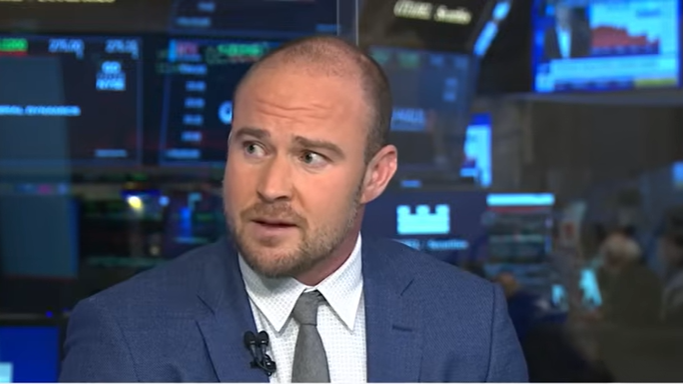
The message matters because it comes from someone whose forecasts have already shaped positioning. Strategist Warren Pies correctly anticipated the surge in equities, the recovery in bonds and the strength in crude, including a bold target of 6,800 on the S&P 500 that once looked outlandish and now feels like a reference point for late-cycle exuberance. When the person who mapped 2025 so accurately starts talking about a sentiment reset in 2026, I think it is worth asking not just whether he will be right again, but what kind of market psychology could make that call self-fulfilling.
From contrarian call to market reference point
The first thing I focus on is how quickly Warren Pies went from outlier to benchmark. Earlier this year, his projection that the S&P 500 could reach 6,800 was treated as a stretch case, yet the market’s relentless climb has turned that figure into a shorthand for how far optimism has run. His framework did not just cover equities. He also laid out a constructive view on bonds and oil, arguing that a combination of moderating inflation, resilient growth and disciplined energy supply would support all three major asset classes at once, a stance that has since been validated by the performance of stocks, Treasurys and crude futures that he had highlighted in his detailed outlook of 6,800 and 500 m in potential market value shifts tied to sentiment.
That track record is why his new warning carries weight. In a fresh round of commentary, Pies is described as the strategist who “nailed” stocks, bonds and oil this year and is now cautioning that the same optimism which powered those gains could be vulnerable to a shakeout in early 2026, particularly if growth expectations and positioning have outrun what earnings and policy can deliver. His call is not framed as a crash scenario, but as a repricing of exuberant assumptions, a phase where investors who extrapolated 2025’s conditions too far into the future may be forced to reset their expectations as the cycle matures and liquidity dynamics shift, a view that is laid out in detail in the discussion of how he foresaw the 6,800 level and the 500 m swing in sentiment-driven flows in the strategist’s 2025 review.
What an “optimism shakeout” really means
When I hear the phrase “optimism shakeout,” I do not think of a single crash day, but of a process. In Pies’s framing, the risk is that early 2026 becomes the moment when markets stop rewarding every dip buyer and start punishing crowded consensus trades. That could mean a period where high-flying growth names, richly valued cyclicals and leveraged plays on lower volatility all face a simultaneous test, not because the macro backdrop collapses overnight, but because the bar for positive surprises has been set too high by a year of near-perfect outcomes. In that environment, even modest disappointments on earnings, inflation or policy could trigger outsized reactions as investors rush to protect gains.
The language used in the coverage of his outlook underscores that nuance. The strategist is described as someone who accurately predicted stocks, bonds and oil this year and is now cautioning about a potential “Optimism Shakeout” in “Early” 2026, a phrase that signals timing risk rather than an immediate cliff edge. I read that as a warning that the first part of next year could feature a sequence of air pockets, where liquidity thins out and sentiment swings more violently than fundamentals alone would justify, especially in segments of the market that have become consensus winners. That perspective is captured in the description of how the “Strategist Who Accurately Predicted Stocks, Bonds, Oil This Year Cautions About Potential” dislocations tied to an “Optimism Shakeout” in the “Early” part of the coming year in the detailed summary of his warning.
The 3F Research lens on sentiment and positioning
To understand why this strategist is so focused on sentiment, I look at the broader research ecosystem around him. Pies is closely associated with 3F Research, a shop that has built its reputation on data-driven views of macro, valuation and positioning rather than story-driven narratives. Their work has consistently highlighted how flows, dealer hedging and systematic strategies can amplify both rallies and drawdowns, turning what might have been modest moves into regime shifts. That lens is particularly relevant after a year in which passive inflows, options activity and trend-following strategies all reinforced the bullish trend across major benchmarks.
The public face of that framework is visible in the way 3F Research communicates with clients and the broader market, often sharing charts and theses that track how investor positioning evolves as prices move. I see their social feed as a running log of how sentiment builds and then occasionally overshoots, which is exactly the backdrop in which an optimism reset can become dangerous if everyone is leaning the same way. The firm’s emphasis on quantifying crowding and risk appetite is evident in the regular updates and visual breakdowns posted by 3F Research, which help explain why a strategist steeped in that data would be quick to flag the point where enthusiasm turns into vulnerability.
How Warren Pies frames his own calls
One detail I find telling is how Warren Pies himself talks about his forecasts. Rather than treating his 2025 calls as a victory lap, he has been explicit that his views are snapshots of risk and reward at a given moment, not guarantees. In a recent social post, he highlighted a “Nice” retrospective on his work that looked back on some of the firm’s calls this year and then looked ahead to 2026, while stressing that they release their views as part of an ongoing process rather than as one-off, point-in-time predictions. That humility about the limits of forecasting is important context for interpreting his warning about a sentiment reset, because it suggests he is more interested in mapping probabilities than in planting a flag on a single dramatic outcome.
For investors, that framing matters. If the person who correctly anticipated the 2025 rally is now saying that his optimism is conditional and that the balance of risks is shifting, it is a cue to revisit assumptions rather than to blindly follow a new headline. I read his comments as an invitation to think in scenarios: one where the cycle extends but with more volatility and another where a sharper repricing forces a broader rethink of risk appetite. His own description of that process, including the reference to a “Nice” look back at prior calls and a reminder that their work is not about static, point-in-time predictions, is laid out in his post on how he views his track record, which reinforces the idea that the 2026 warning is part of a continuous reassessment rather than a sudden pivot.
Signals from global coverage and the SPX benchmark
The reach of Pies’s call is also evident in how it has been picked up in global market coverage. International reports have framed him as the “Strategist Who Nailed Stocks, Bonds and Oil This Year” and emphasized that he now “Warns of” an “Optimism Shakeout” in the “Early” part of 2026, tying that warning directly to the performance of the S&P 500 index, referenced as the 標普500指數 (.SPX.US) with figures such as 500 and 68 used to illustrate how far the benchmark has run relative to prior expectations. When a strategist’s views are being translated and circulated across regions, it signals that his framework is influencing not just U.S. investors but also global allocators who use SPX as their primary risk barometer.
That international echo chamber can itself become a driver of the very sentiment shifts he is flagging. As more investors abroad anchor on the same narratives about the S&P 500’s path and the potential for a reset, the risk grows that any wobble in SPX will trigger a synchronized response across markets that have been using it as a guide. I see that as a reminder that the optimism shakeout he describes may not be confined to one index or one country, but could ripple through global portfolios that have been built around the assumption that U.S. large caps will continue to lead. The way his warning is framed in coverage of the 標普500指數 (.SPX.US), including the explicit references to 500 and 68 in the context of how the “Strategist Who Nailed Stocks, Bonds and Oil This Year Warns of” an “Optimism Shakeout” in the “Early” stages of 2026, is captured in the international analysis of the SPX-linked outlook.
More From TheDailyOverview
- Tennessee loses $2.6B megafactory and faces major layoffs
- Retired But Want To Work? Try These 18 Jobs for Seniors That Pay Weekly
- What to do with your pennies after the U.S. stops minting them
- Home Depot CEO warns of a troubling customer trend in stores

Grant Mercer covers market dynamics, business trends, and the economic forces driving growth across industries. His analysis connects macro movements with real-world implications for investors, entrepreneurs, and professionals. Through his work at The Daily Overview, Grant helps readers understand how markets function and where opportunities may emerge.

