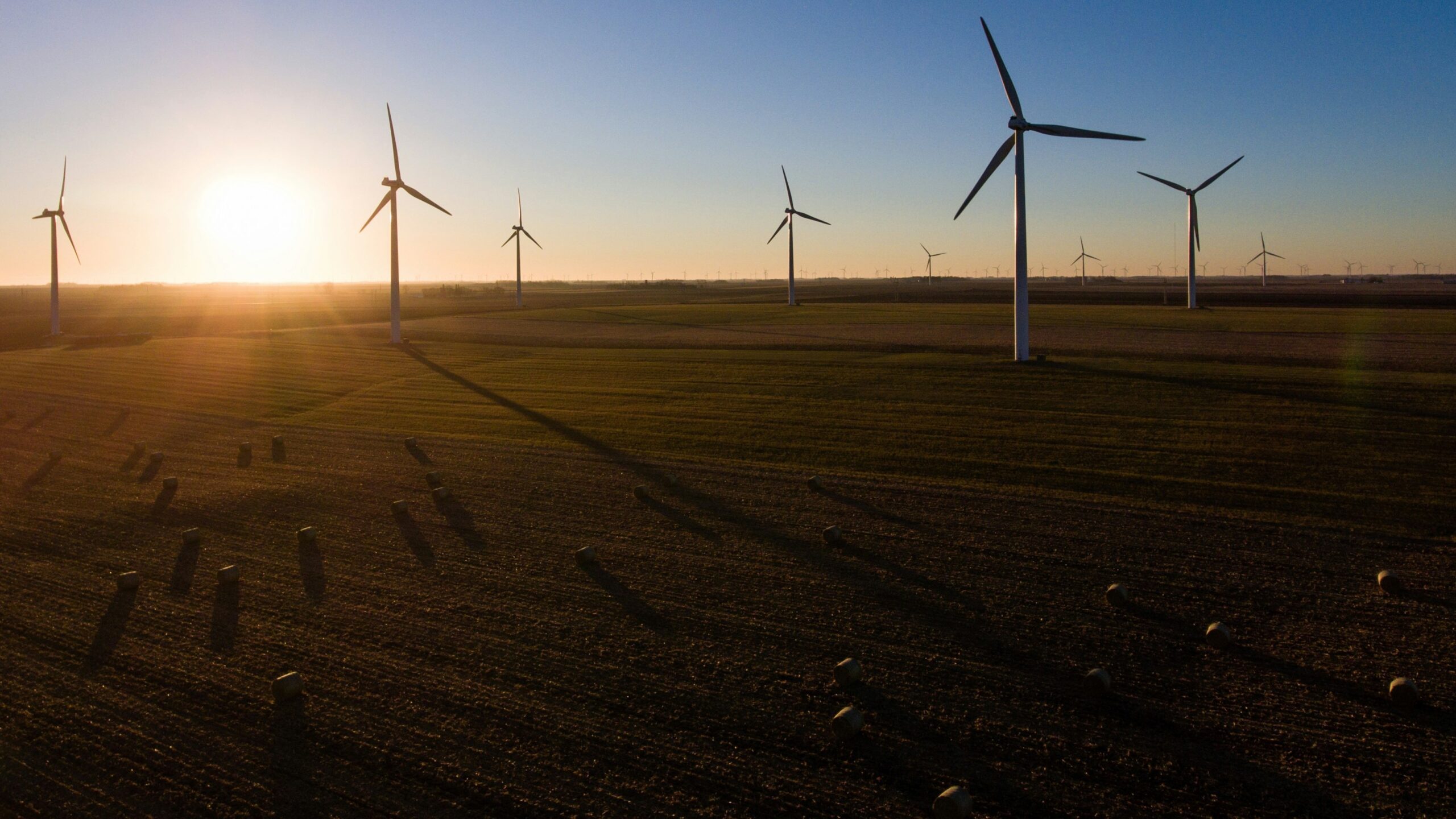
The United States just watched a wave of clean energy investment evaporate. Companies walked away from more than $34 billion worth of projects, shelving factories, wind farms, solar arrays, and battery plants that were supposed to anchor the next generation of the power system. The result is a sudden reversal in a sector that had been defined by breakneck growth and a warning about how fragile the clean energy boom has become.
Those lost projects are not abstract accounting entries. They represent specific plants that will not hire workers, communities that will not see new tax revenue, and power lines that will not be built to connect low cost renewable energy to the grid. The cancellations are also a direct test of President Donald Trump’s promise to declare a “national energy emergency” and to slow, or even reverse, the shift away from fossil fuels.
The $34 billion reversal and what vanished
Companies canceled or downsized more than $34 billion in U.S. clean energy projects in 2025, a scale of retrenchment that would have been hard to imagine only a few years ago. A detailed review of those decisions found that the pullbacks spanned the full range of the transition economy, from utility scale wind and solar to battery storage and manufacturing facilities that were supposed to supply those projects. The same analysis underscored that these were not speculative ideas on a whiteboard but concrete investments that had already advanced through planning and, in many cases, early construction.
In its year end look at the sector, one business group concluded that Topline Findings for 2025 showed a clean energy landscape defined as much by retreat as by expansion. Under the section labeled “Glance,” the report highlighted that cancellations and downsizings were now a central feature of the market rather than isolated setbacks. That same assessment framed the lost projects as a drag on regional economies that had been counting on new industrial activity tied to the energy transition.
Three dollars abandoned for every dollar announced
The most striking metric from that year end analysis is a simple ratio. For every dollar of new clean energy investment announced in 2025, companies abandoned three, a pattern captured in the phrase “Three dollars abandoned for every dollar announced.” That imbalance signals that the sector is not just slowing but, in net terms, shrinking relative to what had been planned. It also reflects a growing sense among developers that long term policy uncertainty and shifting incentives make it risky to commit capital to projects that may take years to complete.
A separate release from the same group put a finer point on the damage, noting that Companies Cancelled $34.8 billion in projects and 38K Jobs for Clean Energy Projects in 2025, Outpacing New Investments. That figure, which includes the precise amounts of $34 and $34.8 billion, captures not only the lost construction work but also the permanent positions that would have operated factories and maintained facilities. The release framed the cancellations as a clear signal that policy whiplash and regulatory headwinds were beginning to outweigh the pull of tax credits and consumer demand.
Policy whiplash in the Trump era
President Donald Trump campaigned on a promise to slow the clean energy buildout, and he has treated that pledge as a governing mandate. During his 2025 inaugural address, During that speech he vowed to declare a “national energy emergency” and to prioritize coal, oil, and gas over solar, wind, and stored power. Soon after taking office in January 2025, his administration began rolling back or freezing a series of programs that had underpinned the previous surge in clean energy investment, signaling to developers that the federal government was no longer a reliable partner.
Reporting on the first year of this agenda has documented how Trump followed through on those promises once in office. One of his first actions was to pause leasing and permitting for renewable energy projects on federal lands and waters, a move that immediately put large wind and solar developments in limbo. Another analysis noted that, while the One Big Beautiful Act has been the most visible symbol of this shift, One Big Beautiful drew headlines, the broader policy and regulatory attack on clean energy has been more consequential, reshaping incentives for electric vehicles and power projects alike.
Grid bottlenecks, local backlash, and the Silfab Sola example
Federal policy is only part of the story. Developers also face a grid that is struggling to absorb new projects and communities that are increasingly skeptical of large energy infrastructure. One industry leader put it bluntly, saying that “These cancellations are very clearly attributable to high interconnection costs,” pointing to the fees and delays that come with plugging new plants into congested transmission networks. In 2025, local opposition also led to the demise of multiple projects, as residents pushed back against new lines and substations even when they promised cheaper power.
The cancellations are not limited to power plants. In one widely discussed case, a community that thought it was getting a data center discovered that the proposed facility was actually a factory set to produce solar panel components. But the project, tied to Silfab Sola, would have employed more than 100,000 people across its supply chain, yet it was ultimately shelved amid political and local resistance. A broader review of the trend found that the United States has lost $34 billion in clean energy projects, with Silfab Sola serving as a vivid example of how misinformation and backlash can derail industrial investments that were supposed to anchor the clean energy economy.
What survived: a $9.7 billion lifeline and contested programs
Even as many initiatives have been cut or frozen, not every piece of the previous administration’s climate agenda has been dismantled. One notable survivor is a $9.7 billion Biden-era initiative designed to bring renewable energy to rural electric cooperatives, which has so far escaped the ax. Reporting on that program emphasized that it remains one of the largest single federal efforts to help rural communities shift away from coal and toward cleaner sources, and that its preservation reflects both political pressure from farm state lawmakers and the practical reality that many co-ops see renewables as a way to lower bills.
The same coverage, By Benjamin Storrow, noted that this program is an exception in a broader pattern of cuts. A separate policy roundup detailed how the administration moved to Rescinds unobligated balances for programs including the Advanced Industrial Facilities Deployment Program DOE Home Energy Rebates, part of a wider effort to claw back funding that had not yet been spent. Those decisions have added another layer of uncertainty for companies that had been counting on federal support to make complex projects pencil out.
More From The Daily Overview
*This article was researched with the help of AI, with human editors creating the final content.

Grant Mercer covers market dynamics, business trends, and the economic forces driving growth across industries. His analysis connects macro movements with real-world implications for investors, entrepreneurs, and professionals. Through his work at The Daily Overview, Grant helps readers understand how markets function and where opportunities may emerge.

