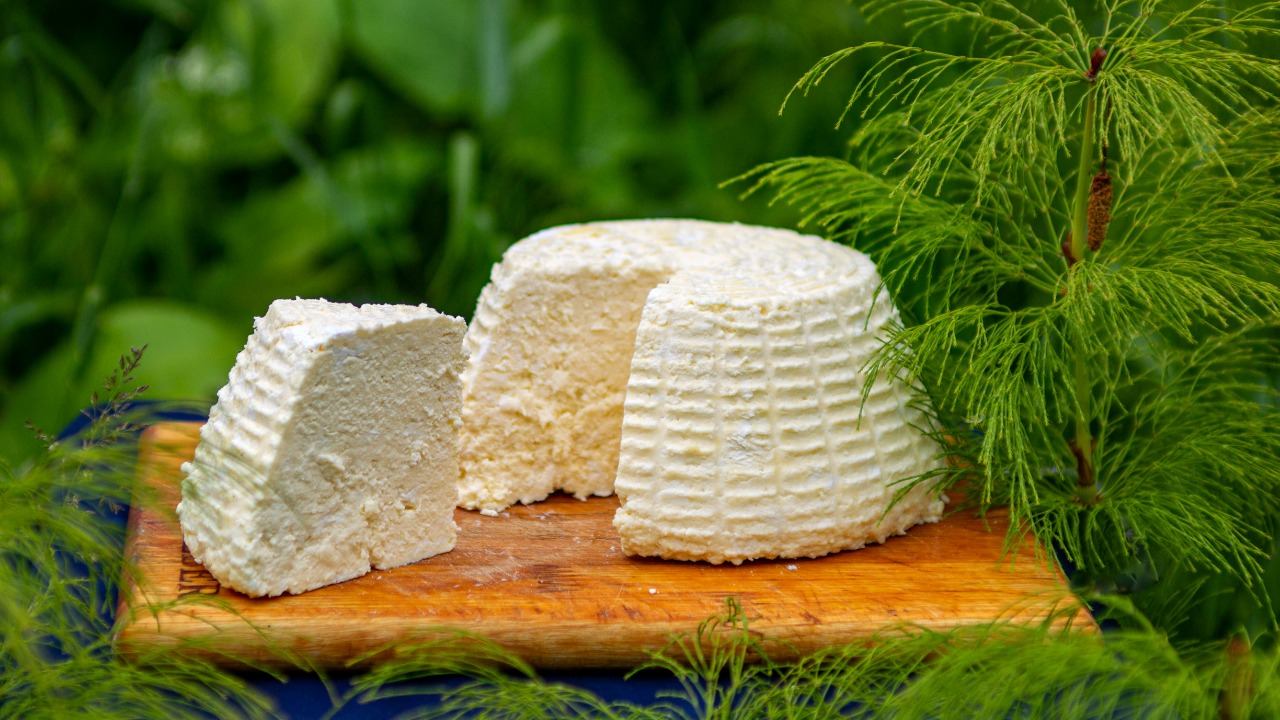
The priciest cheese on the planet is not a centuries-old wheel from France or Italy but a crumbly, pale block made with milk from working animals that rarely feature on a cheeseboard. Pule, produced in tiny quantities in Serbia, routinely commands four-figure sums per kilo, putting it in the same price bracket as fine jewelry rather than supermarket cheddar. I want to unpack why this particular cheese is so wildly expensive and how a mix of biology, geography, and luxury demand has turned it into a cult object for serious collectors.
What Pule actually is, and why it breaks price records
Pule, sometimes called magareći sir, is a Serbian specialty made from a blend of donkey and goat milk that looks deceptively modest on the plate. The recipe uses a precise mix of 60% Balkan donkey milk and 40% goat’s milk, a ratio that gives the cheese its unusual texture and concentrated flavor while anchoring it firmly to the herds and pastures of the Balkans. According to detailed descriptions of Pule cheese, the result is a dense, crumbly product that is closer to a very dry feta than a creamy brie, with a sharp, saline profile that reflects the animals’ forage and the region’s climate.
What truly sets Pule apart is its price, which routinely reaches levels that make even high-end Parmigiano-Reggiano look affordable. Reports on the global luxury food market describe Pule as the most coveted cheese available, valued at around $600 per pound, with other accounts citing figures closer to 1,000 euros per kilogram or even about $1,000 per pound. One video report on the production process puts the figure at €1,000 per kilo, while another analysis of luxury food pricing notes that Pule can be listed at around $113 for very small quantities. Even at the lower end of those estimates, it sits comfortably above almost every other cheese on the market.
Rare donkeys in a rare place: the geography behind the price
To understand why Pule costs so much, I have to start with where it comes from. The cheese is produced at the Zasavica donkey reserve, a protected area and working farm located about 80 kilometres from Belgrade, where a carefully managed herd of Balkan donkeys is hand-milked for the cheese. Descriptions of Zasavica emphasize that this is not an industrial dairy but a conservation-focused operation, with cheese sales helping to sponsor ongoing work to preserve the animals and their habitat.
The animals themselves are part of the story. The Balkan donkey is a local breed with limited numbers, and the herd at Zasavica is small by design, which means the supply of milk is inherently constrained. Reporting on the cheese notes that Pule is made from the milk of rare donkeys, and that scarcity is compounded by the animals’ biology and temperament. One detailed feature on the cheese explains that Pule is made from the milk of rare donkeys, and that getting enough of that milk for even a small batch is a logistical challenge. Another deep dive into the production process describes how milking takes place three times a day and still yields only tiny volumes, a reality that is reflected in the way its exorbitant price reflects the labour involved.
Milking logistics and the brutal math of supply
Donkey milk is not like cow’s milk, and that difference shows up in the economics. Balkan donkeys produce relatively little milk per animal, and they do so only when they are nursing foals, which sharply limits how much can be collected without compromising the herd. Accounts from the farm and from food writers who have visited the region describe a painstaking routine in which workers hand-milk the animals multiple times a day, often for only a few hundred millilitres at a time. One widely cited breakdown of the process notes that it can take dozens of individual milkings to gather enough liquid for a single kilogram of cheese, which helps explain why companies that work with donkey milk treat it as a luxury ingredient rather than a commodity.
On top of that, the conversion rate from milk to finished cheese is punishing. Donkey milk is naturally low in fat compared with cow or sheep milk, which means more liquid is needed to produce the same amount of curd. Reports on Pule’s production often cite figures that run into the tens of litres per kilogram of cheese, and some analyses of the market point out that this is one reason Pule can reach $1,000 for a single pound. When I look at those numbers alongside the labour involved in milking and the limited number of animals, the high price starts to look less like a marketing stunt and more like the inevitable outcome of a very inefficient, very manual process.
From barn to luxury list: how Pule became a status cheese
Scarcity alone does not guarantee a luxury aura, and Pule’s rise also reflects how the global food world now treats rare ingredients. Coverage of the cheese in mainstream food media often frames it as the ultimate splurge, a product that sits at the far edge of what even serious cheese lovers might consider paying. One detailed feature on the category notes that when it comes to expensive cheeses, it is a lot like couture, with tiny production runs, meticulous craftsmanship, and a clientele that is as interested in the story as in the taste. In one profile, a writer who splits her time between North Carolina and Europe describes how rare donkeys in a rare place have turned Pule into a kind of edible collectible, something to be sought out and discussed as much as eaten.
That narrative has been reinforced by the way Pule is covered alongside other high-priced cheeses and auction sensations. Over the summer, a separate cheese made headlines when a moldy, green wheel sold for more than $42K at auction, a reminder that in the right context, fermented milk can behave like fine art. Pule fits into that same ecosystem of status foods, but with an added twist: it is not French, despite the common assumption that the most expensive cheeses must come from classic European powerhouses. One widely shared piece on the subject underlines that the most expensive cheese in the world does not come from a cow and that it is not French, reinforcing the idea that true luxury in food can emerge from unexpected corners.
Taste, conservation, and the ethics of a four-figure cheese
For all the talk of price tags, Pule is still a food, and people who have tasted it describe a distinctive profile that helps justify the hype. Detailed tasting notes in long-form features compare it to an ultra-concentrated feta, with a crumbly texture, pronounced salinity, and a lingering, slightly wild finish that reflects the mix of 60% donkey and 40% goat milk. Some writers argue that to make a great cheese it is not enough to have a famous region or a protected label, and that the craft and patience involved in aging and handling the curds matter just as much. One analysis of high-end dairy points out that this is also true for other expensive cheeses, where the months the cheese is aged and the care taken in the caves or cellars can be as important as the milk itself, a point echoed in coverage that notes how months the cheese is aged shape its final character.
There is also an ethical and environmental dimension that I cannot ignore. The Zasavica operation presents Pule not just as a luxury product but as a way to fund the preservation of the Balkan donkey and its landscape, with descriptions of the farm emphasizing that cheese sales help to sponsor conservation work. One in-depth profile of the cheese notes that for many of us, the most money we spend on cheese comes at the supermarket, but that What Makes Pule The Most Expensive Cheese On Earth is precisely this combination of rarity, labour, and conservation framing. Broader explainers on the category of ultra-pricey cheeses underline that when it comes to expensive cheeses, it is a lot like couture, really, with buyers paying for a story about place and purpose as much as for flavor, a point that surfaces again in coverage that simply calls Pule the most expensive cheese and treats its wild price as inseparable from the wildness of the animals and landscape that produce it.
More From TheDailyOverview

Cole Whitaker focuses on the fundamentals of money management, helping readers make smarter decisions around income, spending, saving, and long-term financial stability. His writing emphasizes clarity, discipline, and practical systems that work in real life. At The Daily Overview, Cole breaks down personal finance topics into straightforward guidance readers can apply immediately.

