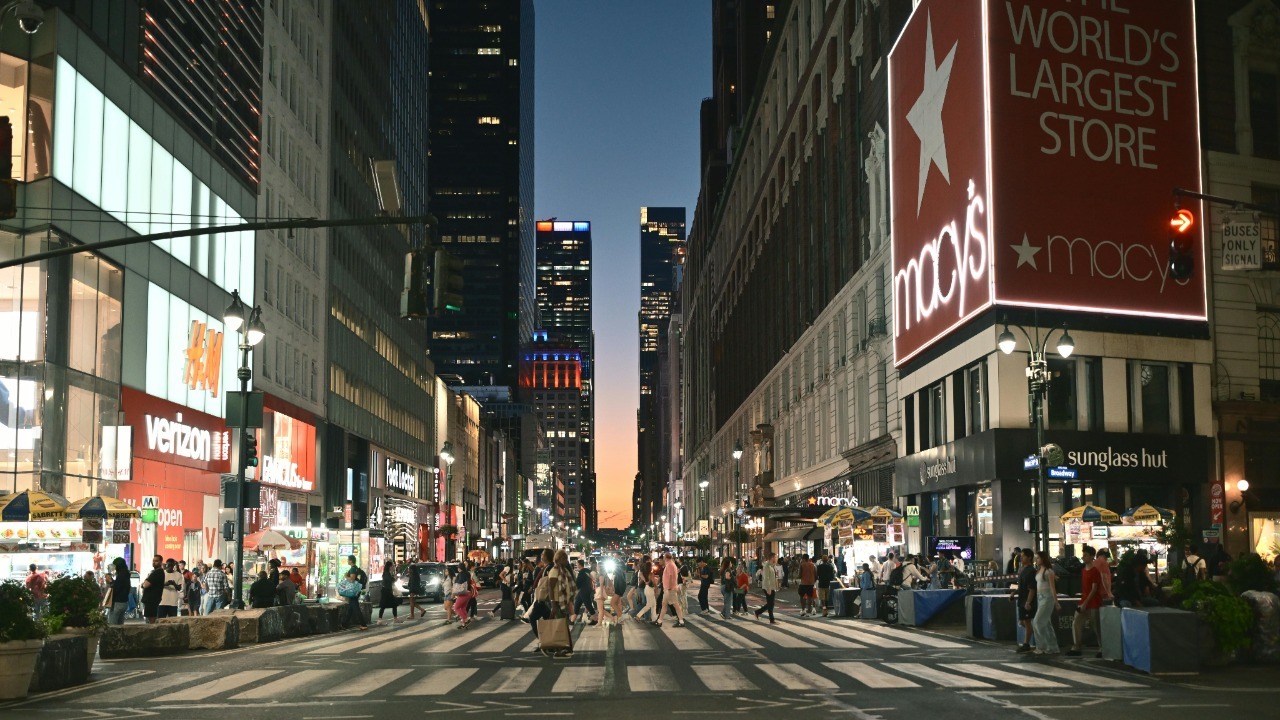
Macy’s has confirmed another round of store closures, with 14 additional locations set to shut their doors as the retailer accelerates a years-long plan to shed underperforming sites and redirect resources toward its strongest properties. The cuts follow a previous wave of 66 closures and bring the company closer to its target of eliminating roughly 150 namesake stores by the end of 2026. For shoppers in affected markets, the practical fallout is already underway: clearance sales, shifting return policies, and the loss of a neighborhood anchor that, in many cases, has operated for decades.
What the “Bold New Chapter” Strategy Actually Means
The closures trace back to a sweeping restructuring plan Macy’s announced in early 2024. Branded internally as A Bold New Chapter, the strategy calls for closing approximately 150 underproductive Macy’s locations through 2026 while concentrating investment in roughly 350 go-forward stores. The company also signaled plans to expand the footprints of its higher-margin brands, Bloomingdale’s and Bluemercury, treating them as growth engines while the flagship Macy’s banner contracts. In later communications, Macy’s reiterated this framework, referring to the same transformation as its corporate strategy guiding which locations stay and which go.
The math behind the decision tells its own story. Those 150 targeted stores account for about 25% of the company’s total retail floor space but generate less than 10% of overall sales, according to financial disclosures. In other words, Macy’s is shedding a quarter of its physical presence to eliminate locations that barely move the revenue needle. That gap between square footage and sales volume is the clearest signal of how long some of these stores have been losing ground to online shopping and shifting foot traffic patterns. By formally labeling them “non-go-forward,” the company is acknowledging that incremental tweaks are no longer enough to make these sites viable.
How 14 More Stores Fit Into the Closure Timeline
The latest batch of 14 closures represents the next phase in a process that has already moved quickly. Macy’s had targeted 50 store closures by the end of fiscal 2024, and the company previously confirmed a wave of 66 locations designated for shutdown as part of the same plan. In that announcement, Macy’s described the closures as a necessary step within its planned store reductions, emphasizing that the impacted sites were underperforming relative to the rest of the fleet. Each round has been tied directly to the Bold New Chapter framework, with management using the term “non-go-forward” to describe locations that no longer fit its long-term portfolio.
The pace of these cuts matters. By front-loading closures, Macy’s can redirect capital toward renovating and restocking its surviving locations sooner rather than later. The company has described the stores it is keeping as go-forward sites, meaning they meet internal benchmarks for traffic, sales density, and market positioning. Stores that fall below those thresholds get labeled underproductive, a corporate term that effectively marks them for elimination. The 14 newly confirmed closures follow that same screening process, and shoppers can check the company’s online closure information for the full list of affected locations and their expected timelines.
Why Suburban Malls Bear the Brunt
Most of the stores being cut share a common profile: they sit in mid-tier suburban malls where foot traffic has been declining for years. The shift to online shopping hit these locations hardest because they depended on the kind of casual browsing that has largely migrated to screens. When Macy’s describes a store as underproductive, it is often describing a location where the surrounding mall itself is struggling, where co-tenants have already left, and where the cost of maintaining a large-format department store no longer pencils out against the revenue it generates. In that context, closing a store is not just about Macy’s own performance but about the health of the entire property.
The consequences extend well beyond Macy’s balance sheet. Department stores frequently serve as anchor tenants in malls, and losing one can trigger a cascade of lease renegotiations, reduced foot traffic for remaining retailers, and in some cases the eventual closure or redevelopment of the mall itself. For communities where a Macy’s has been a fixture for 30 or 40 years, the loss is both economic and symbolic. Local jobs disappear, tax revenue shrinks, and the physical space often sits vacant for months or years before a new tenant, if any, moves in. In many regions, especially those already grappling with retail vacancies, a shuttered Macy’s can accelerate debates about converting aging malls into mixed-use projects, logistics hubs, or even housing.
The Luxury Pivot and What It Signals
While Macy’s shrinks its namesake footprint, it is simultaneously betting on upscale retail. The Bold New Chapter plan explicitly calls for expanding Bloomingdale’s and Bluemercury locations, treating them as the company’s primary growth vehicles. The logic is straightforward: luxury and premium beauty retail have held up better against e-commerce pressure because those customers tend to value in-store experiences, personalized service, and the ability to see and touch high-end products before buying. These banners also generally deliver higher margins, giving Macy’s more room to invest in store design, staffing, and exclusive merchandise.
This two-track approach, closing mass-market stores while opening or upgrading luxury ones, reflects a broader bet that the middle of American retail is hollowing out. Discount chains compete on price, luxury brands compete on experience, and traditional department stores get squeezed from both sides. Macy’s response is to stop trying to be everything to everyone and instead concentrate on the segments where physical retail still has an edge. Whether that bet pays off depends on execution. Opening new Bloomingdale’s locations is capital-intensive, and the company needs the savings from closing underproductive Macy’s stores to fund those investments. If the luxury expansion stalls or consumer spending on premium goods softens, the entire strategy faces pressure, leaving Macy’s with fewer mid-market stores and a heavier reliance on a narrower customer base.
What Closing Means for Shoppers Right Now
For customers at one of the 14 affected locations, the closure process follows a predictable pattern. Clearance sales begin shortly after a store is designated for shutdown, with markdowns deepening as the closing date approaches. According to the company’s published store-closure guidance, coupons remain valid at closing stores until they officially shut their doors, though some exclusions may apply as inventory dwindles. Gift card purchases are cut off at a certain point before the final day, and returns are honored for a defined period, often shifting to nearby locations or mail-in service once the physical store is dark.
Shoppers who relied on a now-closing Macy’s for routine purchases face a practical question: where do they go next? In many suburban markets, the nearest remaining Macy’s may be 20 or 30 minutes farther away, pushing some customers toward online ordering and others toward competitors like Nordstrom, Kohl’s, or Target. The company is clearly betting that its digital platform and its remaining go-forward stores can absorb the displaced demand, but that assumption has limits. Older shoppers, in particular, tend to prefer in-store shopping and are the demographic least likely to switch seamlessly to an app or website. Macy’s own shopping app has been part of its push to retain customers digitally, offering features like order tracking and in-store pickup, but converting loyal in-store shoppers into loyal online shoppers remains a challenge across the retail industry.
A Critical Gap in the Coverage So Far
Much of the reporting around these closures has focused on the strategic rationale, treating the cuts as a logical response to shifting consumer habits. That framing is accurate but incomplete. The assumption that closing underperforming stores will automatically free up resources for more promising investments glosses over the friction of transition: liquidation costs, lease exit fees, and the disruption to local customer relationships. In regions where Macy’s was one of the last remaining full-line department stores, shuttering a location can effectively cede the market to rivals or to e-commerce pure plays, making it harder to win back those shoppers later, even with a stronger digital offering or upgraded flagship stores.
There is also a human dimension that rarely fits neatly into earnings presentations. Each closure represents dozens or hundreds of workers whose roles may not transfer to other locations, especially if the next-closest store is far away or already fully staffed. While Macy’s has emphasized the long-term benefits of its Bold New Chapter strategy for shareholders and customers, it has been more circumspect about the short-term impact on employees and communities. For local governments, the loss of a major retailer can complicate budgets and planning; for nearby small businesses that relied on Macy’s to generate traffic, it can mean an abrupt drop in sales. As the company moves deeper into its plan to shutter roughly 150 stores, the cumulative effect of those local losses will be a key measure of how this transformation is felt outside corporate filings and investor calls.
More From The Daily Overview
*This article was researched with the help of AI, with human editors creating the final content.

Grant Mercer covers market dynamics, business trends, and the economic forces driving growth across industries. His analysis connects macro movements with real-world implications for investors, entrepreneurs, and professionals. Through his work at The Daily Overview, Grant helps readers understand how markets function and where opportunities may emerge.

