The warning lights on the American job market are starting to flash red just as President Donald Trump doubles down on tariffs as his signature economic weapon. A leading forecaster now argues that the United States is sliding into a “jobs recession,” where hiring stalls and layoffs rise even if headline growth figures still look respectable. In his view, Trump’s trade and immigration policies are colliding with fragile household finances in a way that could turn a soft slowdown into something far more painful for workers.
Instead of a sudden crash, the danger is a grinding erosion of job opportunities that leaves paychecks stagnant while living costs stay high. That is the scenario top economist Mark Zandi is sketching out, and it is one that could reshape the political and economic landscape heading into next year if the tariffs keep ratcheting up.
Mark Zandi’s ‘jobs recession’ alarm
When I look at the latest labor data, the phrase that stands out is not “full employment” but “jobs recession,” the term Top economist Mark Zandi is now using to describe a market where hiring has essentially stalled. Earlier this year, he pointed to a month in which the economy added only 22,000 jobs as evidence that America’s job growth has “flatlined,” a level of weakness he argued could mark the start of a downturn in employment even if output keeps rising. For Zandi, the concern is not just one weak report but a pattern of cooling that suggests businesses are pulling back on new hires while still facing elevated costs.
That shift is especially worrying because it is landing on households that he describes as already “living on the financial edge,” with little cushion to absorb a spell of unemployment or even a cut in hours. In interviews and analysis, Zandi has warned that the combination of softening payrolls and rising layoff announcements is “fodder for a recession,” a phrase echoed in coverage of his recent comments on the K-shaped recovery that left many workers behind even as asset prices surged. His latest recession warning, highlighted in a detailed profile of Top economist Mark Zandi, frames the risk not as a distant possibility but as a process already underway in the labor market data.
How Trump’s tariffs are tightening the screws
In Zandi’s telling, the emerging jobs slump is not happening in a vacuum, it is being actively shaped by President Trump’s trade policy. Trump’s new levies on imports are designed to protect domestic producers, but they also raise input costs for manufacturers, retailers, and small firms that rely on global supply chains. Analysts tracking the fallout note that President Trump’s new tariffs are already weighing on business confidence, with one prominent US economist at Pantheon Macroeconomics warning that the measures are “a clear negative” for growth and hiring.
That drag is showing up most clearly in sectors that are both trade exposed and labor intensive, such as manufacturing, construction supply, and parts of retail. Zandi has argued that as tariffs push up prices, companies face a choice between passing those costs on to consumers or cutting back elsewhere, and payrolls are often the first place they look. His broader economic outlook, laid out in a piece on how Winter could be the most vulnerable period for the US economy, links the peak impact of tariffs with a higher probability of recession as the trade and immigration fallout reaches full force.
The K-shaped economy meets a fragile labor market
Even before the latest tariff escalation, the recovery had been deeply uneven, with asset owners and high earners pulling away from workers in lower wage service jobs. Zandi has described this as a K-shaped pattern in which one arm of the “K” points up for affluent households while the other points down for those scraping by, and he argues that this split is now colliding with a weakening job market. In a widely cited interview, he warned that “so many Americans” are already on that financial edge, and that “if we actually do see layoffs pick up, then it certainly feels like we are in recession,” a view captured in coverage that introduced his comments with the phrase To Zandi as he spoke to Fortune.
Private payroll data is reinforcing that concern. If the cooling in the official statistics looks gradual, alternative indicators paint a sharper picture, with one analysis of ADP’s November report noting that hiring has slowed markedly in sectors that had been pandemic-era bright spots. That same assessment, which opened with the line If the cooling in the data seems modest, emphasized Zandi’s warning that layoffs are coming as companies adjust to weaker demand and higher costs. When that adjustment hits workers who never fully recovered their savings, a modest slowdown can quickly feel like a full-blown crisis on Main Street.
Tariffs, immigration, and the shrinking labor force
Trump’s economic agenda is not just about tariffs, it is also about reshaping the labor supply through tighter immigration rules, and that combination is creating a complicated backdrop for jobs. Analysts tracking the macro picture note that the labor force is shrinking in part because of a dramatic slowdown in immigration, even as trade frictions raise costs for employers. One detailed assessment of whether the US is headed for a downturn argued that these forces are interacting with already visible “signs of slowing” in key sectors, and it highlighted how Recession worries are spreading even though some industries have remained relatively stagnant rather than collapsing outright.
At the same time, there are still policy offsets that could cushion the blow, at least temporarily. Supporters of the administration point to the new tax legislation as a counterweight, arguing that lower corporate and individual rates will spur investment and hiring. A separate analysis of the outlook, framed under the heading Tax Bill Offsets, noted that expectations around the Trump administration’s tax bill have tempered some of the gloom by promising a boost to after tax profits. The question Zandi keeps pressing is whether those offsets can overcome the drag from tariffs and a tightening labor supply, or whether they will simply delay the reckoning in the job market.
What the data says about inflation, rates, and the next move
Any discussion of a jobs recession has to grapple with inflation and interest rates, because they shape how aggressively the Federal Reserve can respond if unemployment rises. Forecasts from major consultancies suggest that price pressures are not going away entirely, even as growth cools. One influential outlook projects that CPI growth will average 2.9% in 2025 and accelerate modestly to 3.2% in 2026, and it cautions that further tariff hikes could also push inflation higher Thereafter. That kind of backdrop limits how quickly the Federal Reserve can cut rates without risking another flare up in prices.
For Zandi, the central bank’s dilemma is already acute. In coverage of the latest wave of job cuts, one report described a “pivotal moment for the Federal Reserve” as employers slash positions at the fastest rate since the early stages of the last downturn. For Zandi, the concern is more immediate than the Fed’s long term inflation target, he has argued that the softening now visible in layoffs and hiring is exactly the kind of early warning that policymakers ignored in past cycles when they waited for the unemployment rate to spike before acting.
Why Zandi thinks the risk is peaking now
What makes Zandi’s current warning stand out is not just his track record but his insistence that the risk is front loaded into the coming quarters rather than spread evenly over the next few years. In a detailed economic outlook that has circulated widely on Wall Street, he argued that the United States will be most vulnerable to a downturn late this year and early next, as the full impact of tariffs and immigration restrictions hits business plans. That analysis, which opened with the stark line Winter is coming, laid out his view that the odds of recession will climb as the trade and immigration fallout peak.
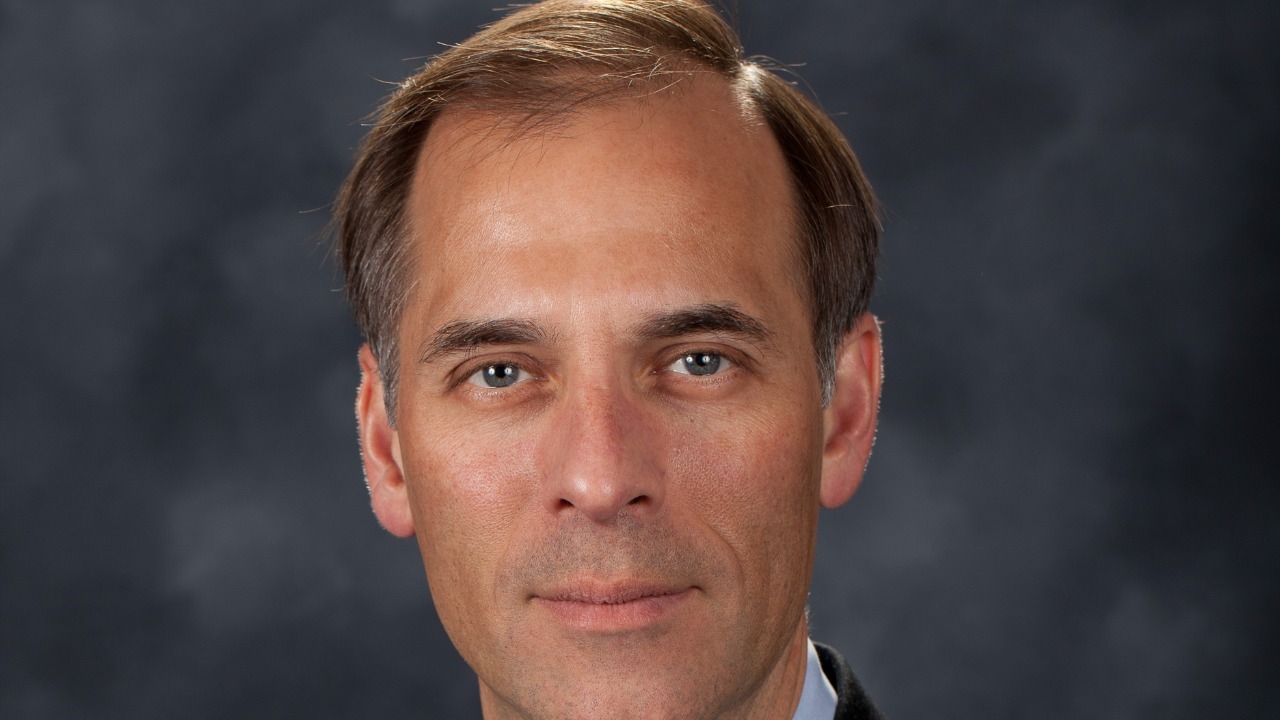
His more recent comments reinforce that sense of urgency. In a profile that traced his evolution from cautious optimist to outspoken critic of the current policy mix, Zandi, who serves as chief economist at Moodys Analytics in Washington and was photographed there by Al Drago, warned that the country is approaching what he called “Liberation Day” from inflation at the very moment when job growth is faltering. That juxtaposition, cooling prices but weakening employment, is exactly what he means by a jobs recession, and it is why he keeps returning to the same core message, unless Trump’s tariffs are dialed back or offset in a more targeted way, the next phase of the economy is likely to feel far less like a soft landing and far more like a slow, grinding squeeze on American workers.
For now, the official statistics still give the White House room to argue that the economy is fundamentally sound, and supporters of Trump’s strategy insist that short term pain is a price worth paying to rebuild domestic industry. But as more indicators line up with Zandi’s warnings, from the month that produced only 22,000 new jobs to the mounting evidence of layoffs in trade sensitive sectors, the burden of proof is shifting. A jobs recession is not a theoretical construct, it is a lived experience for workers whose hours are cut, whose raises vanish, or whose positions quietly disappear, and the latest round of tariffs may be what tips that experience from isolated hardship into a broader national trend.
Supporting sources: Top economist warns US could be entering a ‘jobs recession’ — thanks to Trump….
More From TheDailyOverview

Grant Mercer covers market dynamics, business trends, and the economic forces driving growth across industries. His analysis connects macro movements with real-world implications for investors, entrepreneurs, and professionals. Through his work at The Daily Overview, Grant helps readers understand how markets function and where opportunities may emerge.

