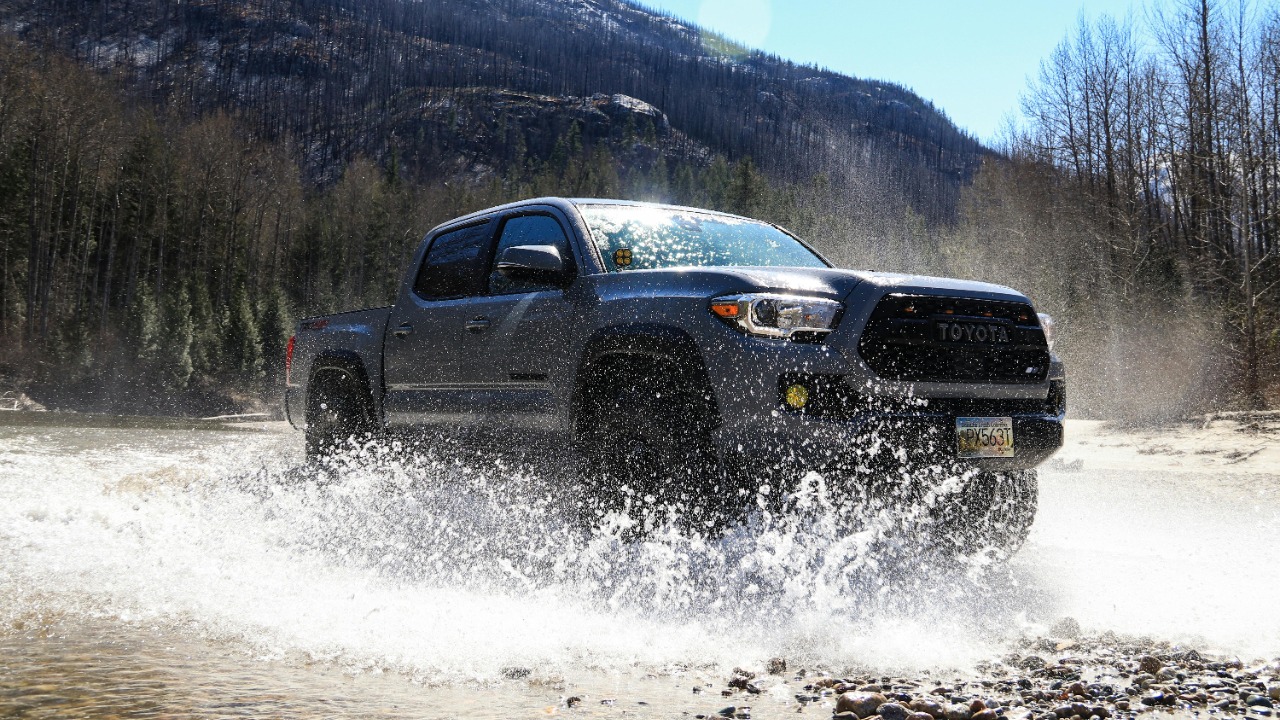
Toyota’s Tacoma pickup truck posted its strongest sales year on record in 2025, moving 274,638 units across the United States and extending a dominance streak that now stretches more than two decades. For a nameplate that traces its lineage back 42 years, the achievement raises a pointed question about American truck buyers: why does a midsize pickup with roots in the early 1980s keep outpacing newer, flashier competitors?
274,638 Units and a 21-Year Winning Streak
The raw numbers tell a clear story. Toyota reported that the Tacoma achieved its best-ever year in 2025, with full-year U.S. deliveries reaching 274,638 units. That figure, drawn from the automaker’s official year-end sales disclosure, represents the highest annual total the model has ever recorded. The Tacoma has now been the most popular midsize pickup for 21 consecutive years, a run that began in 2005 and has survived multiple product cycles, recessions, and shifts in consumer taste.
What makes this streak so unusual is its length relative to the competitive field. Chevrolet, Ford, and Nissan have all launched or refreshed midsize truck entries during that span. Jeep entered the segment with the Gladiator. Hyundai brought the Santa Cruz. None of them have managed to unseat the Tacoma in annual sales. The consistency suggests something deeper than a single strong model year or a well-timed redesign. Buyers keep returning to the Tacoma not because it is the newest option on the lot, but because it has built a reputation for holding its value and surviving hard use, qualities that compound over time into a self-reinforcing loyalty loop.
How a 42-Year-Old Nameplate Defied Industry Headwinds
The Tacoma’s record did not happen in a vacuum. Across the U.S. auto industry, most manufacturers reported sales growth in 2025, even as tariff-related pressures weighed on margins and pricing, according to industry data. That broader tailwind helped, but it does not fully explain why a midsize truck outperformed its own historical ceiling while competing against a wave of electrified and tech-heavy alternatives. The industry grew; the Tacoma grew faster than its own prior limits.
One overlooked factor is the Tacoma’s positioning against the prevailing industry narrative. While much of the auto sector has been channeling capital toward battery-electric vehicles and software-defined cabins, Toyota has continued investing in the Tacoma’s core strengths: off-road capability, mechanical simplicity, and a price point that sits below the full-size truck segment. That approach bucks the assumption that consumers are primarily motivated by novelty. For a significant slice of the American truck market, durability and predictable ownership costs still outweigh touchscreen dashboards and over-the-air updates. The Tacoma’s record year is evidence that this buyer segment is not shrinking. If anything, it appears to be growing.
The Durability Premium That Rivals Cannot Copy
The most commonly cited reason for the Tacoma’s staying power is resale value, and it is worth examining why that advantage is so difficult for competitors to replicate. A truck that holds its value well attracts buyers who plan to keep it for years and buyers who plan to sell it in three. Both groups benefit, which widens the Tacoma’s addressable market beyond what a single demographic or use case would suggest. This is not a marketing trick. It is the result of decades of field data showing that Tacomas accumulate high mileage without catastrophic depreciation, a track record that no competitor can fabricate overnight.
Toyota itself has leaned into this narrative. In its official communication describing a record performance for 2025, the company tied the Tacoma’s achievement to a long history of segment leadership and customer loyalty. That framing is deliberate. By emphasizing continuity rather than disruption, Toyota signals to prospective buyers that the Tacoma is a known quantity in a market full of unknowns. For someone choosing between a proven midsize truck and a first-generation electric pickup with limited long-term reliability data, the calculus often tips toward the familiar option.
Challenging the Innovation-First Assumption
The dominant assumption in automotive commentary over the past several years has been that electrification and advanced technology would rapidly reshape buyer preferences across every segment. The Tacoma’s record year complicates that thesis. It does not disprove it entirely, since EV adoption is still climbing in absolute terms, but it does suggest that the transition is far less uniform than many analysts projected. Midsize truck buyers, in particular, appear to be making purchasing decisions based on proven capability and total cost of ownership rather than powertrain novelty.
This creates a strategic tension for Toyota’s competitors. Automakers that have shifted engineering and marketing budgets heavily toward electrified trucks now face a segment leader that is winning with a formula rooted in incremental improvement rather than radical reinvention. The 274,638 units the Tacoma sold in 2025 represent real demand from real buyers, not pre-orders or reservation counts. That distinction matters because it reflects money already spent, not future intent. Any rival hoping to challenge the Tacoma’s position will need to match not just its specs but its decades-long trust advantage, a gap that cannot be closed with a single product launch.
What Tacoma’s Record Says About Truck Buyers
There is also a broader consumer behavior signal embedded in these results. When tariff-driven price increases make new vehicles more expensive across the board, buyers become more risk-averse. They gravitate toward models with established track records and strong resale floors, both of which the Tacoma offers. Toyota’s own sales reporting, published through its news distribution channels, underscores that the truck’s customer base is not confined to off-road enthusiasts or brand loyalists; it includes budget-conscious shoppers who view a pickup as a long-term financial asset as much as a tool.
That mindset favors brands that can demonstrate consistency over time. Toyota has used its corporate press platforms, including its dedicated automotive media hub, to reinforce the narrative that the Tacoma is a safe bet in an uncertain market. The message aligns with what the sales figures already suggest: when faced with higher monthly payments and lingering questions about new technologies, many truck buyers default to proven durability. In that environment, a 42-year-old nameplate posting its best year ever is not an anomaly; it is a signal that the center of gravity in the midsize truck segment still sits firmly with tried-and-true hardware rather than bleeding edge innovation.
More From The Daily Overview
*This article was researched with the help of AI, with human editors creating the final content.

Elias Broderick specializes in residential and commercial real estate, with a focus on market cycles, property fundamentals, and investment strategy. His writing translates complex housing and development trends into clear insights for both new and experienced investors. At The Daily Overview, Elias explores how real estate fits into long-term wealth planning.

