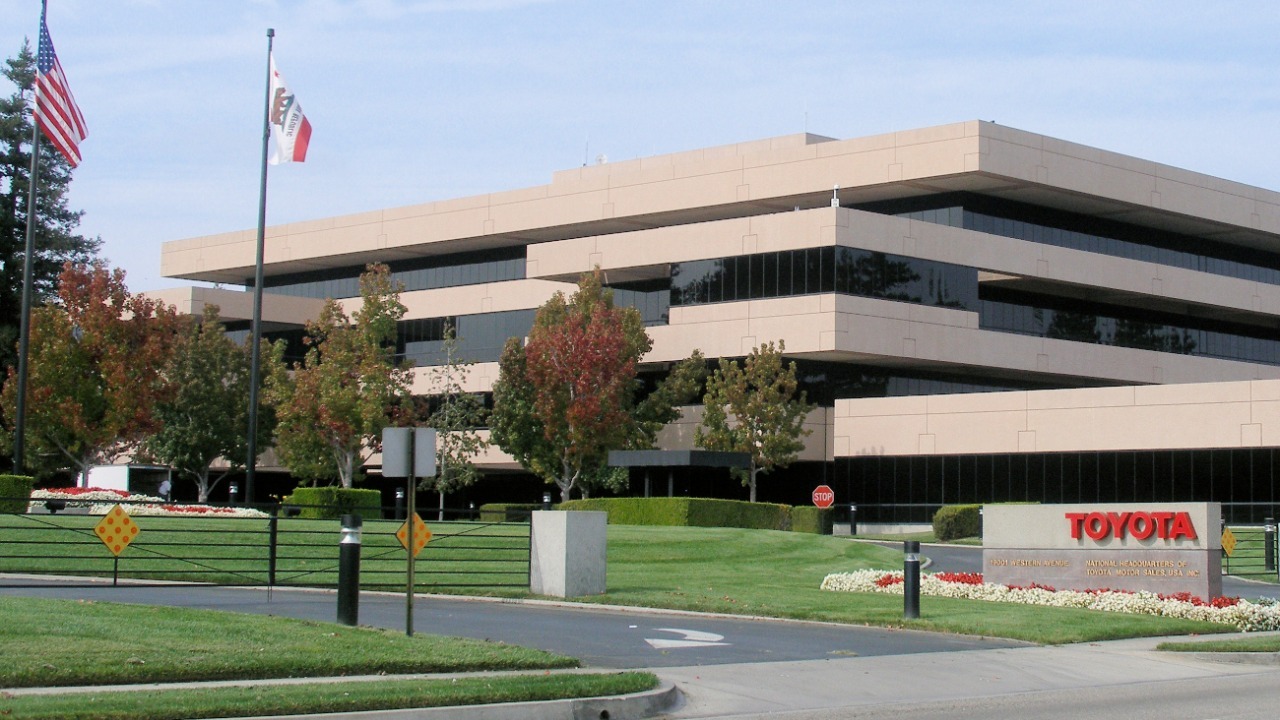
For Toyota, keeping President Donald Trump satisfied has become a strategic priority, not a side concern. The company has learned that what pleases the White House is not just new factories or patriotic slogans, but big, headline-grabbing dollar figures and visible commitments to U.S. jobs. That lesson now shapes how Toyota talks about investment, tariffs, and even which models it builds where, with consequences that reach far beyond a single automaker.
By reverse engineering what makes Trump publicly praise a company, Toyota is trying to turn political risk into a manageable cost of doing business. I see a pattern emerging in how the Japanese giant packages its spending plans, absorbs tariff pain, and courts an audience of one, and it offers a revealing look at how global manufacturers navigate a presidency that can move markets with a single social post.
From reluctant target to political operator
When Trump first began hammering automakers over factory locations and trade, Toyota was pushed into the political spotlight rather than stepping into it by choice. As early as Apr 11, 2017, reporting from DETROIT described how President Donald Trump’s drive for more manufacturing jobs in the United States forced companies like Toyota to respond publicly to criticism, with industry coverage by Tom Krisher of The Associated Press detailing how executives suddenly had to think like political operatives as well as engineers. That early clash set the template: Trump would single out firms over offshoring or imports, and automakers would scramble to highlight U.S. investments and jobs.
Over time, Toyota shifted from reactive damage control to a more deliberate strategy. Instead of waiting for the next critical post, the company began to emphasize its American footprint and future spending in ways calibrated to Trump’s priorities. The goal was straightforward: avoid being cast as a villain in the president’s narrative about trade and manufacturing, and, if possible, earn a public nod of approval that could help with consumers and regulators alike.
The $10 billion promise and the power of a big number
The clearest expression of Toyota’s approach came in its pledge to pour money into the United States. On Nov 26, 2025, coverage of the company’s messaging highlighted how Toyota promised “up to $10 billion” in U.S. investment over five years, a figure that sounded tailor made for a president who prizes large, round numbers and public commitments, with one analysis noting that some of that spending was always going to happen as part of normal operations and that the phrasing was designed to resonate with Trump’s focus on jobs and factories in America on Nov 26, 2025. By framing routine capital expenditure as a fresh, multi‑billion‑dollar pledge, Toyota effectively translated its long term plans into political currency.
Later reporting on Oct 28, 2025, underscored how carefully that number was being handled inside the company. In response to questions about the spending, Toyota executive Hiroyuki Ueda said the automaker had not actually announced specific new plans for a $10 billion program, clarifying that the figure reflected a broader pattern of U.S. investment rather than a single, brand‑new initiative according to Hiroyuki Ueda of Toyota. The distinction matters, because it shows Toyota speaking two languages at once: one for investors and analysts who care about incremental capital allocation, and another for a president who responds to big, symbolic totals that can be touted as proof of economic success.
Tariffs, pain, and the cost of keeping the peace
Behind the upbeat talk about investment, Toyota has been blunt about how Trump’s trade policies hit its bottom line. On May 7, 2025, the company said tariffs tied to the administration would erase $1.3 billion in profits in just two months, a stark figure that highlighted how quickly policy shifts in Washington could ripple through a global supply chain built over decades as Toyota explained on Thursday in remarks about the Japanese auto industry. That kind of hit is not a rounding error, it is the equivalent of wiping out the profits from hundreds of thousands of vehicles.
The pressure did not stop there. On May 7, 2025, Toyota CEO Koji Sato said the carmaker would not speculate on future tariff damage, even as the company acknowledged that President Trump’s measures were already costing it $1.3 billion and creating a more uncertain environment for planning production and pricing in comments from Toyota CEO Koji Sato. By August, the scale of the problem had grown: on Aug 6, 2025, Toyota said it expected a $9.5 billion hit from United Stat trade actions linked to Trump’s tariffs, a figure that forced the company to cut its annual guidance and underscored how costly the political relationship had become even as it tried to stay in the president’s good graces with Toyota expecting a $9.5 billion impact from United Stat tariffs tied to Trump.
Reinventing the U.S. footprint to calm the White House
To offset that pressure, Toyota has been reworking its manufacturing map in ways that speak directly to Trump’s priorities. On Oct 26, 2025, reporting on Toyota Motor (NYSE:TM) described how the company was looking to appease the Trump Administration by telling U.S. officials it planned to “reimagine” its North American production, including considering shifting models such as the Camry to different plants and highlighting potential expansions at facilities like its Troy, Missouri, plant to calm trade tensions and show that more value would be added inside the country as Toyota Motor (NYSE:TM) outlined to the Trump Administration. The message was clear: Toyota was willing to move pieces on the board to keep Washington satisfied.
That recalibration extends beyond factory locations to the narrative around jobs. On Nov 26, 2025, analysts noted that Toyota’s promise of up to $10 billion in U.S. investment over five years would not all be new spending, and that some of the jobs being counted were tied to work in Canada and Mexico that might never fully materialize, a point raised by industry watcher Fiorani, who was skeptical that the full amount would be spent as advertised with Fiorani questioning whether jobs in Canada and Mexico would match the headline figure. By bundling cross‑border employment and long‑planned upgrades into a single, politically resonant package, Toyota is trying to show Trump a growing North American footprint even as it keeps its integrated regional strategy intact.
An audience of one, and a message tailored to him
At the center of this strategy is a recognition that Trump’s public praise or criticism can move markets and shape consumer behavior. On Nov 26, 2025, coverage of a key appearance quoted Trump telling people to “Go out and buy a Toyota,” a line that any marketing department would be thrilled to hear from the president of the United States, especially at a time when tariffs were otherwise clouding the outlook for imported vehicles as Trump urged consumers to support Toyota. That kind of endorsement does not happen by accident, it is the product of months of careful positioning around investment, jobs, and public messaging.
Other automakers have taken note of the same dynamic. In one account of how global car companies court Washington, Toyota was held up as an example of a firm that has figured out how to appeal to Trump, with the narrative describing how Akio Toyoda, the company’s leader, is willing to surprise and adapt in pursuit of an audience of one, Donald Trump, while rivals like Volkswagen dangle their own multibillion‑dollar investment plans to secure face time and favorable treatment with Akio Toyoda cast as a man courting Donald Trump. In that context, Toyota’s playbook is not just about one company’s relationship with the White House, it is a case study in how corporate leaders adapt when political power and economic leverage are concentrated in a single, highly personal decision maker.
More From TheDailyOverview
- Dave Ramsey says these two simple questions show whether you’re rich or poor
- Retired But Want To Work? Try These 18 Jobs for Seniors That Pay Weekly
- IRS raises capital gains thresholds for 2026 and what’s new
- 12 ways to make $5,000 fast that actually work

Grant Mercer covers market dynamics, business trends, and the economic forces driving growth across industries. His analysis connects macro movements with real-world implications for investors, entrepreneurs, and professionals. Through his work at The Daily Overview, Grant helps readers understand how markets function and where opportunities may emerge.

