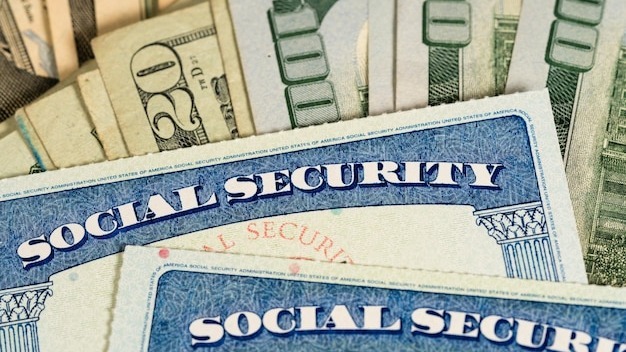
The federal government is moving to end paper checks for Social Security, disability and other benefits, pushing seniors and disabled Americans into direct deposit and prepaid cards whether they are ready or not. The shift is framed as a modernization of how Washington moves money, but for people who have long relied on a physical check in the mail, it feels less like an upgrade and more like an ultimatum. At stake is not only convenience for agencies, but how securely and reliably some of the country’s most vulnerable residents receive the income that keeps them afloat.
At the center of the change is a sweeping directive from President Donald Trump’s administration that orders agencies to phase out paper payments and embrace digital transfers as the default. The Treasury Department is now translating that mandate into practice, cutting off new paper checks for most federal benefits and narrowing the circumstances in which anyone can opt out. Seniors, people with disabilities and low income households are being told to pick an electronic option or risk delays and complications in getting money they depend on every month.
The executive order that put paper checks on the chopping block
The legal backbone of this shift is Executive Order 14247, a directive titled Modernizing Payments To that explicitly targets paper checks as outdated. In Sec. 3, labeled Phase Out of, the order states that, Effective September 30, 2025, and to the extent permitted by law, federal agencies must stop issuing and accepting paper checks. That language gives the Treasury Department and other agencies a clear deadline and a strong presumption that electronic transfers should be the norm, not the exception.
The Treasury Department has embraced that mandate in its own messaging, telling the public that paper checks are being retired in favor of direct deposit and prepaid cards. In a notice bluntly titled Paper Checks Are, officials based in Washington explain that, starting September 30, 2025, the government will no longer send most benefits by mail. That same communication, framed as “Here is What You Need to Know,” underscores that the change is not optional for the vast majority of recipients, and it positions the move as a straightforward implementation of the president’s order rather than a discretionary policy choice.
How Treasury is ending paper checks for Social Security and disability
The most visible impact of the new policy is on Social Security, Supplemental Security Income and disability benefits, where paper checks have already been cut off for new payments. Advocates were formally notified in a Dear Colleague letter from the Social Security Administration that referenced the Date, Wednesday, September 10, and explained that, effective September 30, the agency would, in accordance with the Executive Order, require beneficiaries to receive payments electronically. That letter made clear that Social Security, SSI and SSDI payments would be routed through direct deposit or prepaid cards, with only narrow exceptions.
By the time the deadline arrived, disability advocates were already documenting the practical consequences. A post shared by Disability Belongs noted that On September 30, 2025, the federal government stopped issuing paper checks for Social Security, SSI, SSDI, Veterans benefits and other programs, and that paper-checks-stopped was not just a slogan but a hard cutoff. That same message highlighted that people who had not yet switched were being told to contact Treasury or Social Security to avoid disruptions, underscoring how abrupt the transition felt on the ground.
Why the government says electronic payments are better
Officials argue that the move away from paper is not simply about convenience, but about cost, speed and security. The Internal Revenue Service, in a set of FAQs about the Executive Order, states that Electronic payments are generally processed faster, cost less to handle and reduce errors compared to paper payments, and it notes that Limited exceptions will remain where the law or specific circumstances require non electronic methods. A separate analysis of the policy points out that the White House issued the Executive Order in part to cut down on the cost of printing, mailing and replacing lost or stolen checks, which have long been a source of administrative headaches.
Tax professionals tracking the change note that the same logic is being applied to refunds and other payments handled by the IRS. One advisory on what taxpayers need to know about the end of paper refunds explains that, in the Background section, the Executive Order describes the goal as moving money by electronic funds transfer rather than paper. That same guidance notes that Many taxpayers still receive paper checks for refunds and that some Social Security recipients have also been slow to switch, which is precisely the behavior the new rules are designed to change.
What options seniors and disabled recipients actually have
For people who no longer have the option of a paper check, the Treasury Department is steering them toward a small menu of electronic choices. The most straightforward is direct deposit into a bank or credit union account, which can be set up through the government’s Go Direct enrollment site. For those who are unbanked or wary of sharing account details, the government promotes the Direct Express card, a prepaid debit product described as a tool to Use for federal benefit recipients who need a simple way to receive and spend their funds without opening a traditional account.
Some agencies and commentators also point to digital wallets as an emerging option, particularly for younger disability recipients who are comfortable with smartphone apps. A briefing on the broader shift notes that Executive Order 14247 directs the Department of the IRS to expand the range of electronic methods, including options that can be linked to mobile devices. Another overview on federal payments explains that the Federal Government Will to electronic methods that are processed and transmitted securely, and it frames the change as part of a broader effort to treat the United States as “America’s bank account” in the digital age.
Exemptions, waivers and who can still avoid going digital
Despite the tough rhetoric about “no paper checks,” the government has carved out limited escape hatches for people who truly cannot use electronic payments. A tax advisory that tracks the policy notes that the Government Softens Stance on the No Paper Checks Deadline, explaining that, contrary to earlier messaging, there will be exceptions for people who meet strict criteria. In a radio interview, policy analyst ROMIG was asked whether any flexibility remains and answered, “Yes, the government is still providing exemptions in dire need situations,” noting that people who truly cannot access the banking system can apply for a waiver through the Treasury Department.
Other guidance spells out who qualifies in more detail. One explainer on big Social Security changes notes that the government does allow rare exemptions, primarily for those over age 90, individuals with certified cognitive impairments or those in similar circumstances, provided they apply through the Treasury Department before the deadline. A separate breakdown of waiver rules for Social Security notes that Among those eligible to receive waivers are people for whom an electronic payment would represent a significant hardship, such as those without access to banking services, those facing high fees for electronic transactions or recipients age 90 or older. Another policy document, focused on fee payments, frames the criteria in plain language: Who qualifies is someone where You do not have access to banking services or an electronic payment system, an electronic payment would cause undue hardship or the law specifically requires a non electronic method.
More From The Daily Overview
*This article was researched with the help of AI, with human editors creating the final content.

Cole Whitaker focuses on the fundamentals of money management, helping readers make smarter decisions around income, spending, saving, and long-term financial stability. His writing emphasizes clarity, discipline, and practical systems that work in real life. At The Daily Overview, Cole breaks down personal finance topics into straightforward guidance readers can apply immediately.

