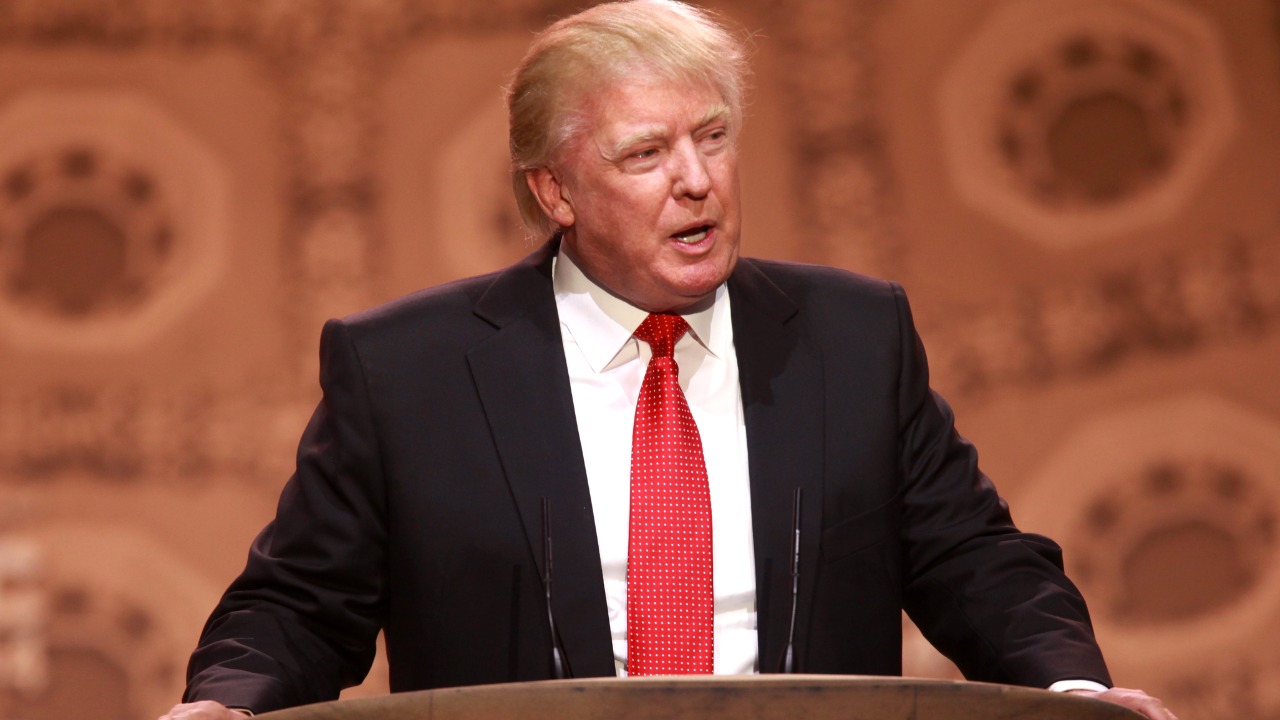
President Donald Trump has thrown his support behind the idea of fresh direct payments worth roughly $1,500 per person, reviving hopes among households still squeezed by inflation and higher borrowing costs. For now, though, the promise of new relief is colliding with a stubborn reality in Washington, where no law has been passed and the federal agencies that would actually send the money are still operating under the last round of stimulus rules.
That gap between political talk and legal authority is exactly where confusion thrives, especially online, and it is why I am focusing on what is actually approved, what remains a proposal, and how you can verify your own status without getting misled by viral posts or unofficial “trackers.”
What Trump is backing and how it differs from past stimulus checks
When President Donald Trump signals support for $1,500 payments, he is tapping into the same political energy that powered earlier stimulus rounds, but the policy mechanics are very different this time. In the past, Congress passed explicit relief bills that spelled out who qualified, how much they would receive, and how the Internal Revenue Service, or IRS, would deliver the money. Today, there is no comparable statute on the books authorizing a new nationwide payout, which means Trump’s backing is a political position, not yet a binding order that can put cash in bank accounts.
That distinction matters because some Americans now assume that a presidential statement automatically translates into an approved stimulus program. The reporting on current relief debates makes clear that there is no federal approval for a new December 2025 stimulus payment, and that the IRS is still operating under the last officially enacted round of economic impact payments. Until Congress passes a law that specifies $1,500 checks and the president signs it, the IRS cannot simply invent a new benefit, no matter how many speeches or social media posts suggest otherwise.
No new December stimulus: what the IRS has actually confirmed
Despite the surge of interest in fresh relief, the clearest throughline in the official record is what has not happened. The IRS has not announced any new direct deposit campaign for December, and there is no internal guidance committing the agency to send out $1,500 checks in the coming weeks. That is not a matter of interpretation, it is a straightforward reading of the agency’s own public posture, which continues to reference only the prior stimulus programs that have already been fully authorized and largely distributed.
Fact checks of the current rumor cycle underline that point. One detailed review explains that there are no new stimulus checks approved and no IRS confirmation of December payments, even as some posts claim that deposits are imminent. Another analysis of the same wave of content stresses that there is no federal approval for a new December 2025 stimulus payment and that the IRS has not set any official amounts or specific deposit dates for a fresh round of relief. Taken together, those findings cut through the noise: Trump may be advocating for more money, but the machinery that would send it has not been activated.
Why $1,500 and $2,000 figures keep going viral
The dollar amounts attached to the latest rumors are not random. The $1,500 figure Trump has embraced fits neatly into a broader online narrative that has also latched onto the idea of $2,000 checks, often without explaining where those numbers come from or what legislative text would support them. In practice, the figures are shorthand for a political argument about how much direct aid households should receive, not a reflection of any enacted statute that the IRS is currently implementing.
Coverage of the broader debate notes that some proposals have floated $2,000 payments and that White House officials have indicated those checks could land in 2026 if they ever move beyond the talking stage. At the same time, that same reporting makes it clear that there has been no formal IRS approval of a 2025 stimulus payment and no concrete movement on those proposals. In other words, the $1,500 and $2,000 numbers are part of an ongoing negotiation, not a finalized benefit you can count on in your December budget.
How to check your real status with the IRS
With Trump’s backing of new checks dominating headlines and unverified claims spreading across TikTok, Facebook, and YouTube, the most practical step for any household is to separate rumor from record. I always start with the same rule: if a claim about federal payments does not match what the IRS is saying on its own platforms, treat it as unverified. That applies whether the post is promising a $1,500 “holiday bonus,” a $2,000 “tariff dividend,” or some other branded payout that sounds official but does not appear in any federal statute or agency bulletin.
The most reliable way to see your status is to log in directly to your IRS online account, where prior stimulus payments, tax refunds, and any outstanding balances are listed under your Social Security number or Individual Taxpayer Identification Number. If you received earlier rounds of relief, those amounts should appear there, along with the dates they were issued. If a new law is eventually passed and the IRS is instructed to send $1,500 checks, that same portal is where you will see confirmation, not in a screenshot of a bank app circulating on social media. Current fact checks emphasize that despite viral posts and videos, the IRS has not confirmed any new stimulus amounts or specific deposit dates, which means any website asking you to “pre-claim” a payment by entering personal data is operating outside the official process.
Red flags, timelines, and what to watch next
Until Congress and President Donald Trump agree on a bill that explicitly authorizes $1,500 checks, the most important skill for consumers is skepticism. I look for several red flags when assessing new claims: promises of guaranteed money on a fixed date that the IRS has not mentioned, requests for upfront fees to “unlock” a payment, and references to secret programs that supposedly bypass normal eligibility rules. None of those match how federal stimulus has worked in the past, when eligibility was tied to tax filings, income thresholds, and clear statutory language.
Looking ahead, the timeline for any real relief will run through familiar checkpoints. First, lawmakers would need to introduce and advance a bill that spells out the $1,500 amount, who qualifies, and how the IRS should deliver it. Second, the White House would have to sign that bill, turning Trump’s backing into binding law. Only then would the IRS publish detailed guidance, update its online tools, and begin scheduling direct deposits and paper checks. Until those steps occur in that order, any claim that you can already track or claim a new $1,500 payment is, based on the available sources, unverified.
More From TheDailyOverview

Julian Harrow specializes in taxation, IRS rules, and compliance strategy. His work helps readers navigate complex tax codes, deadlines, and reporting requirements while identifying opportunities for efficiency and risk reduction. At The Daily Overview, Julian breaks down tax-related topics with precision and clarity, making a traditionally dense subject easier to understand.