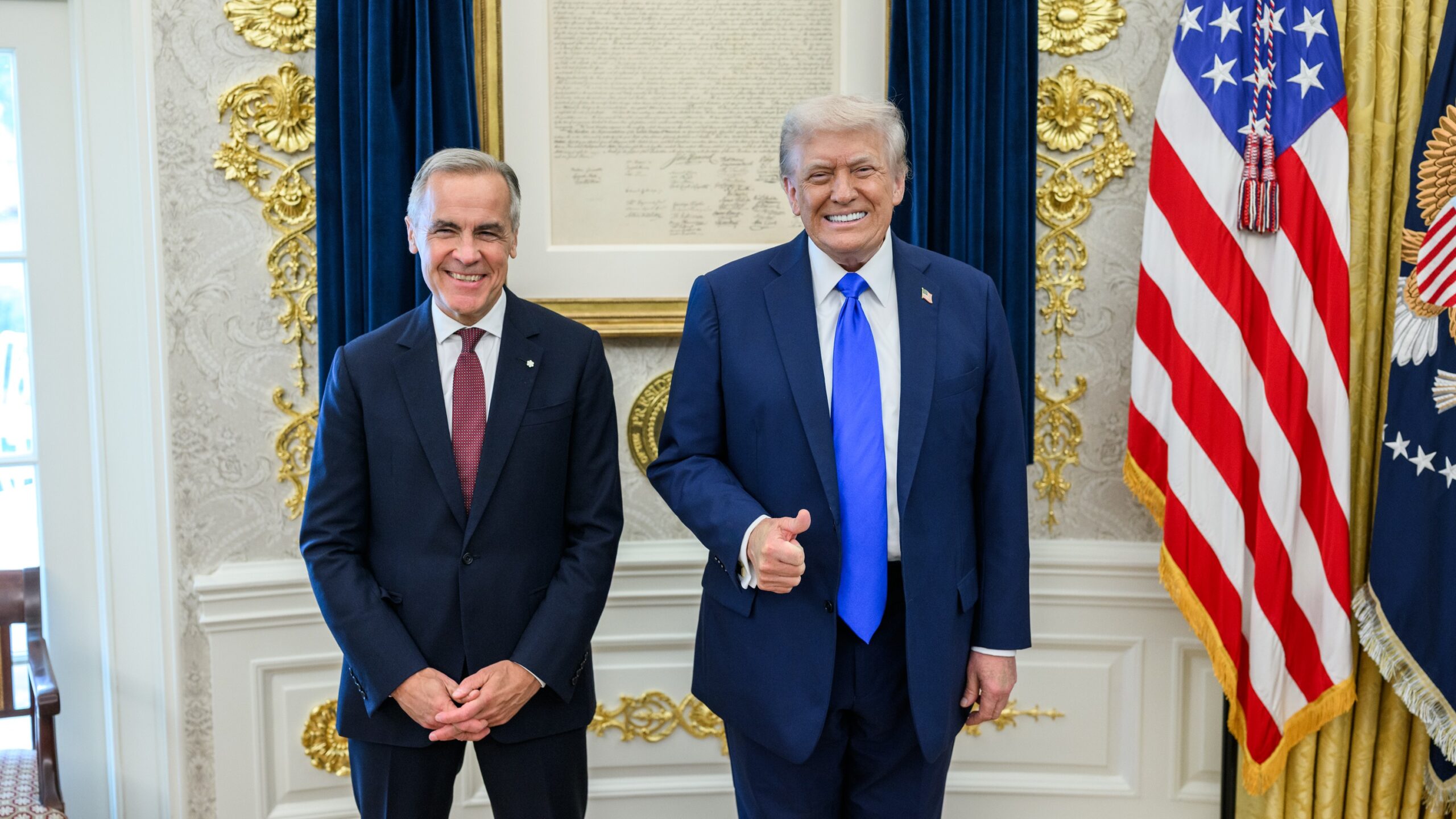
President Donald Trump has given an unusually warm nod to Canada’s new trade pact with China, telling reporters that if Ottawa can secure favorable terms, “you should do that.” His blessing lands at a moment when Washington is tightening the screws on Beijing in sectors like chips and electric vehicles, yet Canada is moving in the opposite direction, cutting tariffs and opening its market wider to Chinese goods.
That contrast turns a seemingly narrow dispute over electric cars and canola into a revealing test of how far allies can diverge on China policy without fracturing broader economic and security ties. It also exposes the transactional logic that still guides Trump’s approach to trade, even as he threatens new tariffs elsewhere.
Carney’s China gamble and the EV centerpiece
At the heart of the new arrangement is a decision by Canadian prime minister Mark Carney and Chinese president Xi Jinping to sharply reduce barriers on electric vehicles and farm exports. Carney and Xi Jinping announced that Canadian tariffs on Chinese EVs will fall to 6.1 percent, a level designed to make imports competitive while still offering some protection to local producers. The deal also positions China as a more central partner in Canada’s industrial strategy, even as Ottawa continues to cast itself as a reliable member of the Western alliance.
The EV provisions are not theoretical. The agreement will allow 49,000 Chinese electric vehicles to enter Canada this year at that 6.1 percent tariff rate, a volume large enough to reshape showroom competition in cities from Vancouver to Montreal. U.S. officials have already flagged the move as “problematic,” warning that Canada’s decision to allow 49,000 Chinese EVs could undercut North American producers and complicate existing tariffs on Canadian vehicles and parts, concerns detailed in a Companies briefing.
Trump’s “good thing” endorsement and the quote that matters
Trump’s reaction has been strikingly relaxed given that his own administration has spent years railing against Beijing’s industrial policies. Asked about the deal, he said of Carney’s move, “That’s OK. That’s what he should be doing. I mean, it’s a good thing for Canada,” according to accounts of his comments on Trump and Carney’s talks. He went further, arguing that “if you can get a deal with China, you should do that,” a line that captures his view that allies are entitled to pursue their own bargains as long as they do not directly cross U.S. red lines.
That endorsement has been echoed across multiple appearances. In Washington, Trump has been quoted saying it is a “good thing” that Carney signed a deal with China, comments reported after he spoke in Posted January coverage of his remarks. A separate account from The Canadian Press by Kelly Geraldine Malone, filed from WASHINGTON at 3:57 p.m. CST, also highlighted how Trump’s praise for Carney contrasted with domestic unease over tariffs that are rattling Canadian industries, a reminder that his words land differently on each side of the border.
Why a China dove on Canada is a hawk elsewhere
Trump’s leniency toward Ottawa’s outreach to Beijing sits alongside a much harder line on China in sectors he sees as core to U.S. power. The White House recently framed a new proclamation as SUPPORTING AMERICA’S SEMICONDUCTOR INDUSTRY, with President Donald Trump invoking Section 232 of the Trade Expansion Act to restrict certain advanced computing chips. That 232 move underscores how he is willing to weaponize trade tools when he believes national security or technological leadership is at stake.
At the same time, Trump has signaled he is prepared to punish other partners that, in his view, take advantage of U.S. openness. In NUUK, Greenland, President Donald Trump has threatened a 10 percent import tax on eight European countries starting in February, tying the measure to his push for a deal to buy the island. Live tariff updates have quoted President Trump suggesting on Friday that countries opposing a U.S. acquisition of Greenland could face new duties, a stance also reflected in coverage that noted Jan. 17 at 8:46 AM PST and an Updated Jan. 18 timestamp in a piece filed By Steve.
Ottawa’s broader China play, from canola to strategy
Carney’s EV deal is only one pillar of a wider reset with Beijing. A separate agricultural accord, described under the banner Canada Secures Major in a New China Partnership, details how China will slash canola seed tariffs and ease other barriers that have dogged Canadian farmers. Marc Zienkiewicz of Seed World Canada Sen has reported that this New China Partnership is intended to restore access to what had been one of Canada’s most important export markets before a series of disputes choked off shipments.
Analysts have framed these moves as part of a rapid recalibration in the relationship. Opponents of the new approach have warned that it could draw the ire of the Trump administration, which has spent years urging allies to limit their exposure to Beijing, a concern captured in reporting that quoted Opponents of the shift. Yet Trump’s own comments have undercut that narrative, with Why Donald Trump endorsed Canada’s deal with China explained in part by the fact that Mark Carney’s new deal to lower tariffs on EVs, canola and other goods could spur U.S. firms to seek their own agreement with China.
Allies, autonomy and the politics of “you should do that”
Trump’s rhetorical green light has not erased unease in Washington. Canada’s new trade deal with China is getting a mixed reaction in the U.S. capital, with President Donald Trump voicing support even as officials in Washington warn that lower tariffs on Chinese EVs could hurt American companies exporting cars to Canada. Those tensions are sharpened by the fact that Canada remains one of the United States’ closest partners, a status reflected in the dense economic ties that show up whenever one searches for Canada and its trade profile.
Trump’s own political calculus is layered on top. Julia Manchester has reported that President Trump told reporters on Friday that the Canadian Pr should be doing trade deals with China, remarks captured in a piece that cited the figure 47 and noted his broader campaign to raise the number of tariffs on China. A related account by Julia Manchester also underscored how he has attacked both Canada and China over their economic policies during his second term, even as he praises Canada’s Mark Carney for cutting a deal with China.
More From TheDailyOverview

Grant Mercer covers market dynamics, business trends, and the economic forces driving growth across industries. His analysis connects macro movements with real-world implications for investors, entrepreneurs, and professionals. Through his work at The Daily Overview, Grant helps readers understand how markets function and where opportunities may emerge.

