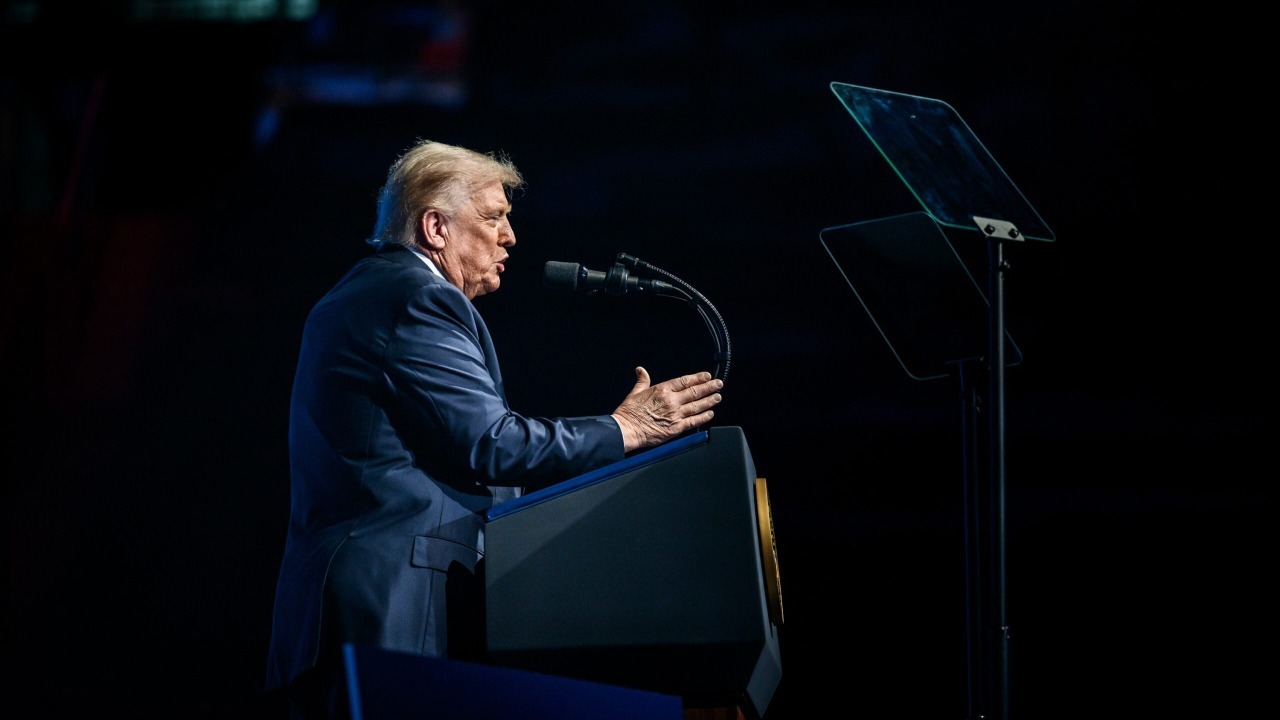
The federal government is again operating on the brink, with a partial shutdown colliding with a record national debt and a fiercely contested White House budget vision. The headline drama about a blown legal deadline obscures a more prosaic but serious reality: Congress, not the president, failed to pass spending bills on time, even as the debt load nears $38.5 trillion and economists warn that the politics of delay are colliding with hard fiscal math. I see a widening gap between the scale of the numbers and the willingness of either branch to own the consequences.
President Donald Trump did submit his formal budget request for the 2026 fiscal year last spring, but that proposal has since run headlong into legislative gridlock and a shutdown that began when lawmakers missed their own funding cutoff. The real story is not a single missed filing date, it is a system that keeps drifting into crisis while the cost of delay compounds.
Shutdown by Congress, not a missing Trump budget
The law is clear that the president must send a budget request to Capitol Hill, but it is equally clear that only Congress can actually pass the spending bills that keep agencies open. Trump’s 2026 blueprint, including a discretionary package of about $1.7 trillion in proposed domestic and defense spending, was transmitted months before the current standoff. The White House later touted that plan as part of a broader 2026 package when The White House rolled out its formal request, underscoring that the executive branch had met its procedural obligations.
The shutdown that began at the end of January, by contrast, traces directly to Capitol Hill. The United States slipped into a partial closure after Congress failed to approve the 2026 budget before the funding deadline, and the Social Security Administration later stressed that Congress failed to reach a deal even as it reassured retirees that core benefit payments would continue. A separate compliance advisory noted that, For the second time in less than three months, lawmakers let funding lapse, a pattern that reflects chronic dysfunction rather than a single blown legal deadline by the president.
A $38.5 trillion backdrop and a sharply contested Trump plan
What has economists unnerved is not a mythical $38.5 trillion spending bill, it is the collision between Trump’s preferred cuts and a debt stock that has already climbed into that neighborhood. Real time trackers put the current national debt at $38.70 Trillion, a figure echoed by a separate dashboard that pegs the burden at $38.49 for the Federal Government. That is the scale of the accumulated borrowing, not the size of any single year’s outlays, but it is the backdrop against which every new budget fight now plays out.
Trump’s 2026 request leans hard into reductions on the domestic side. One analysis of the plan highlights $163 billion in proposed cuts to federal programs, a move that Several Republicans themselves criticized, particularly over defense levels. A separate breakdown notes that What Trump is asking for would keep base discretionary spending roughly flat while reshuffling money among priorities like homeland security and emergency relief.
Economists’ alarm: structural gaps, not paperwork drama
When I talk to budget analysts, their concern is less about a single deadline and more about a pattern of short term fixes layered on top of long term promises. A recent review of 2026 appropriations warns that, Unfortunately, earlier deals like BBA 2018 and 2019 only offset a fraction of their own costs, leaving structural deficits in place. A separate fact sheet on the Fiscal Year 2026 Request at a Glance argues that President Trump is not offering a full budget so much as an annual appropriations wish list, and labels it explicitly as Not a comprehensive plan to stabilize the debt.
At the same time, the day to day choreography of governing continues, even in the shadow of a shutdown. Trump’s public schedule has featured events like President Trump Participates in Signing Time, a Feb appearance that ran 02:52, and President Trump Gaggles with the Press at Mar a Lago, underscoring how the modern presidency blends ceremony with fiscal brinkmanship. Behind the scenes, career staff at the White House and the Treasury Department are tracking every uptick in borrowing, while official guides explain how the national debt has grown to Thi level over the nation’s history.
More From The Daily Overview
*This article was researched with the help of AI, with human editors creating the final content.

Grant Mercer covers market dynamics, business trends, and the economic forces driving growth across industries. His analysis connects macro movements with real-world implications for investors, entrepreneurs, and professionals. Through his work at The Daily Overview, Grant helps readers understand how markets function and where opportunities may emerge.

