President Donald Trump has used a new opinion piece in the Wall Street Journal to claim that his sweeping tariffs did not just protect American industry, but “brought America back” from the brink. In the op-ed, he casts his trade policy as the central reason the United States went from what he calls a “DEAD” economy to the “HOTTEST” nation in the world, and he frames that shift as proof that his confrontational approach to global commerce works. I want to unpack how Trump builds that story, what evidence he cites, and how his boasts fit into the broader political and economic stakes of his second term.
Trump’s argument is not subtle: tariffs, in his telling, are the engine of an “American economic miracle,” the tool that turned a supposed national slump into a roaring success. By walking through his own words, the research he invokes, and the international reactions he highlights, I can show how the president is trying to lock in a narrative that his trade war strategy has been vindicated, even as many economists and trading partners see a far more complicated picture.
Trump’s op-ed and the claim that tariffs “brought America back”
At the heart of Trump’s new opinion piece is a sweeping claim that his tariff policy rescued the United States from decline and restored its economic vitality. He writes in the Wall Street Journal that “my tariffs brought America back,” presenting himself as the architect of a turnaround that transformed what he describes as a stagnant country into a resurgent powerhouse. In the op-ed, Trump leans heavily on the language of revival, arguing that his trade measures jolted a complacent establishment and forced foreign competitors to pay a price for what he portrays as years of unfair practices, a framing that is captured in reports on his Wall Street Journal essay.
Trump’s rhetoric goes further than a standard defense of tariffs as a bargaining chip. He insists that his approach turned a “DEAD” nation into the “HOTTEST” in the world, a pair of capitalized adjectives that underscore how much he wants readers to see the shift as dramatic and personal. In his telling, the tariffs are not a marginal policy tweak but the central lever that moved the country from weakness to strength, and he uses the prestige of the Wall Street Journal’s opinion pages to amplify that message to investors, executives, and political elites who follow that forum closely. By casting the story in such stark before-and-after terms, Trump is inviting voters to credit his trade war for every positive economic headline they have seen over the past several years.
From “DEAD” to “HOTTEST”: the economic miracle narrative
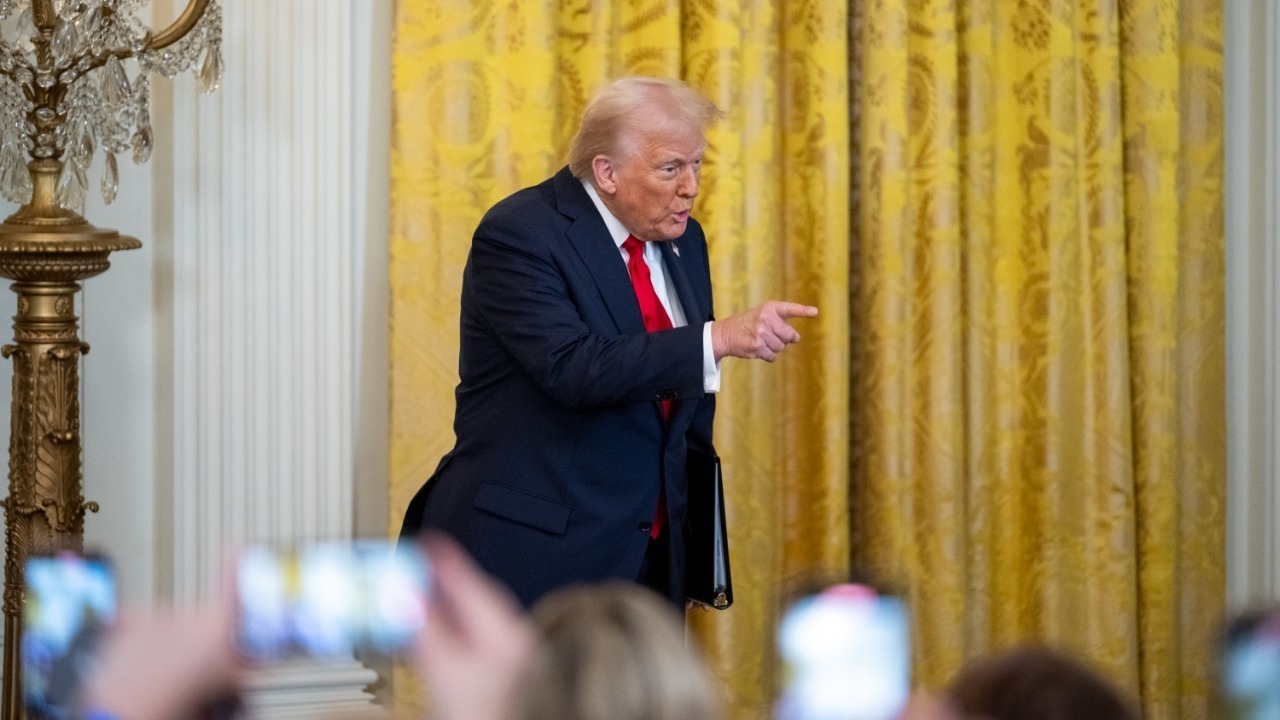
Trump’s description of the United States as once “DEAD” and now the “HOTTEST” nation in the world is more than a flourish, it is the backbone of his economic narrative. He argues that his “tariff blitz” did not simply shield domestic producers, but “created an American economic miracle,” a phrase that he and his allies have repeated as shorthand for job growth, stock market gains, and a manufacturing rebound. In coverage of the op-ed, Trump is quoted boasting that his sweeping tariffs transformed a “DEAD” nation into the “HOTTEST” in the world, language that appears alongside images of him at rallies and official events sourced to Getty Images.
To make that “miracle” sound concrete, Trump points to indicators like low unemployment, strong consumer spending, and robust corporate profits, and he links those outcomes directly to his trade measures rather than to broader global trends or monetary policy. He portrays the pre-tariff United States as a patient on life support, drained by trade deficits and offshoring, and the post-tariff era as a time when factories reopened and wages rose because foreign producers were finally forced to pay. By framing the story this way, Trump sidesteps the possibility that the economy might have improved without tariffs, and instead invites readers to see the entire upswing as proof that his aggressive stance on trade was not only justified but indispensable.
How Trump says tariffs work: shifting the burden abroad
To bolster his case that tariffs are a net win for the United States, Trump leans on academic research that he says proves foreign companies shoulder most of the cost. In the op-ed, he cites work from Harvard Business School and claims that “at least 80% of tariff burdens are borne by foreign producers and intermediaries,” a statistic he uses to argue that his measures punish overseas firms rather than American consumers. By invoking Harvard Business School and the specific figure of 80%, Trump is trying to wrap his populist trade war in the authority of elite scholarship, a move that is highlighted in coverage of his argument about tariff burdens.
Trump also presents tariffs as a kind of forced negotiation tool that compels trading partners to lower their own barriers and open their markets to American goods. He argues that once foreign producers realize they are paying most of the tariff cost, they either absorb the hit in their profit margins or push their governments to strike better deals with Washington. In his telling, this dynamic allows the United States to extract concessions without inflicting serious pain at home, because the 80% burden figure suggests that domestic consumers and firms are largely spared. That logic is central to his claim that tariffs are not a tax on Americans, but rather a clever way to make other countries fund the United States’ economic revival.
International reactions and the South Korea example
Trump’s op-ed does not focus solely on domestic outcomes, it also points to specific foreign cases to argue that his tariffs forced change abroad. One example he highlights is South Korea, which he presents as a country that had to adjust its trade posture in response to his measures. Reporting on the op-ed notes that U.S. President Donald Trump sent his piece directly to The Wall Street Journal and that he singled out the case of South Korea first, using it as a template for how other nations, from Europe to Asia, have had to reckon with his tariff strategy, a detail captured in coverage by Jang Hyowon.
In Trump’s framing, South Korea’s response shows that tariffs can pry open markets and shift supply chains in ways that benefit American producers. He suggests that once confronted with U.S. duties, Seoul moved to address trade imbalances and adjust its own policies, and he implies that similar dynamics are playing out in other countries that depend heavily on access to the American consumer market. By foregrounding this example, Trump is trying to show that his approach has not isolated the United States, but instead has forced trading partners to take Washington’s complaints seriously, even if that has meant short term friction and diplomatic strain.
Trump’s political messaging: from Wall Street Journal to the campaign trail
The decision to place this argument in the Wall Street Journal is itself a political signal. Trump is speaking directly to business leaders, investors, and policy insiders who treat that opinion page as a key forum for economic debate, and he is telling them that his tariffs are not a reckless gamble but a calculated strategy that has paid off. At the same time, the language he uses, from “DEAD” to “HOTTEST,” is tailored for the campaign trail, where vivid contrasts and simple narratives tend to resonate more than technical trade jargon. By blending those registers, Trump is trying to reassure elites while energizing his base with the same story of national revival.
Coverage of the op-ed notes that Trump’s boastful tone is consistent with his broader political style, which often pairs sweeping claims with pointed attacks on critics. One report describes how he bragged that his tariff blitz has “created an American economic miracle” and that he made this case on a Friday, with the piece written by Anna Young and highlighting how he framed the tariffs as a shield against what he called a potential “meltdown,” a detail that appears in the account by Anna Young. By repeating these themes in both elite media and mass rallies, Trump is working to cement the idea that any economic strength the country enjoys is inseparable from his willingness to fight trade battles that previous presidents avoided.
The numbers Trump leans on and the gaps he leaves
Trump’s op-ed is rich in evocative language, but it also leans on a few key numbers to give his story a veneer of precision. The most prominent is the claim that at least 80% of tariff burdens fall on foreign producers and intermediaries, which he attributes to Harvard Business School research. He also points to figures like a decline in certain trade deficits and improvements in specific manufacturing indicators, and he suggests that these shifts prove his tariffs have worked exactly as intended. By foregrounding these statistics, Trump is trying to preempt the common criticism that tariffs are simply taxes on domestic consumers that raise prices and slow growth.
At the same time, there are notable gaps in the way Trump presents the data. He does not dwell on sectors that have struggled under retaliatory tariffs, such as American agriculture, nor does he explore how higher input costs have affected small manufacturers that rely on imported components. He also does not address the possibility that some of the economic gains he touts might have occurred even without tariffs, driven by technological change, consumer demand, or monetary policy. The result is a narrative that feels tightly curated, one that highlights the 80% burden figure and the “American economic miracle” while leaving out the more complicated trade-offs that many businesses and workers have experienced.
Why Trump’s tariff story matters now
Trump’s decision to reassert his tariff record in such sweeping terms comes at a moment when trade policy is once again a central fault line in American politics. As president, he is not only defending his past choices but also laying the groundwork for future moves, from potential new duties on strategic sectors to tougher enforcement of existing measures. By insisting that his tariffs “brought America back,” he is effectively arguing that any retreat from this approach would risk undoing the gains he claims to have delivered, and he is challenging opponents to explain why they would abandon a strategy he portrays as successful.
For voters and markets, the stakes are significant. If Trump’s narrative takes hold, it could normalize a more permanent reliance on tariffs as a core tool of U.S. economic policy, rather than as a temporary bargaining chip. That would have implications for everything from supply chain planning in industries like autos and electronics to the way allies and rivals calibrate their own trade strategies. The president’s op-ed, with its vivid language about a “DEAD” nation turned “HOTTEST” and its confident invocation of figures like 80%, is not just a retrospective defense of his record, it is a blueprint for how he intends to wield trade power in the years ahead, a message that resonates through every line of his tariff manifesto.
More From TheDailyOverview
This article was researched with the help of AI, with editors refining and creating the final content.

Grant Mercer covers market dynamics, business trends, and the economic forces driving growth across industries. His analysis connects macro movements with real-world implications for investors, entrepreneurs, and professionals. Through his work at The Daily Overview, Grant helps readers understand how markets function and where opportunities may emerge.

