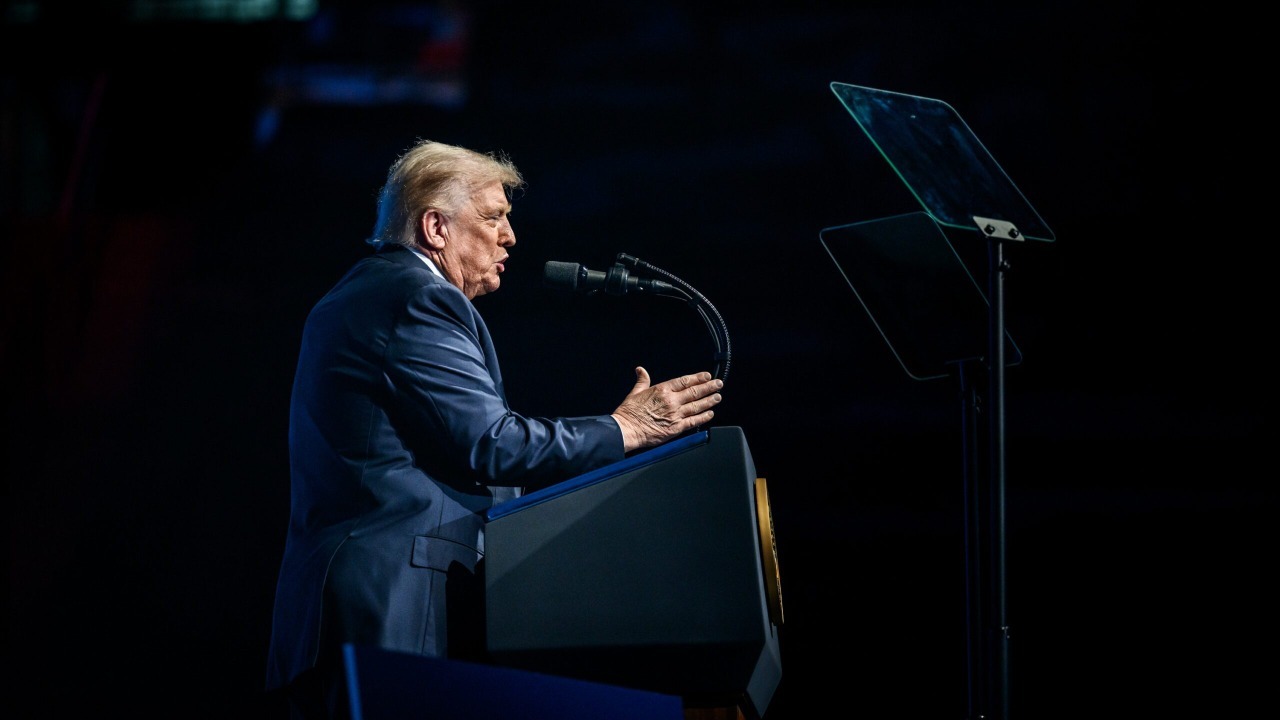
President Donald Trump has repeatedly told Americans that grocery costs are coming down, casting his economic agenda as a relief for families squeezed at the checkout line. The official data and on-the-ground receipts tell a very different story. Food inflation has cooled from its peak, but prices are still climbing, and the gap between the president’s rhetoric and the reality in supermarket aisles is widening.
Instead of a broad decline, federal statistics and private analyses show that food costs remain elevated compared with just a few years ago, with some staples still rising faster than overall inflation. The numbers are clear: households are paying more for Food today than they did before Trump took office, and forecasts suggest that trend will continue into 2026.
Trump’s talking point collides with the data
Trump has made grocery prices a centerpiece of his political message, insisting that his policies have reversed the surge that frustrated shoppers in earlier years. During a recent appearance, Trump said grocery prices are falling and portrayed his administration as delivering cheaper basics for families. According to Trump, Americans are now paying less for groceries than in years past, a claim that has quickly become a staple of his speeches.
That narrative has been reinforced by his allies. President Donald Trump has argued that grocery prices are “falling rapidly,” a phrase he used while touting his economic record, even as government figures showed the opposite. In one account, President Donald Trump claimed that his policies were driving down costs at the supermarket, suggesting that the era of painful food inflation was over. Those assertions set a clear benchmark against which the official numbers can be judged.
What the inflation numbers actually show
The government’s own inflation yardstick tells a starkly different story from the one Trump is selling. The Consumer Price Index for all items rose 2.7 percent from December 2024 to December 2025, and within that overall figure, food prices increased as well. According to Consumer Price Index Food, both groceries and meals away from home continued to climb, underscoring that the cost of eating, whether at home or in restaurants, is still rising rather than falling.
Those annual figures sit on top of several years of elevated inflation, which means shoppers are not just dealing with a one year bump but a cumulative hit to their budgets. The broader Consumer Price Index data, available through the CPI database, show that food categories have ratcheted higher since before Trump’s term, leaving prices significantly above their pre-2020 levels. Even if the pace of increase has slowed, the level of prices remains high, which is what families feel when they swipe a card at the register.
Grocery inflation is picking up again
More recent monthly readings suggest that food inflation is not just lingering, it is reaccelerating in some categories. Analysts have noted that Food prices are rising at their fastest monthly pace since 2022, defying Trump’s claims that the problem is behind us. As one breakdown of the latest figures explained, Here is why that matters: when food costs jump more quickly than overall Inflation, they squeeze lower and middle income households that spend a larger share of their income on groceries.
The same analysis pointed out that inflation held firm in December and that the reading matched economists’ expectations, even as Trump continued to insist that prices were dropping. In recent remarks, the president has claimed victory over food inflation, but the data show that grocery prices have climbed 15.5 percent over a multiyear span. According to the detailed breakdown of Inflation, that cumulative increase is what shoppers are living with today, regardless of how the president frames the trend.
USDA forecasts and expert warnings
Looking ahead, the federal government’s own agriculture economists are not expecting relief. In its Jan update, the Economic Research Service resumed its Food Price Outlook and projected that in 2026, overall food prices will continue to rise. The Food Price Outlook summary notes that in 2026, overall food prices are expected to increase, even as the range of uncertainty has decreased in size since 2019. That is a far cry from the picture of falling prices painted by the White House.
Independent consumer advocates are hearing the same message. In a Dec briefing aimed at older Americans, one group highlighted that, According to the U.S. Department of Agriculture, food prices are expected to rise by nearly 3 percent in 2026. The Key Takeaways stressed that, According to the Department of Agriculture, USDA projections point to continued increases, and then offered advice on how to spend less at the grocery store. That kind of guidance would be unnecessary if prices were truly falling across the board.
Staples that are still getting more expensive
Beyond the averages, some of the most common items in American kitchens are poised for fresh price hikes. Analysts looking at specific categories have warned that several Grocery Items Poised for the Biggest Price Increases in 2026 include Beef, which is expected to see some of the sharpest gains. Several experts put beef at the top of the list of foods that will cost more, citing tight supplies and strong demand, and they caution shoppers to stock up when they see sales if they have the storage space.
Other staples tell a similar story. A detailed review of six years of grocery receipts found that prices for essential food items have marched higher, with only a few signs of potential easing. One researcher, Hilton, suggested that Maybe in 2026 we will start to see coffee prices come back down, then immediately added a caveat. “But it may be the case that consumers just have to adjust to a new normal,” Hilton said, according to an analysis of Jan receipts that also drew on data from the Department of Health and Human Services (HHS). That is not the language of a market where prices are broadly falling.
More From TheDailyOverview
This article was researched with the help of AI, with editors refining and creating the final content.

Grant Mercer covers market dynamics, business trends, and the economic forces driving growth across industries. His analysis connects macro movements with real-world implications for investors, entrepreneurs, and professionals. Through his work at The Daily Overview, Grant helps readers understand how markets function and where opportunities may emerge.

