President Donald Trump has moved a simmering dispute with Caracas into the skies, declaring that the airspace above and around Venezuela should now be treated as off limits. His warning, delivered in public remarks and amplified online, instantly raised questions about legal authority, aviation safety and the next phase of a long running confrontation with the government in Caracas.
The statement landed in a region already on edge, where sanctions, migration and energy politics have intertwined with the fate of a country that holds some of the world’s largest oil reserves. By telling airlines and allies that Venezuelan skies are effectively closed, Trump has turned a technical sounding directive into a new test of power, sovereignty and risk management for everyone who flies near the country.
The moment Trump drew a line in the sky
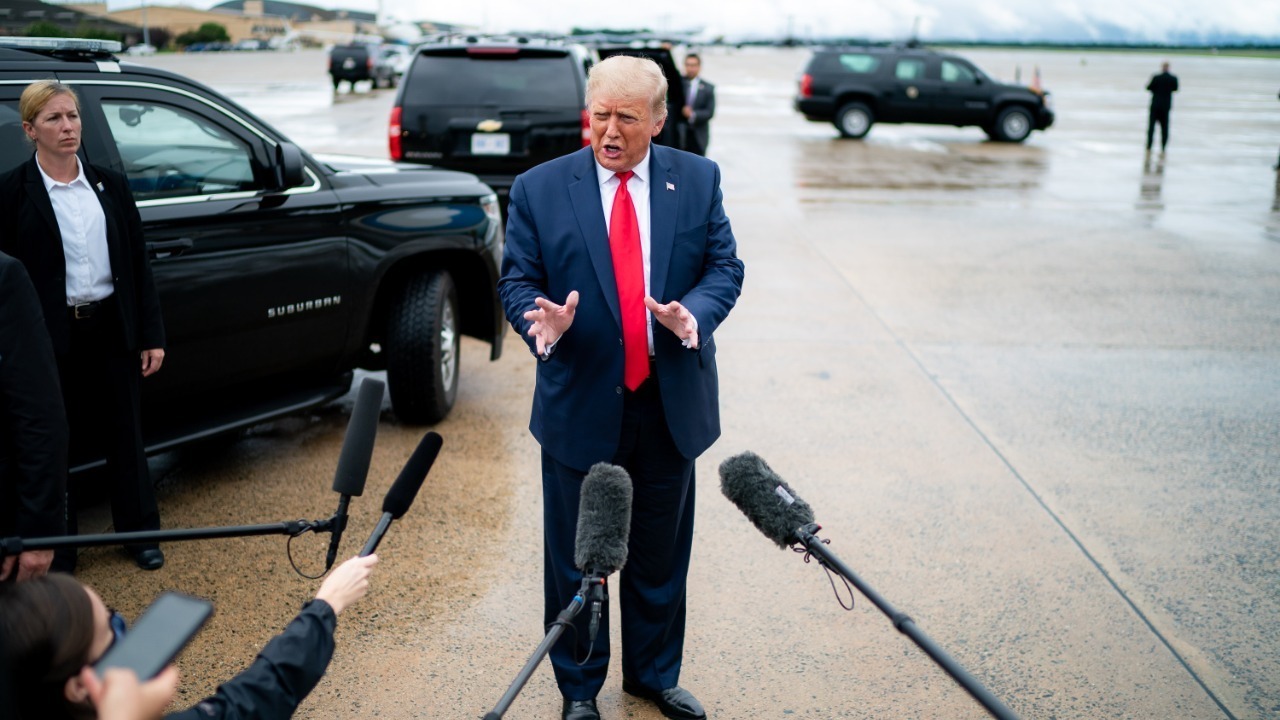
When President Donald Trump said the airspace above and surrounding Venezuela should be considered closed, he was not just commenting on aviation routes, he was signaling a sharper phase in his standoff with Caracas. In public remarks that included Thanksgiving greetings to U.S. troops, he thanked the Air Force’s 7th Bomb Wing for its work and then pivoted to warn that Venezuelan skies were now to be treated as off limits, language that officials later echoed in guidance to carriers that the area was “closed in its entirety.” That phrasing, delivered as part of his role as commander in chief, carried an implicit expectation that U.S. airlines and partners would quickly adjust flight paths to avoid the country.
Trump’s declaration did not come with a detailed legal memo or a step by step enforcement plan, which is why aviation regulators and foreign governments immediately began parsing what, in practice, he was ordering. Reporting on his message to carriers describes him telling airlines that Venezuela’s airspace is “closed in its entirety,” a formulation that went beyond the narrower restrictions the United States has sometimes used in other conflict zones and that suggested a sweeping, if still ambiguous, directive to reroute traffic around the country on Saturday morning in late Nov 28, 2025.
A social media post, a phone call and a fast escalating directive
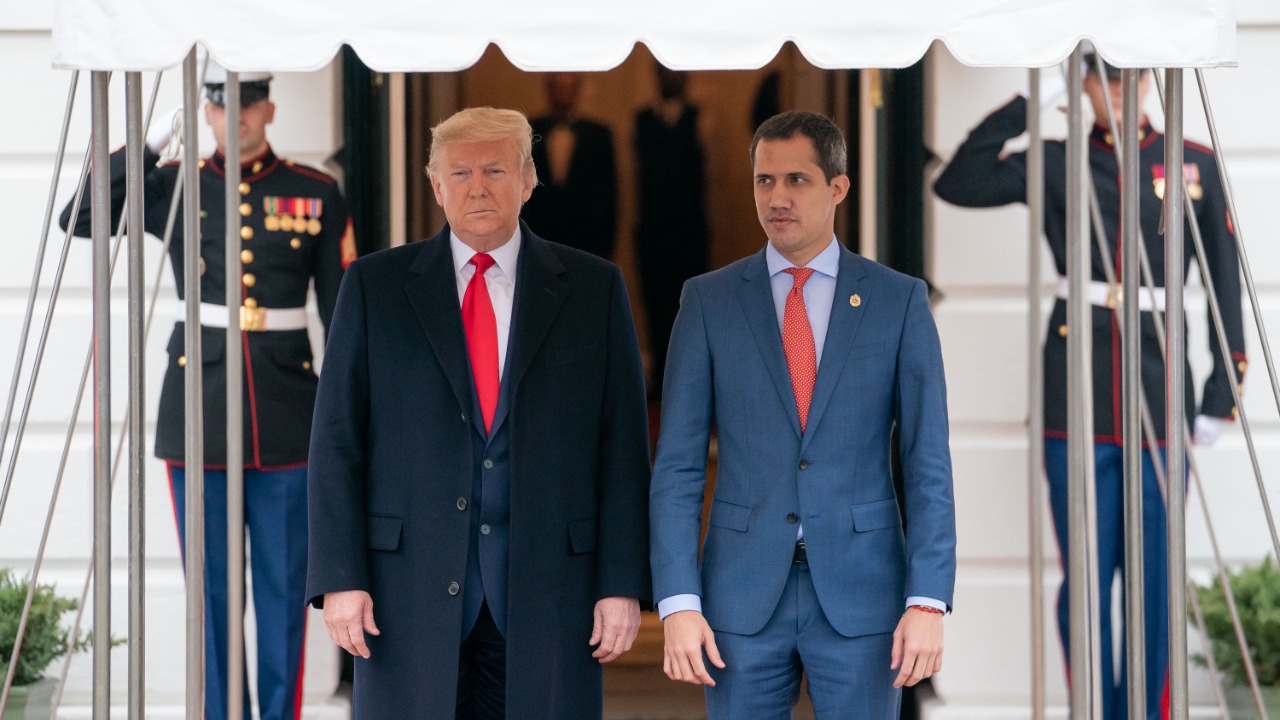
The path to this airspace warning ran through Trump’s preferred channels of power, a mix of private leader to leader contact and public social media blasts. According to people familiar with the sequence, Trump and the Venezuelan strongman spoke by phone the week before the announcement, a conversation that has not been fully detailed but that appears to have set the stage for the president’s next move. His subsequent social media post, in which he declared that the airspace around the country should be considered closed, transformed what might have been a quiet diplomatic warning into a global headline and a practical problem for airlines and insurers.
That online declaration, which came on the same day as his public remarks, was framed as a security measure rather than a negotiating gambit, and it landed in Caracas as a direct challenge to Venezuelan sovereignty. Officials there quickly denounced the message, calling it a colonialist threat and accusing Washington of trying to dictate what happens in their skies. The timing, with the social media post following the phone call between Trump and the Venezuelan leader, has fueled speculation about what was said privately, but the only firm detail available from that sequence is that Trump’s post came after the call, as described in coverage of how Trump and the Venezuelan leader interacted in the days before the warning.
What Trump actually said, and what it might mean in practice
Parsing Trump’s language is essential, because the difference between a political warning and a binding aviation order can determine whether a flight plan is legal, insurable or even physically allowed to enter a given route. In his public comments, President Donald Trump said on Saturday the airspace above and surrounding Venezuela should be considered closed, and he did not provide any further explanation about how that would be enforced or under which statute he was acting. That left regulators and lawyers to interpret whether he was invoking existing authorities that allow the United States to restrict U.S. carriers from entering certain foreign airspace, or whether he was attempting something broader that would require new steps from Congress.
The ambiguity was captured in follow up reporting that noted how Trump declared Venezuelan airspace closed without immediately issuing a detailed regulatory notice, even as officials stressed that the warning should be taken seriously by airlines and allies. Analysts pointed out that the U.S. government has long used Notices to Air Missions to steer traffic away from conflict zones, but that Trump’s sweeping phrasing about the airspace above and surrounding Venezuela being closed in its entirety went further rhetorically than many previous advisories. That tension between rhetoric and regulation is why coverage of his statement, which described how President Donald Trump spoke from WASHINGTON on Saturday the day of the announcement, has repeatedly emphasized that it is still not fully clear what, in legal terms, his words mean.
How airlines and regulators scrambled to respond
For airlines, Trump’s warning was not an abstract geopolitical signal, it was a routing problem that had to be solved in real time. A number of carriers had already begun shifting their paths away from Venezuelan airspace earlier in the month, reflecting both existing security concerns and the expectation that Washington might tighten restrictions further. Once Trump told airlines that the skies over the country were closed in their entirety, those tentative adjustments hardened into more formal reroutes, with dispatchers and pilots working to redraw tracks that had long cut across the Caribbean and northern South America.
U.S. regulators moved in parallel, with the Federal Aviation Administration reinforcing guidance that discouraged or barred U.S. passenger and cargo carriers from entering Venezuelan airspace, building on restrictions that had been in place for years. The U.S. Federal Aviation Administration was already a central player in managing risk assessments for flights near conflict zones, and its role only grew as carriers sought clarity on whether they could overfly the country at high altitude or had to avoid it completely. Reporting on the shift notes that a number of airlines began rerouting flights away from Venezuela’s airspace earlier in the month and that the U.S. Federal Aviation Administration was central to that process, a pattern captured in coverage that described how carriers adjusted routes after Trump’s comments from his Mar a Lago estate in late Nov 28, 2025.
Caracas calls it a ‘colonialist threat’ and suspends deportation flights
Inside Venezuela, Trump’s declaration was received not as a technical safety advisory but as a direct affront to national sovereignty. Officials in Caracas condemned the move as a colonialist threat, arguing that only Venezuela has the right to decide who flies through its skies and under what conditions. They stressed that direct flights from U.S. passenger and cargo carriers to Venezuela have been suspended since 2019, and framed Trump’s new warning as an attempt to extend U.S. control beyond its own borders by pressuring foreign airlines and partners to treat Venezuelan airspace as if it were under Washington’s jurisdiction.
The political response did not stop at rhetoric. The Venezuelan government also suspended all deportation flights from the United States after Trump’s airspace closure warning, tying migration cooperation directly to what it described as an unacceptable attempt to dictate policy from abroad. Officials said they would not accept foreign orders or threats, and they cast the airspace dispute as part of a broader pattern in which Washington uses economic and logistical levers to try to weaken the government in Caracas. Coverage of that reaction has highlighted how Venezuela called Trump’s airspace closure declaration a colonialist threat to its sovereignty and noted that direct flights have been suspended since 2019, details that appear in reports describing how Direct flights had already been halted and how Venezuela suspends deportation flights in response.
Global aviation maps shift and flight trackers light up
Once Trump’s warning was out, the impact became visible not just in policy memos but on consumer flight tracking apps that anyone with a smartphone could open. Users watching real time maps saw commercial jets bending around Venezuelan territory, with corridors that once cut directly over the country now hugging neighboring airspace or taking longer overwater routes. The visual effect was a sudden hollowing out of the sky over Venezuela, a pattern that aviation analysts compared to the way traffic has avoided other conflict zones when governments issue strong warnings about overflight risk.
Those maps also fed a new round of public debate about what exactly Trump’s order was meant to achieve. Some supporters argued that closing the skies would make it harder for traffickers ferrying narcotics to the U.S. to exploit Venezuelan routes, while critics countered that determined smugglers rarely rely on scheduled commercial flights and that the main impact would fall on legitimate carriers and passengers. Coverage of the shift has pointed to flight tracker data that shows how Venezuelan airspace changed after Trump’s order and has noted that a media error briefly interrupted one such visualization, a glitch that appeared in a report that referenced a Media Error while discussing how the closure might affect planes ferrying narcotics to the U.S.
Legal gray zones and the question of authority
Behind the political theater sits a more technical question that matters enormously to airlines and foreign governments: what legal basis does the United States have to tell carriers that the airspace around another sovereign country should be treated as closed. Under long standing practice, Washington can bar U.S. airlines from entering certain foreign airspace and can advise foreign partners to follow suit, but it cannot unilaterally change the legal status of another nation’s skies under international law. That is why Trump’s sweeping language has been met with careful, sometimes skeptical, parsing by aviation lawyers who are trying to reconcile his rhetoric with the more limited tools that regulators actually possess.
Analysts who track aviation law have noted that the Trump administration’s announcement about the closure of Venezuelan airspace raises questions about how far U.S. authorities can go without new legislation or explicit multilateral agreements. They point out that while safety based advisories are common, declaring that the airspace above and surrounding a country is closed in its entirety pushes into a gray zone that could invite challenges if foreign carriers or governments decide to resist. A detailed breakdown of these issues appears in a legal analysis that asks what legal basis the administration has for its move and how the closure affects international flights, a discussion laid out in a Table of Contents style review of the Venezuelan airspace closure and its implications for U.S. relations and global aviation.
Regional stakes: migration, sanctions and a contested presidency
The airspace dispute cannot be separated from the broader political and economic crisis that has defined Venezuela’s relationship with Washington in recent years. The U.S. government does not view Maduro as the legitimate leader of the oil rich but increasingly impoverished South American nation, a position that has shaped sanctions policy, diplomatic recognition and cooperation on issues like migration and counter narcotics. Trump’s decision to escalate with an airspace warning fits into that pattern, using the tools of aviation and logistics to increase pressure on a government that Washington has long sought to isolate.
For neighboring countries and regional airlines, the stakes are practical as well as political. Rerouting around Venezuelan territory can add time and cost to flights that connect hubs in Panama City, Bogotá or Miami with destinations across the hemisphere, and it can complicate efforts to manage already strained migration and deportation systems. The Venezuelan government, for its part, has tried to frame the dispute as part of a larger struggle against foreign interference, arguing that it will not accept foreign orders or threats even as it faces deep economic challenges at home. Reporting on Trump’s comments has underscored that the U.S. government does not recognize Maduro as the legitimate leader of the South American country and has noted that this stance colors every aspect of the confrontation, a point made explicitly in coverage that described how the U.S. government views Maduro and the South American context of the dispute.
How this reshapes U.S.–Venezuela tensions and what comes next
Trump’s airspace warning has already hardened positions on both sides, and it is likely to shape U.S.–Venezuela relations long after the immediate routing changes have settled into routine. For Washington, the move reinforces a strategy that leans on sanctions, travel restrictions and now aviation warnings to squeeze Caracas without committing to direct military confrontation. For Venezuela, it offers another example to rally domestic supporters around the idea that the country is under siege from a foreign power that seeks to control its resources and dictate its policies, a narrative that the government has used repeatedly to justify tight internal controls.
The next phase will depend on whether Trump’s words are followed by more formal regulatory steps, coordinated action with allies or potential negotiations that trade airspace flexibility for concessions on other fronts. If the United States moves to codify the closure through detailed notices and multilateral pressure, airlines and neighboring governments will have little choice but to adapt, even if they privately question the legal theory behind it. If, instead, the warning remains more rhetorical than regulatory, carriers may gradually test the boundaries of what is allowed, especially if economic pressures mount. For now, the only certainty is that Venezuelan airspace, once a routine corridor on global flight maps, has become a symbol of a much larger struggle, one that sits at the intersection of sovereignty, security and the contested future of Venezuela itself, a struggle intensified by Trump’s insistence that the airspace above and surrounding the country be closed in its entirety as described in coverage that noted how Trump says the skies should be treated and how The Venezuelan government has branded the comments hostile.
More From TheDailyOverview
- Dave Ramsey warns to stop 401(k) contributions
- 11 night jobs you can do from home (not exciting but steady)
- Small U.S. cities ready to boom next
- 19 things boomers should never sell no matter what

Grant Mercer covers market dynamics, business trends, and the economic forces driving growth across industries. His analysis connects macro movements with real-world implications for investors, entrepreneurs, and professionals. Through his work at The Daily Overview, Grant helps readers understand how markets function and where opportunities may emerge.