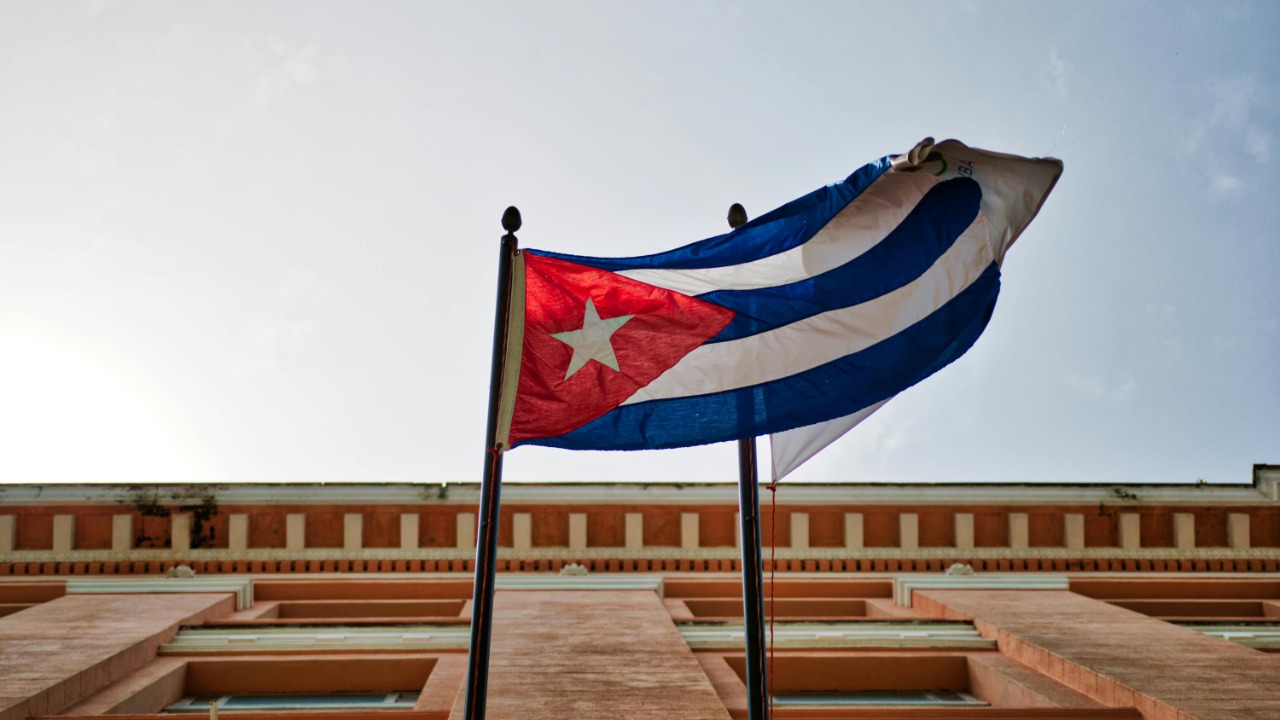
President Donald Trump has opened a new front in his hard line on Havana, declaring a national emergency over Cuba and threatening tariffs on any country that keeps the island’s oil flowing. The move targets the fuel lifelines that keep Cuba’s lights on and its economy barely functioning, while pulling regional partners into a high‑stakes confrontation over energy, sanctions and sovereignty. I see a policy designed to squeeze the Cuban government colliding with the risk of a humanitarian crisis for ordinary Cubans and a diplomatic headache for neighbors that sell or ship oil to the Island.
By framing Cuba as a direct danger to United States security and foreign policy, Trump is giving himself broad legal room to punish third countries that trade with Havana. The strategy hinges on a simple calculation: if outside suppliers can be scared away from selling oil to Cuba, the government in Havana will face intense pressure, but so will a population already living with long blackouts and fuel shortages.
The national emergency Trump just declared over Cuba
Trump’s escalation begins with a formal declaration that the situation with respect to Cuba constitutes a national emergency for the United States. In an executive order titled “Addressing Threats to the United States by the Government of Cuba,” he states, “NOW, THEREFORE, I, DONALD J. TRUMP, President of the United States of America,” and then invokes emergency powers to confront what he describes as an “unusual and extraordinary threat” posed by the Cuban government to American security and foreign policy. By using that language, Trump is not just signaling displeasure with Havana, he is activating legal authorities that allow him to block property, restrict transactions and direct federal agencies to craft new sanctions against Cuban entities and those who support them, as laid out in the executive order.
The White House framed the move as part of a broader campaign it described as “CONFRONTING THE CUBAN REGIME,” saying that “Today, President Donald J. Trump signed an Executive Order declaring a national emergency and establishing that the Cuban government’s actions pose a threat to American security and foreign policy.” In that fact sheet, the administration argues that Cuba’s ties to hostile powers and support for groups Washington labels terrorist organizations justify the emergency designation and the sweeping measures that follow, presenting the order as a necessary response to protect United States interests rather than a discretionary escalation, a rationale it outlines in its Cuban regime briefing.
How the tariff threat targets Cuba’s oil lifelines
At the heart of the order is a threat that reaches far beyond Havana: Trump is warning that any country that sells or provides oil to Cuba could see tariffs slapped on its exports to the United States. The White House has said Trump “threatens tariffs on goods from countries that sell oil to Cuba,” arguing that such trade effectively props up a government it accuses of working with hostile powers, a position spelled out in its description of tariffs on goods. In practical terms, that means oil producers and traders from Latin America to Europe now have to weigh the value of their Cuban business against the risk of losing access to the American market or paying steep duties at the border.
Trump’s order, signed on a Thursday according to multiple accounts, is explicit that the tariffs would apply to “any goods from countries that sell or provide oil to Cuba,” making the threat both sweeping and deliberately vague. Reports describe President Donald Trump using the same Thursday signing to declare Cuba an “unusual and extraordinary threat” and to authorize tariffs on nations that “sell or provide the island nation with oil,” a formulation that appears in detailed coverage of how Trump tightens screws on Havana. By tying the tariff trigger to any form of oil supply, the administration is signaling that even indirect or barter arrangements could draw penalties, a design that maximizes leverage but also uncertainty for global shippers.
Cuba’s fragile energy reality and the risk of blackouts
The pressure campaign lands on an energy system that is already stretched to the breaking point. Cuba is an Island economy with limited domestic production and a chronic dependence on imported fuel, a vulnerability that has translated into long power cuts and rationing. Mexican officials, who are watching the situation closely, have warned that the Island country only has oil enough to last 15 to 20 days and that 12‑hour blackouts have become commonplace, a stark description of Cuba’s current energy reserves and daily life that appears in reporting on the oil crisis. When a government is operating on barely three weeks of fuel, even small disruptions in supply can cascade into nationwide outages, shuttered factories and paralyzed transport.
That fragility is why the threat to cut off oil lifelines is so potent. Cuba’s grid has already been cycling through long outages, with 12‑hour blackouts described as routine, and any further squeeze on imports risks pushing the system from hardship into collapse. The United States has made clear that it sees Cuba’s external relationships, including with countries that provide fuel, as part of a broader pattern of ties to hostile powers, a concern it has linked to the national emergency in its description of nations that keep an oil lifeline open. For ordinary Cubans, the distinction between punishing a government and punishing a population may blur quickly if fuel runs out and blackouts deepen.
Mexico and regional suppliers caught in the crossfire
The tariff threat is not aimed only at Havana, it is also a direct message to regional partners that have become crucial suppliers of oil to Cuba. Mexico, in particular, finds itself in a bind because its state‑linked companies have been part of the Island’s fuel mix and its government has positioned itself as a defender of non‑intervention in Latin America. Mexican leaders have publicly warned that the Island country’s 15 to 20 days of oil and 12‑hour blackouts mean that any disruption could trigger a humanitarian crisis, a warning that appears in accounts quoting Thomas Graham in Tijuana and other observers who describe how Mexico’s president sees the tariff threat as a potential catastrophe.
For Mexico and other exporters, the calculus is brutal. Continuing to sell oil to Cuba could mean facing tariffs on goods shipped to the United States, a market that dwarfs their Cuban business, yet cutting off supplies risks being seen as abandoning a neighbor to “extreme living conditions,” a phrase used in one account of how people on the Island are already being subjected to hardship. Trump’s order, signed on Thursday according to several reports, has been described as backing Mexico into a corner by threatening tariffs on any country selling oil to Cuba, a dynamic laid out in analysis of how Mexico is cornered. The result is a regional test of how far governments are willing to go to shield their own economies from United States pressure while maintaining energy ties with Havana.
Washington’s security rationale and the terrorism argument
Trump’s team is not presenting the tariff threat as a simple economic punishment, it is framing it as a security measure tied to Cuba’s alleged support for terrorism and alignment with adversaries. The White House has said that Cuba’s ties to hostile powers are a key reason for the order, and that countries selling oil to Havana are effectively enabling a regime that backs groups the United States considers terrorist organizations, a linkage it makes explicit in its description of Cuba’s ties to hostile actors. In the administration’s telling, cutting off oil is a way to weaken a government that provides support and safe harbor to groups Washington wants to isolate.
One account of the order notes that President Donald Trump, on Thursday, signed an executive order that would impose a tariff on any goods from countries that sell or provide oil to Cuba and that the measure is justified in part by references to organizations such as Hamas and Hezbollah, which the United States designates as terrorist groups, a detail captured in coverage of how terrorism links are invoked. By embedding the Cuba move inside the broader counterterrorism narrative, Trump is seeking to align it with long‑standing bipartisan concerns, even as critics argue that the direct connection between oil shipments to Havana and the activities of those groups is tenuous and risks conflating separate issues.
Havana’s furious response and warnings of “brutal” aggression
From Cuba’s perspective, the national emergency declaration and tariff threat are not a defensive measure but an act of economic warfare. Cuban Foreign Minister Bruno Rodríguez and several other Cuban officials have condemned the order, calling it a “brutal act of aggression” and accusing the United States of trying to strangle the Island’s economy by targeting its fuel supplies, language that appears in detailed reporting on how Bruno Rodríguez reacted. Rodríguez has also accused the United States of trying to cut off Cuba’s access to oil from Venezuela, a country that has been a key supplier for a quarter‑century, underscoring how deeply energy ties are woven into Havana’s foreign relationships.
Cuban officials argue that the new measures will not topple the government but will instead deepen the suffering of ordinary people who are already enduring long blackouts and shortages. They point to the Island’s limited oil reserves and the existing 12‑hour blackouts as evidence that any further squeeze will translate directly into “extreme living conditions” for families, hospitals and schools, a phrase that appears in accounts of how people on the Island are being subjected to extreme hardship. For Havana, the fight is not only about sanctions but about narrative: whether the world sees the United States as defending its security or as using its economic weight to punish a smaller neighbor.
What comes next for Cuba, its suppliers and the United States
Trump’s order has set up a tense waiting game in which oil suppliers, Cuban officials and United States agencies are all trying to gauge how far the new powers will be used. The executive order directs departments such as Commerce, State, Treasury and Homeland Security to identify and target entities that help supply Cuba with oil, a mandate described in accounts of how federal agencies are being mobilized. For companies and governments that have been part of Cuba’s fuel network, the question is whether to pull back preemptively or test the limits of enforcement, knowing that the United States has now formally labeled the situation a national emergency.
More From TheDailyOverview
This article was researched with the help of AI, with editors refining and creating the final content.

Grant Mercer covers market dynamics, business trends, and the economic forces driving growth across industries. His analysis connects macro movements with real-world implications for investors, entrepreneurs, and professionals. Through his work at The Daily Overview, Grant helps readers understand how markets function and where opportunities may emerge.

