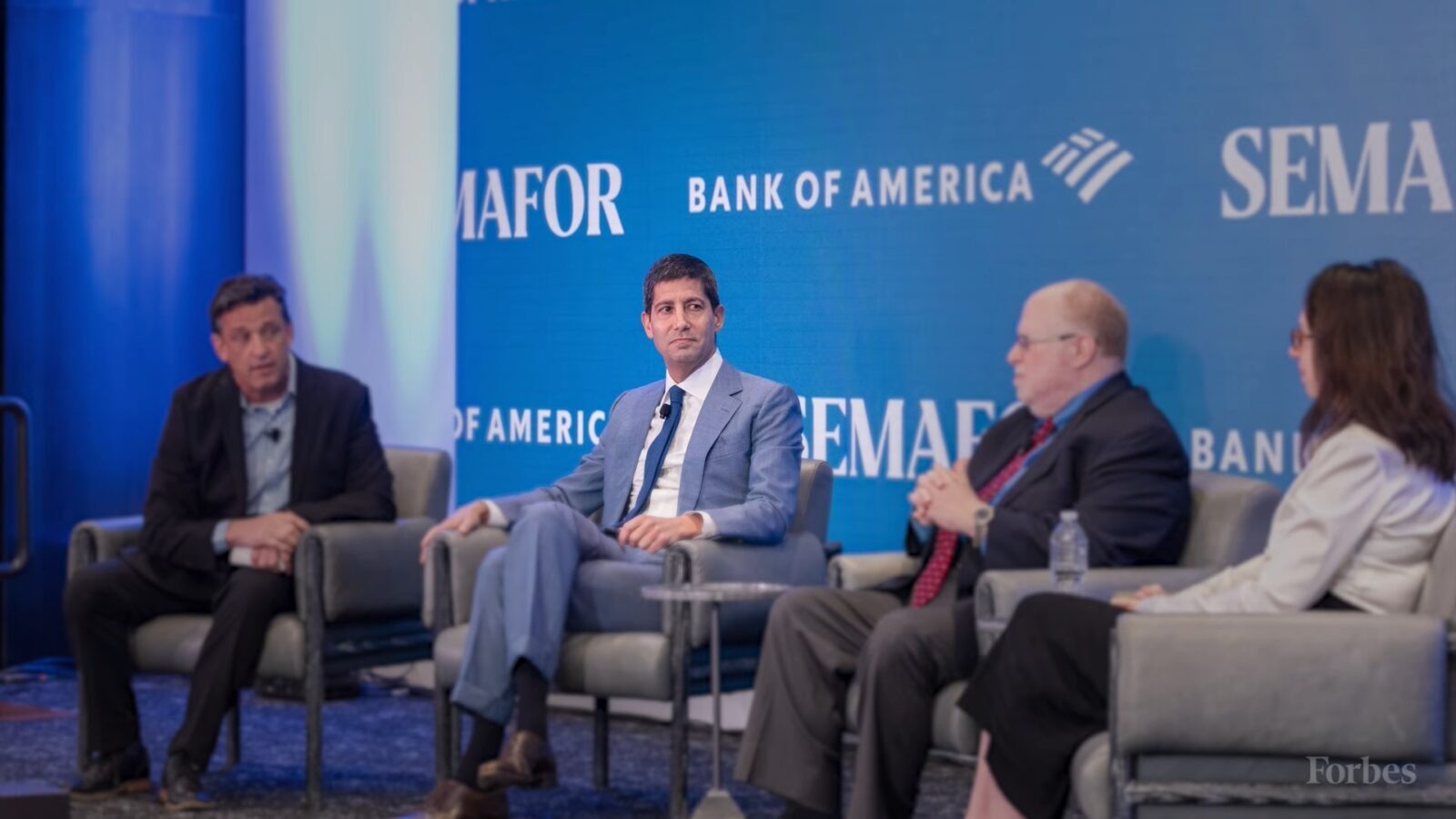
President Trump’s reported decision to nominate Kevin Warsh as the next Federal Reserve chair is about more than replacing Jerome Powell. It signals a potential overhaul of how the central bank operates, one that could put the White House’s demand for lower borrowing costs on a collision course with a far more ambitious restructuring of Fed policy and its balance sheet.
Why Warsh, and Why Now
Trump has long pressured the Fed to cut interest rates, viewing cheaper borrowing as essential to sustaining economic growth and reducing the government’s own debt-servicing costs. But Warsh is not simply a rate-cut messenger. He served as a Fed governor from 2006 to 2011, a tenure that included the worst of the financial crisis and its aftermath. That experience shaped his skepticism toward the Fed’s expanded role in financial markets, particularly the massive bond-buying programs that swelled the central bank’s balance sheet. The administration has highlighted his crisis-era experience and his critiques of unconventional policies, with the president’s own staff casting the nomination as a bid for steadier, more disciplined leadership at the top of the central bank.
The timing also matters. Powell’s term is winding down after a period of sustained tension with the administration over the pace of rate cuts and the Fed’s broader agenda. According to coverage in Washington, the announcement arrived alongside a broader pressure campaign around lower borrowing costs and a simmering controversy over the Fed’s building renovation projects, which the White House has seized on as evidence of misplaced priorities. Warsh’s selection is not just a personnel swap; it represents the administration’s clearest attempt yet to reshape the direction of monetary policy from the top, installing a chair who shares its doubts about the post-crisis expansion of the Fed’s footprint in markets.
The Tension Between Rate Cuts and Structural Reform
Here is where the story gets complicated. Trump wants lower rates, and he wants them quickly. Warsh, however, appears to want something larger: a fundamental rethinking of how the Fed manages its balance sheet and communicates with markets. According to reporting on his views, Warsh has argued that there is scope to reduce interest rates because stronger growth does not automatically translate into higher inflation. That argument gives Trump what he wants to hear. But the same reporting notes Warsh’s interest in shrinking the Fed’s roughly $6.5 trillion balance sheet, a move that could tighten financial conditions in ways that work against the president’s goals if it pushes longer-term yields higher even as short-term rates fall.
This internal contradiction is the central risk of the nomination. Any turbulence that pushes up longer-term rates would, as analysts have warned, clash with the president’s goal of cutting borrowing costs for the government and for households. Mortgage rates, corporate bond yields, and Treasury borrowing costs all respond to expectations for long-term interest rates, not just the overnight policy rate. If Warsh moves aggressively to unwind the Fed’s bond holdings or overhaul its operating framework, the short-term effect could be higher, not lower, long-term borrowing costs. That outcome would directly undermine the rate relief Trump has publicly demanded and could expose a rift between the White House’s political timetable and the new chair’s institutional agenda.
Reuters has described Warsh as an inflation hawk during his prior Fed tenure, a label that sits uneasily alongside the argument that he would champion easy money to satisfy Trump. The conflicting signals suggest Warsh’s actual policy direction may be more independent than either supporters or critics currently assume. He could seek to deliver a short-term rate cut to establish goodwill while simultaneously laying the groundwork for a leaner balance sheet and a more rules-based approach to policy—changes that might ultimately constrain the kind of politically driven easing the White House has sought.
The Bessent-Warsh Alliance and What It Could Mean
One thread that most coverage has underweighted is the potential coordination between Warsh and Treasury Secretary Scott Bessent. According to accounts of their relationship, collaboration between Bessent and Warsh could eventually yield changes that are minimally disruptive to financial markets. Warsh has already floated ideas for altering the composition and size of the Fed’s portfolio, and the thinking in some administration circles is that a coordinated approach between the Fed and Treasury could manage any transition in a way that avoids the kind of bond-market shock that would spike mortgage rates and government borrowing costs simultaneously.
This is where the “something far bigger” in the nomination takes shape. If Warsh and Bessent work in tandem to reshape how the government finances itself and how the Fed manages its portfolio, the result could be a meaningful shift in the relationship between fiscal and monetary policy. That kind of alignment has not existed in modern American economic governance and would raise real questions about Fed independence. Critics will argue that close coordination between the Treasury and the central bank blurs lines that exist for good reason, specifically to prevent political leaders from using monetary policy as a tool for short-term electoral gain. Supporters will counter that the current system, with its massive balance sheet and persistent tension between the White House and the Fed, is already dysfunctional—and that a more explicit partnership could deliver clearer signals to markets and a more coherent strategy for managing the government’s debt load.
What Powell Left Behind
Warsh inherits a Fed that has been under unusual scrutiny. Powell’s tenure was marked by the pandemic crisis, a rapid expansion of the central bank’s balance sheet, and a difficult pivot away from near-zero rates as inflation surged. The result is an institution that is simultaneously more powerful and more politically exposed than at any time since the 1970s. Lawmakers have questioned everything from the Fed’s emergency lending tools to its role in supervising large banks, while the White House has zeroed in on interest rates and even the optics of the central bank’s headquarters renovation. Warsh will step into this environment with a mandate, at least from the administration, to pare back the Fed’s footprint and re-center its mission on price stability and growth, even as he navigates a skeptical Congress and an anxious Wall Street.
At the same time, the economic landscape he faces is more technologically complex than the one Powell encountered when he took office. The Fed must now assess how rapid advances in areas like artificial intelligence, which the federal government is trying to coordinate through initiatives such as the national AI program, affect productivity, labor markets, and inflation dynamics. It must also understand how new forms of digital payments and financial infrastructure interact with traditional banking and with the Treasury market that underpins global finance. Warsh’s stated desire for a simpler, less interventionist Fed will collide with a reality in which the financial system is more interconnected, data-driven, and vulnerable to cyber and operational shocks than ever.
A Bigger Experiment in Economic Governance
Beyond the immediate questions of rates and the balance sheet, Warsh’s nomination fits into a broader Trump-era experiment in economic governance. The administration has pursued a more centralized approach to key levers of policy, from trade to industrial strategy, and has shown a willingness to blur the lines between technocratic agencies and political priorities. In domestic security, for example, the Department of Homeland Security has used programs like the “Walls of Wire” initiative to fuse technology, border management, and data collection in ways that reflect White House priorities as much as traditional bureaucratic planning. The Warsh pick suggests a similar impulse in monetary policy: bring the central bank closer to the president’s agenda while installing a chair who has his own, more structural ambitions for change.
That approach is mirrored in other policy domains. Economic strategists around Trump have floated ideas for integrating digital identity, payments, and benefits delivery through projects akin to the experimental “Trump Card” platform, and for aligning health-care pricing and pharmaceutical policy under initiatives such as the TrumpRx framework. Each of these efforts points toward a governing philosophy that favors tighter executive-branch control over complex systems that were previously left more insulated from day-to-day politics. Warsh’s prospective Fed, especially if closely coordinated with Bessent’s Treasury, would extend that philosophy into the heart of the financial system, testing how far a White House can go in reshaping the institutional architecture of American capitalism without triggering a backlash from markets, Congress, or the public.
For now, the nomination leaves more questions than answers. Will Warsh prioritize the quick rate cuts Trump has demanded, or will he move first to lay out a long-term plan for slimming the balance sheet and redefining the Fed’s role? Can he maintain enough distance from the administration to preserve the appearance—and reality—of central bank independence, even as he works closely with a Treasury secretary who shares his instincts? And how will markets react if the promised alignment between fiscal and monetary policy looks less like a stabilizing partnership and more like a political project? The answers will determine not only the path of interest rates, but also whether this moment marks a temporary change in personnel or the beginning of a much deeper reordering of how economic power is exercised in Washington.
More From The Daily Overview
*This article was researched with the help of AI, with human editors creating the final content.

Grant Mercer covers market dynamics, business trends, and the economic forces driving growth across industries. His analysis connects macro movements with real-world implications for investors, entrepreneurs, and professionals. Through his work at The Daily Overview, Grant helps readers understand how markets function and where opportunities may emerge.

