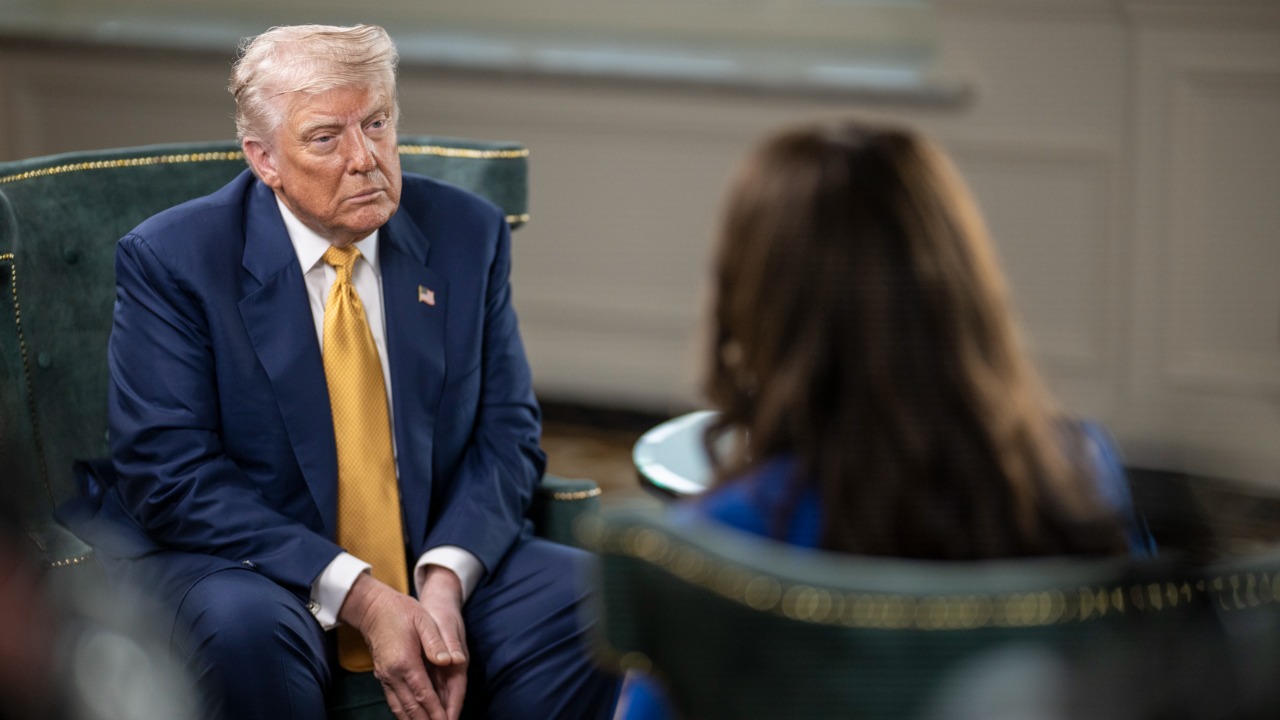
President Donald Trump has spent months talking up the idea of fresh $2,000 stimulus checks, but his latest comments suggest the plan is more aspiration than locked‑in promise. In a televised NBC interview, he said he was “looking at it very seriously” and added that he “may make the commitment,” yet he also stressed that no final decision has been made. That tension between bold rhetoric and careful hedging now defines the debate over whether households will actually see another round of direct payments.
The White House has framed the proposal as a “tariff dividend,” arguing that money collected from foreign imports could be routed straight into Americans’ bank accounts. At the same time, reporting on tariff revenue, legal challenges and the lack of a concrete bill in Congress points to a far murkier reality. The result is a political promise that sounds simple on the stump but looks increasingly fragile once you follow the money and the law.
Trump’s careful walk‑back on a $2,000 promise
Trump’s own words have shifted from confident sales pitch to conditional maybe. Earlier this year he repeatedly talked about sending $2,000 checks, positioning the idea as a signature benefit of his return to the presidency. In an interview that aired on Thursday on “NBC Nightly News,” anchor Tom Llamas pressed him on whether he would guarantee the money, and President Donald Trump replied that he was “looking at it very seriously” and that he “may make the commitment,” a formulation that keeps the option alive without binding him to deliver.
That nuance has grown sharper in subsequent remarks. According to one detailed account of his NBC comments, President Donald Trump told NBC News that he had not yet made a commitment, even as he continued to praise the concept of a tariff‑funded payout. A separate analysis of his public statements notes that, Since returning to office, Trump has repeatedly floated $2,000 checks without backing them with a formal legislative package, underscoring how much of the plan still lives in the realm of political messaging rather than statutory text, as reflected in one Feb interview.
The tariff dividend idea runs into math and law
At the heart of the proposal is a simple pitch: tariffs on foreign goods would generate a pool of cash that could be “gifted” back to citizens. Trump has described the tariff money as “so substantial” that he would “be able to do $2,000 sometime,” language that frames the checks as a kind of national rebate. In one account of his comments, Trump explicitly tied the payments to this revenue stream, saying the funds were “coming in” and could be redirected, a claim that has resonated with supporters who see tariffs as a way to make other countries foot the bill, as summarized in a Feb overview.
The numbers, however, are far less forgiving than the rhetoric. Independent coverage of the “tariff dividend” notes that Tariff revenue is far below needed levels to cover nationwide $2,000 checks, especially once you factor in existing budget commitments and the cost of administering a new program. Legal and Supreme Court challenges to some of the underlying trade measures add another layer of uncertainty, since a ruling against key tariffs could shrink or even erase the revenue Trump is counting on, as detailed in one Legal analysis. When you line up the projected intake against the potential outlay, the gap helps explain why the president is now hedging instead of locking himself in.
No checks in February and a muddled legislative path
For families watching their bank accounts, the immediate reality is straightforward: there is no federal $2,000 stimulus check arriving in Feb. Reporting on the status of the plan stresses that Routine tax refunds and existing credits are still flowing, but they are not part of any new Trump stimulus. Instead, the only money hitting accounts this month is tied to the normal filing season, and officials have warned people to avoid $2,000 stimulus scams that try to piggyback on the confusion, as one detailed Feb breakdown makes clear.
The legislative roadmap is just as hazy. Analysts tracking Congress and the White House note that there is still no detailed rollout plan or named bill sponsors for a tariff‑funded stimulus, even though Millions of Americans are waiting to know if they will really get $2,000 checks promised by President Donald Trump. Since the president has not sent a specific proposal to Capitol Hill, lawmakers have little more than talking points to react to, a vacuum that has fueled speculation but not concrete progress, as described in one Feb update.
IRS logistics and the shadow of past relief fights
Even if Congress eventually authorizes new payments, the Internal Revenue Service would have to execute the plan on top of an already strained tax season. Coverage of the current filing period notes that many readers are asking, “When are we getting $2,000 stimulus check 2026 from the IRS?” and that officials have had to clarify that the IRS is focused on processing regular refunds and existing credits, not a new Trump program. One detailed explainer walks through how the IRS “Get My Payment” tools work and emphasizes that any future tariff dividend would require new legal authority before the agency could send money, as laid out in a Feb guide.
That operational backdrop matters because the IRS is still dealing with the aftershocks of earlier pandemic‑era relief. A separate report aimed at everyday filers opens with the line, “Wondering if there will be another stimulus check in 2026?” and notes that many people are confusing normal refunds with any potential new program. It cites 56 as a key figure in its breakdown of common questions and flags that Maria Francis of the USA TODAY NETWORK has had to walk readers through how to distinguish legitimate IRS communications from scams, as detailed in a Feb explainer. The lingering confusion from past relief rounds is a reminder that even a well‑designed program can sow chaos if the messaging and mechanics are not tightly aligned.
Economic stakes and expert skepticism
Behind the political theater sits a serious economic question: would a one‑time $2,000 tariff dividend meaningfully change the trajectory of household finances and the broader recovery, or would it function more as a symbolic gesture? Academic and policy experts who have weighed in tend to stress the limits of a single payment, especially if it is not paired with broader reforms on wages, housing costs or health care. One analysis framed the proposal as a short‑term boost that could help families cover a month or two of rent or a car payment on a 2020 Honda Civic, but not as a substitute for structural policy, a view that aligns with the cautious tone in a Jan Trump Stimulus that asks whether Is the Tariff Stimulus Money really on the Way for most households.
Some of the sharpest skepticism focuses on the mismatch between expectations and execution. A widely cited overview of the current debate notes that Yang, meanwhile, is defending his long‑standing $1,000 monthly payment idea and contrasts that recurring model with Trump’s more ad hoc $2,000 concept. The same report points out that Trum has not provided a detailed rollout plan or legislative details, which makes it hard for economists to model the impact or for families to plan around it, as captured in one Feb analysis. When experts cannot even agree on the basic contours of a program, it is a sign that the policy is still more slogan than statute.
More From The Daily Overview
*This article was researched with the help of AI, with human editors creating the final content.

Grant Mercer covers market dynamics, business trends, and the economic forces driving growth across industries. His analysis connects macro movements with real-world implications for investors, entrepreneurs, and professionals. Through his work at The Daily Overview, Grant helps readers understand how markets function and where opportunities may emerge.

