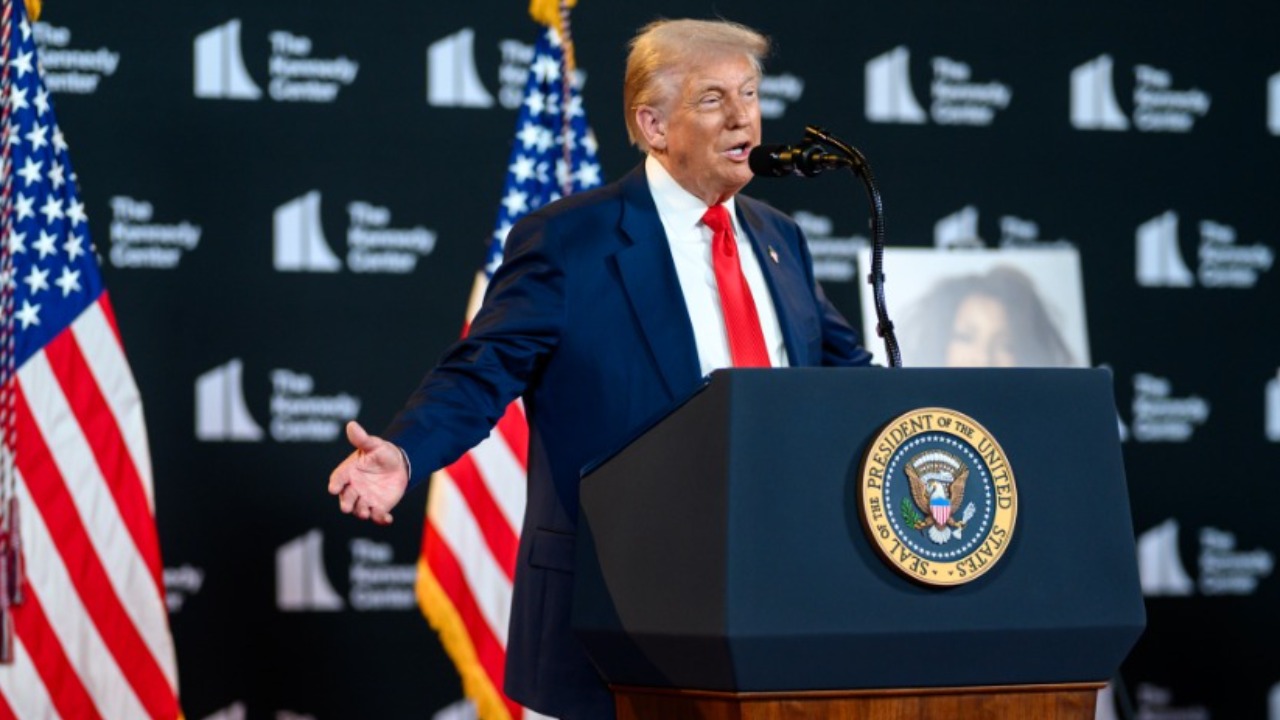
President Donald Trump is leaning hard into a new economic promise: that Americans are about to enjoy the biggest tax refund season in U.S. history. His advisers say the combination of a fresh tax law and quirks in how employers handled withholdings will translate into unusually large checks for households next spring. I want to unpack what that means in practice, who is likely to benefit, and how much of the hype around “massive” refunds holds up against the underlying numbers.
Trump’s bold promise of record refunds
The White House is framing the coming filing season as a centerpiece of President Donald Trump’s economic agenda, arguing that bigger refunds will offer visible proof that his tax policy is working for ordinary families. In public remarks, Trump has pledged what he calls the “largest tax refund season of all time,” telling supporters that taxpayers will see more money land in their bank accounts after they file. One detailed breakdown of what you can expect from this pledge notes that President Donald Trump is explicitly tying those larger refunds to relief from high prices that have squeezed household budgets.
Trump has also linked the coming windfall to what he has repeatedly branded his “big beautiful bill,” a sweeping tax package that his team says was designed to cut rates, expand credits, and simplify filing for millions of households. In one extended explanation of the policy, coverage of his address notes that US President Donald Trump has been telling voters that “next spring is projected to be the largest tax refund season ever,” presenting the law as a direct response to inflation worries.
What the Trump economist is actually predicting
Behind the president’s rhetoric is a specific forecast from his economic team that has quickly become a talking point on cable news and social media. A senior adviser described as a Trump economist has said Americans should brace for the “biggest refund cycle ever,” arguing that “massive” checks are on the way for workers who have seen their paychecks stretched by higher prices. In one interview, a White House official told viewers that massive refund checks are coming to Americans who rely on tips or overtime, suggesting that lower and middle income workers could see some of the biggest percentage boosts.
Another prominent voice has been National Economic Council Direc Kevin Hassett, a longtime Trump ally who has been out front selling the benefits of the new law. In recent comments, he has said that a typical family could save “thousands” once the new rules are fully in place, and that the cumulative impact over several years could be substantial. One detailed account of his remarks reports that the Trump economist expects “massive” tax refunds and predicts families will save between $11,000 and $20,000 each year once all the provisions are reflected in their tax filings.
The “Big Beautiful Bill” and how it fattens refunds
The legal engine behind these projections is the One Big Beautiful Bill Act, the formal name for the tax package that Trump and his allies pushed through as the centerpiece of this refund push. Policy analysts who have run the numbers say the law is structured so that many households will see their final tax liability fall even if their paychecks did not change much during the year. One nonpartisan estimate finds that the Tax Foundation estimates the OBBBA will push average refunds up by up to $1,000, a figure that helps explain why the administration is so confident about a record-setting season.
Kevin Hassett has been especially eager to connect those projections to the branding that Trump favors. In a social media video, he told viewers that “Thanks to President Trump’s ‘Big Beautiful Bill,’ many taxpayers may not realize how much they are owed until they file,” and he highlighted how new savings vehicles and credits could add up over time. In that clip, he suggested that the law could enable up to $10,000 tax-free growth in certain accounts, and he framed that as part of a broader message that Thanks to President Trump and his Big Beautiful Bill, ordinary savers will have more room to build wealth without handing as much to the IRS.
Why the refunds are so big: timing, withholdings and the IRS
Beyond the statutory tax cuts, a more technical factor is quietly amplifying the size of the expected refunds. Several economists have pointed out that many employers did not update their payroll systems quickly enough to reflect the new withholding tables, which meant workers had more tax taken out of each paycheck than the law ultimately requires. One widely shared explainer titled “Why the Refunds are So Big” lays out The Reason as a timing mismatch, noting that Why the Refunds are So Big is that many companies did not adjust their payroll systems in time, so the excess withholding is now set to come back in a lump sum.
On top of that, the IRS itself has contributed to the coming bulge in refunds by delaying some of the implementation work that would normally smooth out these effects. One detailed analysis of the upcoming season notes that larger refunds in 2026 are expected, thanks to the Trump tax law and an IRS delay that effectively pushed some benefits into a single year. That report asks, “What could $50 billion more” in aggregate refunds mean for the economy, and explains that the $50 billion figure reflects how much more money could flow back to taxpayers compared with the same period in 2023, a scale that helps justify the White House’s superlatives.
Who benefits, and what could go wrong
Trump’s team is adamant that the gains will be broad based, with particular emphasis on workers who have struggled to keep up with rising costs. In one televised appearance, a senior aide described as a Trump economist predicted the “biggest refund cycle ever” and “massive checks ahead,” while the LABOR SECRETARY DOWNPLAYS WARNINGS about whether this surge is a sign of deeper instability. That segment highlighted how the Trump admin promises largest tax refunds in US history amid concerns that some economists see big refunds as evidence that paychecks were too lean throughout the year, not as a pure bonus.
At the same time, the administration is trying to manage expectations so that households understand a larger refund is not the same as a permanent raise. A separate breakdown of the policy impact notes that larger refunds in 2026 are expected, thanks to the Trump tax law and IRS delay, but also warns that future years could look more normal once withholdings catch up. That piece, headlined “Larger tax refunds in 2026 expected,” underscores that the Larger refunds are a one time alignment of Trump policy, IRS timing and employer behavior, not a guarantee that every filing season under this administration will deliver the same kind of windfall.
More From TheDailyOverview

Julian Harrow specializes in taxation, IRS rules, and compliance strategy. His work helps readers navigate complex tax codes, deadlines, and reporting requirements while identifying opportunities for efficiency and risk reduction. At The Daily Overview, Julian breaks down tax-related topics with precision and clarity, making a traditionally dense subject easier to understand.

