Layoff announcements at the start of 2026 have surged to levels not seen since the depths of the Great Recession, colliding with a new wave of public‑sector cuts under President Donald Trump. The result is a January that looks less like a soft landing and more like the opening chapter of a harsher jobs reset. I see a pattern emerging in which corporate cost‑cutting, contract upheavals, and federal workforce reductions are reinforcing each other in ways that will be hard for workers to escape.
The headline numbers are stark enough, but the story behind them is more troubling: job cuts are clustering in key sectors, from transportation to tech, while the federal government itself is shedding staff in the middle of a shutdown fight. Taken together, these Trump‑era layoffs mark the worst January for planned cuts since the Great Recession, and they raise uncomfortable questions about how resilient the labor market really is.
The worst January for layoffs since 2009
Corporate America entered the year with a sharp pivot from hiring to trimming, and the scale of that shift is now quantifiable. According to data compiled by Challenger, U.S. firms announced 108,435 layoffs in January 2026, a figure that instantly reset expectations about the strength of the jobs recovery. That total represents a 118% increase year over year, a jump large enough that it cannot be dismissed as routine restructuring or seasonal churn. When I compare that spike with the relatively modest cuts of the prior year, it reads as a decisive turn in corporate sentiment.
The historical comparison is even more bracing. Analysts note that last month was the worst January for layoff plans since 2009, when job cuts peaked at the height of the financial crisis and 241,749 positions were eliminated. One report on worst January levels underscores that the current total is the highest for the month since that 241,749 benchmark, and another analysis of recession‑era levels notes that January job cuts have not been this severe since that same period. It is also the worst monthly total since Oct in that data set, which tells me this is not a one‑off blip but part of a broader cooling that has been building for months.
Transportation, tech, and the contract shock
Behind the headline totals, the composition of the layoffs points to specific stress points in the Trump‑era economy. The latest breakdown shows that transportation and technology companies are driving a large share of the 108,435 cuts, with major carriers and logistics firms reacting to shifting demand and higher costs. Reporting on how transportation and tech cuts dominate the list suggests that the sectors that powered earlier phases of the recovery are now retrenching. When I see logistics firms and software companies cutting in tandem, I read it as a sign that both goods movement and digital investment are slowing at the same time.
Contract upheavals are amplifying that pain. One analysis of the January surge notes that 30,784 of the job losses are tied directly to the ending of contracts, including a high‑profile decision involving UPS and a delivery agreement with Amazon. The report on 30,784 contract‑related cuts makes clear that these are not simply companies trimming fat, they are workers caught in the crossfire of corporate renegotiations. Another account of the same trend stresses that Market and economic conditions are cited as the cause for an additional tranche of job losses, reinforcing the idea that both macro headwinds and firm‑specific decisions are converging on the same employees.
Wall Street wakes up to a labor‑market turn
Financial markets have started to price in the new layoff reality, even if the unemployment rate has not yet fully reflected it. A live markets briefing noted that Last month was the worst January for layoff plans since 2009, citing Challenger data as traders digested a broader sell‑off in tech stocks. In that coverage, Yahoo Finance’s Emma Ockerman highlighted how the spike in layoff announcements is feeding into concerns about corporate earnings and consumer demand. When I connect those dots, I see a feedback loop in which job cuts weigh on confidence, which in turn pressures valuations and encourages even more cost‑cutting.
The same live feed, updated as the Dow, S&P 500, and Nasdaq slid, underscored that Layoff announcements are now a regular feature of daily market chatter rather than isolated headlines. A separate link to the same market coverage shows how investors are treating the January numbers as an early warning sign that corporate America is bracing for slower growth. From my vantage point, once Wall Street starts trading on layoff statistics, it becomes harder for policymakers to argue that the labor market is merely “normalizing.”
Trump’s federal layoffs add a political shock
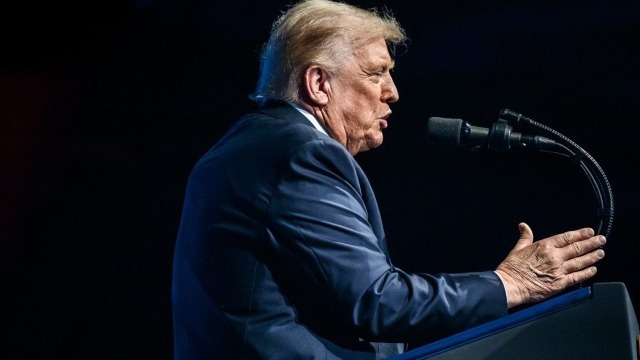
Layered on top of private‑sector cuts is a new and politically charged wave of federal layoffs. During the current government shutdown, President Trump has authorized the first large‑scale reductions in force of his term, targeting civilian employees even as agencies struggle to maintain basic services. An Office of Management and Budget official confirmed to TIME that layoff notices were being sent out, describing the cuts as part of a broader strategy to shrink the federal workforce during the funding standoff. The same account notes that An Office of Management and Budget, referred to as OMB, declined to specify which agencies were affected, leaving tens of thousands of workers guessing about their futures.
Another detailed report on how Trump begins mass layoffs of federal workers during the shutdown quotes an OMB spokeswoman who would not say how many federal workers are affected or which agencies were targeted, but who described the layoffs as “substantial.” That description, captured in the An OMB account, suggests a scale that goes well beyond routine attrition. When I put those federal cuts alongside the private‑sector numbers, I see a Trump‑era labor market in which the government is no longer acting as a stabilizing employer of last resort, but instead is adding to the wave of job insecurity.
From Great Recession echoes to worker reality
What makes this January so unsettling is how closely it echoes the early stages of the Great Recession while unfolding under very different political leadership. The comparison to 2009, when 241,749 jobs were cut in a single January, appears repeatedly in analyses of January job cuts. Another piece on worst January levels reinforces that this is the highest January total since that crisis year. For workers who lived through that period, the repetition of those numbers is not an abstraction, it is a reminder of how quickly a seemingly solid job market can unravel.
At the same time, the drivers of today’s cuts are more varied. Contract cancellations like the UPS delivery agreement with Amazon, detailed in the UPS analysis, sit alongside Market and economic conditions that are squeezing margins across sectors. Federal reductions in force, confirmed by OMB officials and echoed in the substantial description from An OMB spokeswoman, add a political edge that was largely absent from the private‑sector‑driven cuts of 2009. When I look across the data, from the 108,435 total layoffs and 118% annual jump to the 30,784 contract‑linked losses and the shutdown‑era federal pink slips, the throughline is clear: Trump‑era workers are facing a jobs landscape that is deteriorating on multiple fronts at once, with fewer safe harbors than they had a decade and a half ago.
More From The Daily Overview
*This article was researched with the help of AI, with human editors creating the final content.

Grant Mercer covers market dynamics, business trends, and the economic forces driving growth across industries. His analysis connects macro movements with real-world implications for investors, entrepreneurs, and professionals. Through his work at The Daily Overview, Grant helps readers understand how markets function and where opportunities may emerge.