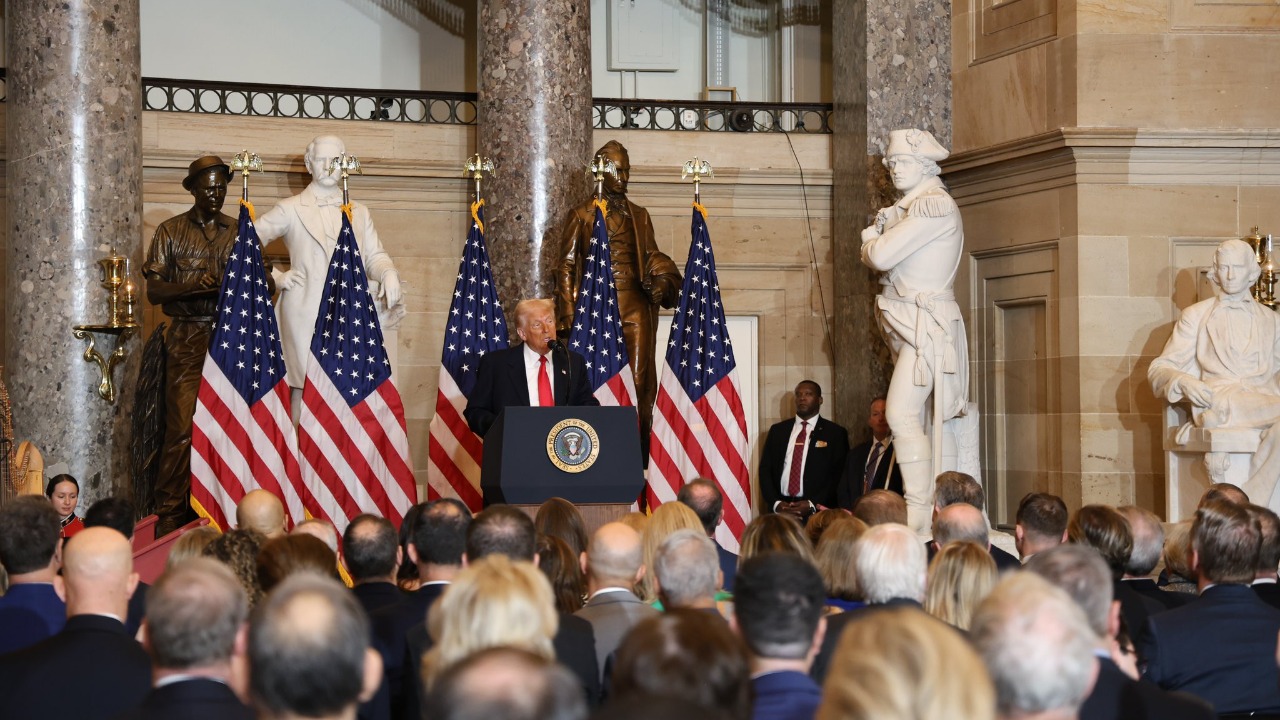
President Donald Trump is weighing a plan to sell roughly $1.7 trillion in federal student loans to private investors, a move that would shift one of Washington’s largest financial assets out of government hands and into Wall Street’s. The prospect has ignited a rapid backlash from Senator Elizabeth Warren and more than 40 Democratic lawmakers, who warn that privatizing the portfolio would strip away hard‑won protections and leave tens of millions of borrowers exposed.
At stake is not only who owns the debt, but who sets the rules for repayment, forgiveness, and collections in the years ahead. I see a clear collision between an administration eager to reduce the federal footprint in student lending and lawmakers who argue that turning over the system to profit‑driven firms would be, in Warren’s words, a “tremendous mistake” for borrowers and taxpayers alike.
The Trump plan and a revived push to privatize student loans
The Trump Administration is again exploring whether to offload the federal student loan portfolio, reviving an idea that first surfaced several years ago and never fully went away. According to a bicameral letter sent on Nov 16, 2025, lawmakers say that In 2019, the Trump Administration already examined selling the loans but backed off after consultants raised alarms, and they now allege that officials are again targeting a sale of the entire portfolio by December 1, 2025. That timeline, if it holds, would represent a breathtakingly fast attempt to move a massive federal asset out the door before the end of the year.
Inside the administration, the push is framed as a way to shrink Washington’s balance sheet and lean on private markets to manage risk. Supporters of this approach point to the Benefits Of Privatization, arguing that Reduced Government Involvement would shift some financial exposure away from taxpayers and that Privatization could, in theory, bring more flexible products and faster innovation. Yet even that analysis concedes that privatizing student loans is likely to come with higher interest rates and fees, a trade‑off that looms large when the asset in question is the primary path to college for America’s middle‑ and working‑class families.
Warren’s warning and a growing Democratic revolt
Democrats on Capitol Hill are treating the potential sale as a red‑alert moment for higher education policy, and Elizabeth Warren has placed herself at the center of the fight. In a Nov 16, 2025 letter, Warren and her colleagues told the Trump Administration to “immediately cease any efforts to privatize the federal student loan portfolio,” arguing that such a move would undermine the government’s responsibility to protect borrowers and administer relief programs fairly, a demand laid out in detail in Warren’s bicameral appeal. The letter, signed by more than 40 lawmakers, reflects a belief that student loans are not just another asset to be traded, but a public commitment that should remain under democratic control.
That message has only sharpened as details of the potential sale have filtered out. On Nov 19, 2025, a separate warning highlighted that But Democratic lawmakers fear the administration may strip student loans of legal protections through a selloff, potentially weakening income‑driven repayment options, discharge rights, and other safeguards that exist only because the loans are federal. When I look at the coalition forming around Warren, including figures like Bernie Sanders and Ayanna Pressley, it is clear they see this not as a technocratic restructuring, but as a fundamental shift in who the system is designed to serve.
What a $1.7 trillion sale could mean for borrowers
For the roughly 40 million Americans with federal student loans, the most immediate question is what happens if their debt is suddenly owned by a private consortium instead of the government. Reporting on the proposal has stressed that a sale to private companies would likely move borrowers into a world where lenders are less constrained by federal rules, and that A sale to private companies could mean fewer protections than borrowers currently enjoy under federal rules than private lenders typically offer. That shift would not necessarily change the amount owed on day one, but it could reshape everything from how aggressively servicers pursue delinquent accounts to how flexible they are when a borrower loses a job.
Consumer advocates are especially worried about how collections and repayment would work once profit motives are front and center. One analysis of the proposal notes that What does this mean for borrowers is a system where private lenders may be less willing to offer generous forbearance, income‑based plans, or forgiveness, even if the sale is structured so that it may not cost the taxpayers money. In practical terms, that could translate into more aggressive default judgments, faster referrals to collection agencies, and a harder path back to good standing for anyone who falls behind, especially low‑income graduates and borrowers of color who already face higher default rates.
Inside the political and policy fight over the Trump Education Department’s role
The battle over the proposed sale is also a fight over what The Department of Education is supposed to be. In a Nov 18, 2025 statement, dozens of Democrats argued that The Department of Education‘s role in providing financial aid to America’s students is clear, and the Department should not outsource that responsibility to private investors. They warned that America’s higher education system depends on a public guarantee that aid will be administered fairly, and suggested that moving the portfolio could invite conflicts of interest or even open the door to acting unethically if profit considerations override student needs.
Critics have also zeroed in on the Trump Education Department itself, arguing that it is treating the loan book as a political target rather than a public trust. One report framed the potential Sale of student loan portfolio as the next target of the Trump Education Department, noting that officials had not responded to a request for comment even as internal planning appeared to accelerate. When I connect that silence with the speed of the proposed timeline, it suggests an administration trying to move quickly before opposition can harden, a dynamic that is only intensifying scrutiny from lawmakers and borrower advocates.
Why Warren calls the sale a “tremendous mistake”
Elizabeth Warren has not minced words about what she thinks of the plan, describing the idea of selling the federal student loan portfolio to Wall Street as a “tremendous mistake” that she vows to fight. In a Nov 19, 2025 interview, she warned that Elizabeth Warren Warns Trump Making a Tremendous Mistake By Selling Federal Student Loans To Wall Street, saying she is ready to Fight to preserve repayment plans and forgiveness programs that exist only because the loans are federal. Her argument is straightforward: once the debt is in private hands, future presidents and Congresses will have far less leverage to expand relief, pause payments in a crisis, or overhaul the system in borrowers’ favor.
That warning lands in a country where student debt has already shaped life decisions for an entire generation, from delaying homeownership to putting off having children. A recent segment on Oct 7, 2025 highlighted how, back here in the United States the Trump administration is weighing a dramatic shift in how federal student loans are handled, underscoring that the stakes are not abstract policy debates but the monthly budgets of teachers, nurses, software engineers, and millions of others. When I weigh Warren’s language against the administration’s push, the core dispute comes into focus: is student lending a public service that should be governed by elected officials, or a financial product that can be packaged and sold like any other asset?
That is why the current fight over a $1.7 trillion sale feels like more than a one‑off policy skirmish. It is a referendum on whether Washington will double down on a public model of higher education finance or pivot toward a privatized system where Wall Street, not the federal government, calls the shots on how Americans pay for college and how, or whether, they ever get out from under the debt.
More From TheDailyOverview
- Dave Ramsey says these two simple questions show whether you’re rich or poor
- Retired But Want To Work? Try These 18 Jobs for Seniors That Pay Weekly
- IRS raises capital gains thresholds for 2026 and what’s new
- 12 ways to make $5,000 fast that actually work

Silas Redman writes about the structure of modern banking, financial regulations, and the rules that govern money movement. His work examines how institutions, policies, and compliance frameworks affect individuals and businesses alike. At The Daily Overview, Silas aims to help readers better understand the systems operating behind everyday financial decisions.

