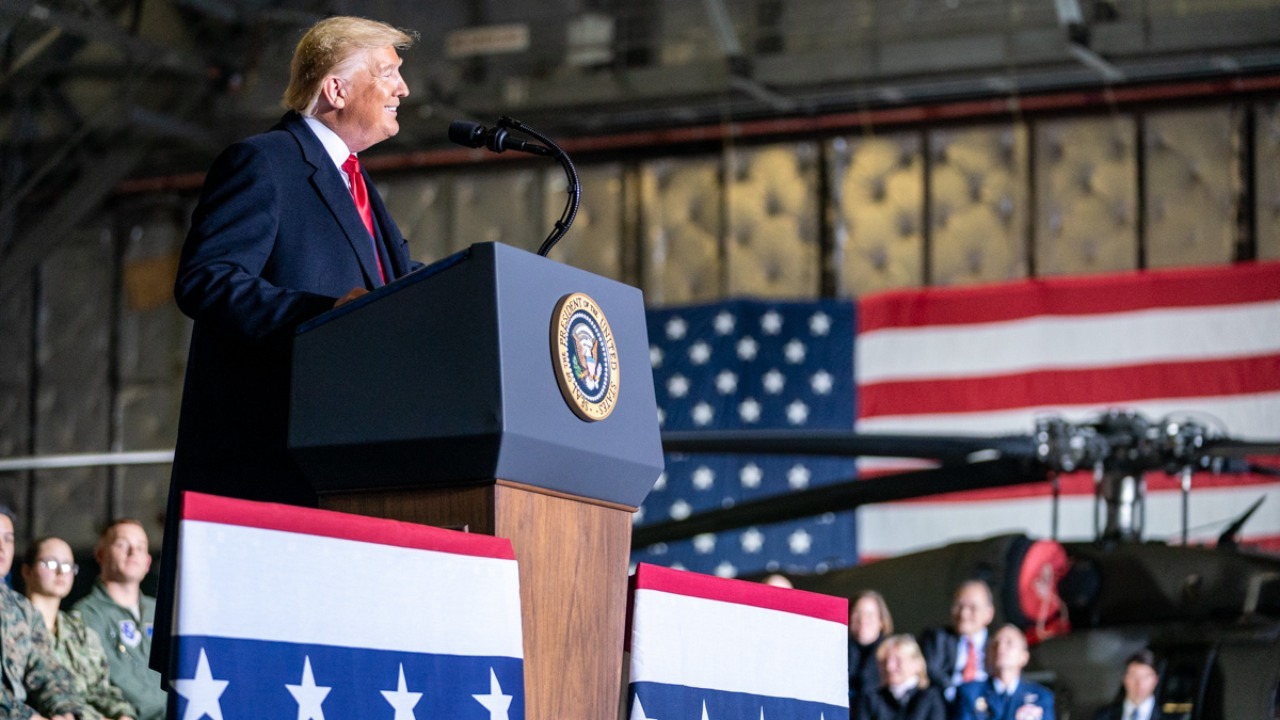
President Donald Trump has promised to send $2,000 tariff dividend checks to every American, pitching the idea as a way to turn trade policy into direct household relief. I see four major obstacles that will determine whether those $2,000 payments ever materialize, from basic budget math to the politics of getting any new stimulus through Congress.
1) Cost Barriers to Funding the Rebates
Cost barriers to funding the rebates start with the sheer scale of President Donald Trump’s pledge to give Americans $2,000 each from tariff revenue. Reporting on Trump’s proposed 2,000 tariff rebates describes costly challenges that budget analysts say could strain federal finances, especially if tariff receipts fall during an economic slowdown. A related account from The Center Square, carried by another outlet, notes that even a smaller benchmark of $200 per person would require tens of billions of dollars in reliable revenue, underscoring how aggressive a full $2,000 promise really is.
Those numbers matter because tariffs are volatile, tied to trade flows and global demand rather than a stable tax base. If collections come in below projections, the Treasury would either have to shrink the checks, borrow more, or cut other programs to keep the rebates going. That is why critics warn that the plan could widen the federal deficit while offering only temporary relief, particularly for lower income Americans who already pay higher prices when tariffs raise the cost of imported goods.
2) Procedural Hurdles for Distribution
Procedural hurdles for distribution form the second major challenge, since Trump’s $2,000 tariff checks cannot go out until several technical steps are completed. Coverage of what needs to happen highlights requirements such as verifying tariff revenue, assessing the impact on the federal deficit, and designing eligibility rules that determine which Americans qualify. Officials would also have to coordinate with the IRS or another agency to build a payment system that can handle tens of millions of transactions without the fraud and delays that plagued earlier stimulus rounds.
Timing is another sticking point. Trump has publicly floated a relatively quick turnaround, and one local report details when President Donald Trump expects $2,000 tariff dividend checks to be sent if the plan moves forward. Yet experts quoted in national coverage caution that even with political will, building the legal and administrative framework could take months. For households counting on fast relief, that gap between rhetoric and bureaucracy is a significant risk.
3) Congressional Approval Roadblocks
Congressional approval roadblocks are the third test, because Trump’s tariff dividend idea cannot bypass lawmakers if it is structured as a broad federal benefit. Analysts examining whether the plan could get hung up in Congress describe it as a key test of how far legislators are willing to go in repurposing trade revenue. Any bill would have to move through tax-writing committees, where skeptics on both sides of the aisle are likely to question the precedent of earmarking tariffs for direct cash payments instead of deficit reduction or targeted programs.
Partisan dynamics add another layer. Some Republicans have signaled discomfort with another round of large checks, while Democrats may push to reshape the proposal into a more traditional stimulus or social safety net expansion. As one economic explainer on the broader tariff rebate check proposal notes, the plan effectively asks Congress to lock in a new entitlement that depends on uncertain trade policy. That makes the $2,000 promise vulnerable to amendment, delay, or outright rejection as negotiations unfold.
4) Feasibility and Accuracy Scrutiny
Feasibility and accuracy scrutiny form the final challenge, as fact checkers and tax experts dissect whether tariff revenue can realistically fund $2,000 payments. A detailed review fact-checking Trump’s promise concludes that current and projected tariffs are unlikely to cover the full cost without significant borrowing or cuts elsewhere. Separate analysis of new Trump $2,000 stimulus payments in 2026 similarly stresses that the outlook depends on future trade flows and policy choices that are far from settled.
Those doubts are amplified by Trump’s own messaging. In one Truth Social post, highlighted in a video on Trump’s proposal, President Trump suggests Americans could receive up to $2,000 from tariffs as if the money were a straightforward “dividend.” Yet economists quoted across multiple outlets argue that tariffs are ultimately paid by consumers and businesses, not foreign governments alone, so recycling that revenue into checks does not create free money. For American households, the real question is whether the promised $2,000 would outweigh higher prices and the long term fiscal trade offs that come with it.
More From TheDailyOverview
- Dave Ramsey says these two simple questions show whether you’re rich or poor
- Retired But Want To Work? Try These 18 Jobs for Seniors That Pay Weekly
- IRS raises capital gains thresholds for 2026 and what’s new
- 12 ways to make $5,000 fast that actually work

Julian Harrow specializes in taxation, IRS rules, and compliance strategy. His work helps readers navigate complex tax codes, deadlines, and reporting requirements while identifying opportunities for efficiency and risk reduction. At The Daily Overview, Julian breaks down tax-related topics with precision and clarity, making a traditionally dense subject easier to understand.

