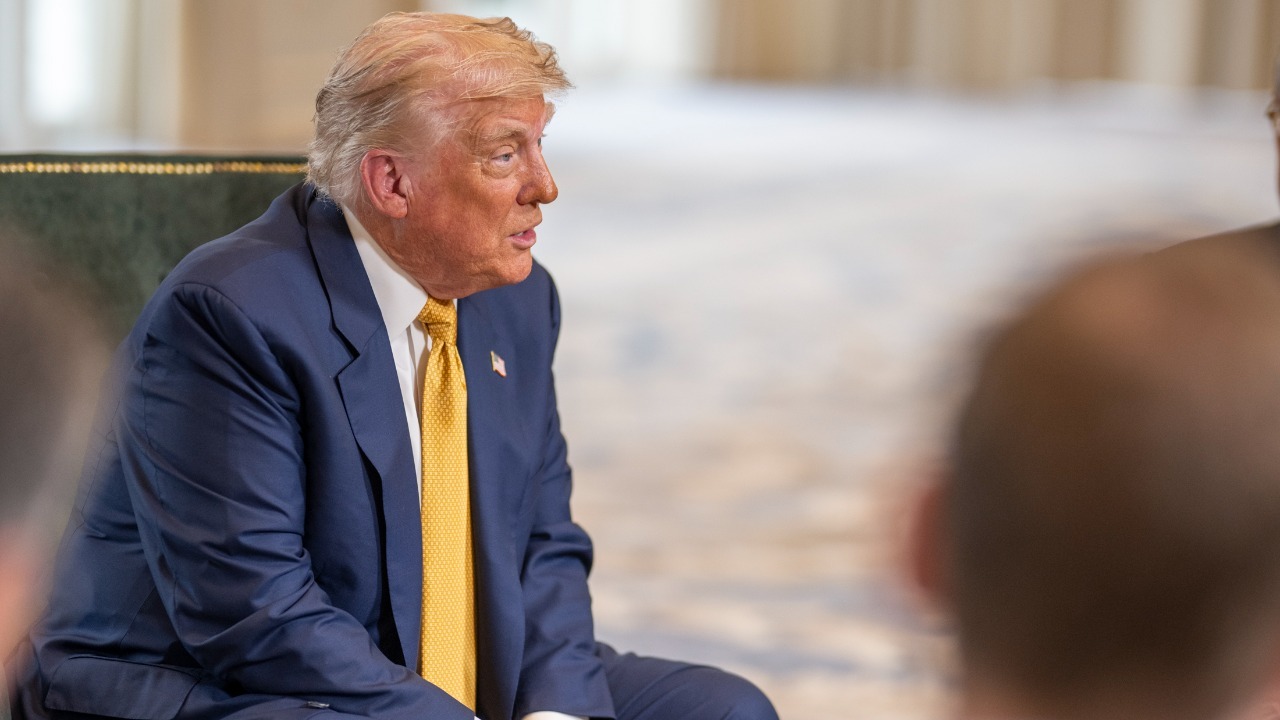
On November 2, 2025, Donald Trump responded to critics of his proposed tariff policies with a bold assertion, invoking the phrase “He who has the gold makes the rules” to emphasize his control over trade dynamics. In his remarks, Trump also positioned himself as “the greatest friend of American capitalism,” marking a shift from previous defenses centered on national security to a more direct embrace of free-market principles amid ongoing economic debates.
Trump’s Tariff Defense Escalates
Trump’s use of the phrase “He who has the gold makes the rules” served as a direct retort to those opposing his tariff policies. This statement underscores his vision for leveraging U.S. economic power in international trade negotiations. By framing tariffs as a tool for asserting economic dominance, Trump aims to reinforce the United States’ position in global markets. This rhetoric marks a significant intensification compared to his earlier comments, emphasizing the urgency of implementing these policies following his re-election.
In his address, Trump targeted specific critics, including business leaders and economists who have voiced concerns over the potential negative impacts of tariffs on the economy. He countered these arguments by portraying tariffs as essential measures to protect domestic industries from unfair foreign competition. This approach aligns with his broader economic strategy, which prioritizes American manufacturing and job creation over global trade liberalization.
Pro-Capitalism Stance Amid Backlash
Trump’s self-declaration as “the greatest friend of American capitalism” is a strategic move to counter accusations of protectionism. By emphasizing his commitment to deregulation and tax cuts, Trump seeks to reassure investors and business leaders of his pro-growth agenda. This claim comes at a critical time, as recent market volatility has raised concerns about the potential for trade disruptions under his administration’s policies.
The timing of Trump’s statement is particularly significant, as it aims to address fears of a looming trade war. By positioning himself as a champion of capitalism, Trump hopes to mitigate concerns from Wall Street figures and industry groups about the potential economic fallout from his tariff plans. This rhetoric is designed to bolster confidence in his administration’s ability to foster a favorable business environment, despite the contentious nature of his trade policies.
Implications for Policy Rollout
The potential near-term effects of Trump’s tariff policies on U.S. trade partners are substantial. His remarks suggest an accelerated timeline for implementing these measures in early 2026, signaling a commitment to reshaping global trade relationships. This approach is likely to provoke reactions from international allies and competitors, who may seek to negotiate or retaliate in response to the new tariffs.
Since the election, public and expert discourse has shifted, with Trump’s recent statement reinforcing his unyielding approach to economic nationalism. The mantra “gold makes the rules” encapsulates his vision for American dominance in global supply chains, challenging traditional notions of capitalism and free trade. As debates continue, stakeholders must grapple with the implications of this policy direction on both domestic and international economic landscapes.
For more details on Trump’s recent statements and their implications, visit the full articles on MSN and AOL.
More From TheDailyOverview
- Dave Ramsey warns to stop 401(k) contributions
- 11 night jobs you can do from home (not exciting but steady)
- Small U.S. cities ready to boom next
- 19 things boomers should never sell no matter what

Grant Mercer covers market dynamics, business trends, and the economic forces driving growth across industries. His analysis connects macro movements with real-world implications for investors, entrepreneurs, and professionals. Through his work at The Daily Overview, Grant helps readers understand how markets function and where opportunities may emerge.

