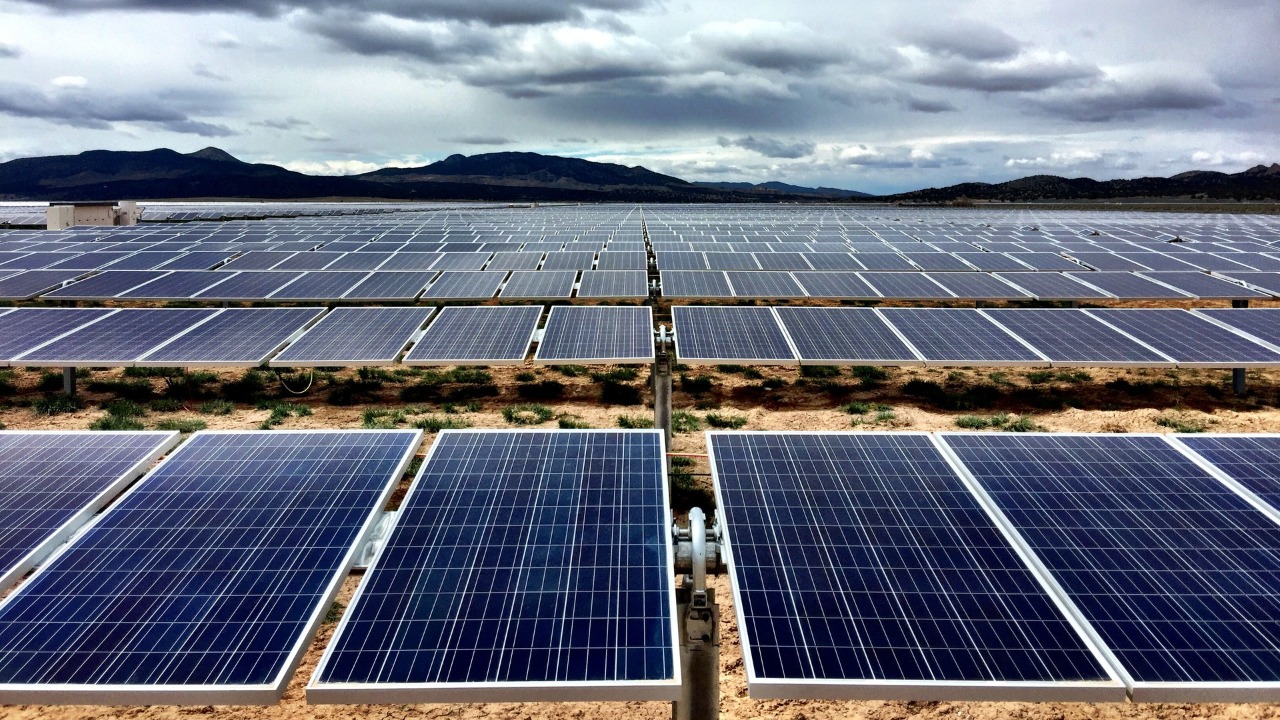
President Donald Trump is rapidly rewriting federal energy policy, pulling back tens of billions of dollars in government support for wind, solar, batteries, and grid upgrades while steering public finance toward natural gas and nuclear power. The shift guts a core pillar of Biden-era climate strategy and replaces it with a vision centered on big power plants, fossil fuel exports, and a new generation of reactors. I see a coherent, if controversial, doctrine emerging: Washington will still pick winners, but the winners are gas pipelines and nuclear fuel, not rooftop solar or community microgrids.
The stakes are enormous for utilities, manufacturers, and communities that had banked on federal backing to decarbonize. The Energy Department is unwinding a web of clean energy loans and grants that stretched from battery factories in the Midwest to transmission lines in the Mountain West, even as it promises to use the same machinery of state to turbocharge liquefied natural gas exports and nuclear enrichment. Whether that tradeoff delivers “reliable” and “affordable” power or locks the United States into decades of higher emissions will define the country’s energy trajectory well beyond Trump’s current term.
The scale of the clean energy rollback
The first thing that jumps out in the new policy landscape is the sheer volume of money being clawed back or rewritten. The Energy Department has acknowledged that it is canceling or revising $83 billion in Biden-era energy grants, a figure that captures how aggressively the administration is dismantling its predecessor’s climate agenda. Separate disclosures describe the Trump team restructuring or eliminating nearly $84 billion in clean energy loans, a tally that includes projects for grid upgrades, manufacturing, and transportation that had been approved under Biden. In parallel, the Energy Dept has publicly said it Says It Is $30 Billion in Clean Energy Loans that had been approved under the Biden administration, underscoring how much of the previous green industrial policy is being unwound.
Inside the government’s own energy finance arm, the shift is even more explicit. A leadership letter from DOE and EDF states that, as a result of a sweeping review, the two are restructuring, substantially revising, or eliminating over $83.6 billion in commitments, with the stated goal of focusing on “reliable” and “affordable” energy for the American people. Another account of the same process notes that the Trump administration is revising or scrapping over $83 billion in clean energy loans, language that aligns with the internal restructuring described by DOE, EDF, and the Office of Energy Dominance Financing.
From Biden’s green bank to Trump’s “energy dominance”
What had been branded as a green bank under Biden is being repurposed into a vehicle for Trump’s preferred fuels. The Trump administration has said it is canceling almost $30 billion of financing from the Energy Department’s green bank after reviewing projects approved under Biden, with officials explaining that the money will instead support natural gas and nuclear projects. That pivot is detailed in reporting that the Trump administration is canceling almost $30 billion of financing from the Energy Department green bank and redirecting support toward gas and nuclear, a move that effectively redefines what counts as “clean” in federal lending.
The Office of Energy Dominance Financing is central to this reorientation. One account of the Energy Dept’s cancellations notes that the office, which grew out of the 2025 tax law, now has more than $290 billion in available lending authority, and that the administration has laid out plans to use the program, which has more than $289 billion in loan authority remaining, to finance large natural gas and nuclear projects. The Energy Dept’s own description of the cancellations notes that the Energy Dept Office of Energy is now the world’s largest energy lender, with the 2025 tax law providing the office billions in new lending authorities and roughly $290 billion in available lending according to the department, as highlighted in EDF coverage.
Gas and LNG at the center of “unleash American energy”
Trump’s allies argue that the money being pulled from solar farms and battery plants is not disappearing, it is being redeployed to fuels they see as more dependable. The Trump administration has been clear that it is restructuring or eliminating nearly $84 billion in clean energy loans in order to prioritize natural gas and nuclear power plants, a point spelled out in a WASHINGTON, Jan 22 account that quotes Reuters on the Trump administration’s plan to back new gas and nuclear power plants. Another summary from The Blueprint notes that the Trump administration is restructuring or eliminating nearly $84 billion in clean energy loans and that nearly $30 billion of that total is being canceled outright, reinforcing how central gas and nuclear have become in the new portfolio.
At the same time, the White House is celebrating record fossil fuel exports as proof that this strategy is working. An official energy priorities page touts that the United States set a new liquefied natural gas export record in 2025, becoming the first country ever to export more than 100 m metric tons of LNG in a single year, and frames that milestone as part of President Trump’s broader effort to “unleash American energy.” The same page credits President Trump with reinvigorating America’s Beautiful and withdrawing from dozens of international climate organizations, signaling that the administration sees fossil fuel expansion and regulatory pullback as two sides of the same energy dominance coin.
Nuclear power’s big bet, from enrichment to waste
If gas is the near term workhorse in Trump’s plan, nuclear is the long game. The Energy Department has laid out goals for 2026 that explicitly include nuclear and fossil fuels, with The Energy Department stating that it is canceling or revising $83 billion in Biden-era energy grants while elevating nuclear and fossil projects as priorities for reliability and lower costs. A separate summary of the same policy shift notes that the Trump administration is canceling or revising $83 billion in Biden-era energy grants as part of New energy goals that explicitly favor nuclear and fossil fuels, underscoring how central those technologies have become in the department’s planning.
To make that nuclear push real, the Energy Department is putting serious money on the table. In January 2026, The Energy Department announced a $2.7 billion investment to strengthen domestic enrichment in support of President Trump’s goal of accelerating deployment of U.S. small modular reactors, a move that ties fuel supply directly to the administration’s reactor ambitions. In parallel, ENERGYWIRE reporting describes how The Trump administration wants to quadruple America’s production of nuclear power over the coming decades and is offering states a deal to take nuclear waste, with details laid out in an EST dispatch that highlights the political and logistical challenges of siting long term waste facilities across America.
Big power plants, industrial bets, and who gets left behind
Trump’s energy team is not shy about its preference for large, centralized infrastructure. An official fact sheet declares that THE TRUMP ADMINISTRATION IS MAKING ENERGY IN THE MID-ATLANTIC MORE AFFORDABLE AND RELIABLE, noting that THE TRUMP ADMINISTRATION is MAKING ENERGY in the MID Atlantic more affordable and reliable by pushing to build big power plants again after what it describes as a forced shutdown of reliable baseload capacity. A related fact sheet reiterates that THE, TRUMP, ADMINISTRATION, MAKING, ENERGY, MID priorities include new large scale gas and nuclear plants to decrease the risk of blackouts, a framing that casts distributed renewables as secondary to big centralized assets.
More From The Daily Overview
*This article was researched with the help of AI, with human editors creating the final content.

Silas Redman writes about the structure of modern banking, financial regulations, and the rules that govern money movement. His work examines how institutions, policies, and compliance frameworks affect individuals and businesses alike. At The Daily Overview, Silas aims to help readers better understand the systems operating behind everyday financial decisions.

