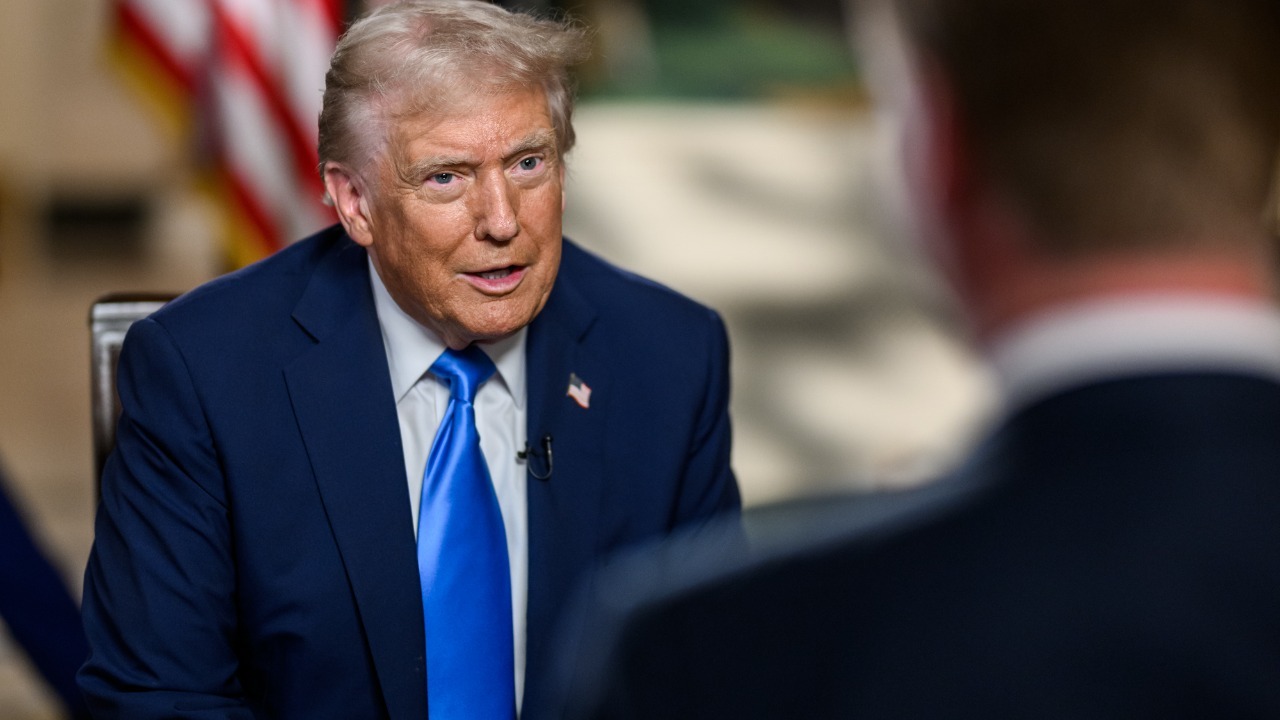
President Donald Trump has moved aggressively to strip federal support from diversity, equity and inclusion programs and climate initiatives that his aides now brand as “woke,” hitting California with some of the steepest losses. From education grants to clean energy projects, hundreds of millions of dollars that once flowed to the nation’s largest blue state are being frozen, clawed back or redirected. The result is a high stakes collision between the White House and Sacramento over who gets to define waste, fairness and the public good.
California officials argue that the cuts are less about fiscal discipline and more about punishing a political rival that has leaned into climate action and civil rights. As the state scrambles to backfill canceled federal awards, the fight is reshaping budgets on both coasts and testing how far a president can go in targeting programs he dislikes without rewriting the law.
The new anti‑“woke” playbook from Washington
The Trump administration has made clear that it sees many climate and equity initiatives as ideological excess rather than core government work. In public messaging, aides now routinely lump environmental justice, LGBTQ+ support services and campus diversity offices into a single “woke” bucket that they say distorts federal priorities. That framing has become the justification for a wave of cancellations and rescissions aimed squarely at Democratic strongholds such as California, where state leaders have spent years building policy around climate resilience and inclusion.
Earlier this week, the White House instructed federal agencies to pull back a fresh tranche of money from programs it now labels as wasteful. According to internal guidance, officials directed the Department of Transportation and the Centers for Disease Control and Prevention to cut $1.5 billion in grants that had been steered toward climate friendly transportation and public health projects in Dem led states. That directive, described by aides as a crackdown on “woke green grants,” set the tone for a broader effort to unwind climate and DEI spending across the federal government.
Climate money pulled from California’s clean energy pipeline
Nowhere are the stakes clearer than in the clean energy sector, where California has long relied on federal dollars to accelerate its transition away from fossil fuels. The administration has already moved to cancel or rescind large awards for renewable power, grid upgrades and industrial decarbonization projects that were expected to create thousands of jobs. Advocates say those cancellations are landing hardest in communities that had been promised new investment, including parts of the Central Valley and Los Angeles County.
One early flashpoint came when federal officials announced that Trump Cuts would remove $3.7 billion in Clean Energy Funding that had been slated for projects in California and other states. Environmental groups warned that the rollback would slow progress on cutting emissions, undermine public health and wipe out planned construction and manufacturing jobs. The Trump administration has countered that the money was propping up what it calls the Left’s climate agenda rather than focusing on core infrastructure, a theme that now runs through its broader budget strategy.
Blue state climate projects in the crosshairs
The administration’s climate retrenchment has not stopped at individual grants. Officials have also targeted large, multi state initiatives that were designed to help Democratic leaning regions build out hydrogen hubs, carbon free power and climate resilient water systems. In internal justifications, aides argue that these programs unfairly favored blue states and that the federal government should not be in the business of underwriting what they describe as partisan experiments in decarbonization.
That logic surfaced when the Trump team announced plans to cut $8 billion for climate projects in blue states, including a high profile hydrogen hub serving California and other Democratic led regions. Follow up documents showed that The Department of Energy ultimately canceled $7.56 billion in funding for energy projects across sixteen Democratic states, a move critics in both parties described as an unprecedented use of federal power to reward allies and punish opponents.
DEI programs in California schools under federal threat
While climate funding grabs headlines, the administration’s assault on diversity, equity and inclusion has been just as sweeping. The Trump team has ordered colleges and K 12 districts to dismantle DEI offices and programs if they want to keep receiving federal support, arguing that such efforts amount to ideological indoctrination. That stance has put California’s education system, which has invested heavily in equity initiatives, on a collision course with Washington.
Guidance from federal civil rights officials warned that The Trump administration would scrutinize campus hiring, training and student services for signs of what it calls compelled speech or preferential treatment, with the Department of Education’s Office for Civil Rights positioned as an enforcement arm. Local coverage has documented how DEI coordinators in California districts are now scrambling to rewrite job descriptions, rename offices or shift responsibilities in hopes of avoiding sanctions while still serving students who rely on targeted support.
Higher education and LGBTQ+ centers in the budget crossfire
California’s public universities and community colleges have become a particular focus of the administration’s campaign. President Trump has proposed cutting more than $10 billion from the Department of Education for core programs, while also singling out campus LGBTQ+ centers and cultural celebrations as examples of what he calls “woke” excess. In budget documents, aides argue that federal taxpayers should not be subsidizing identity based programming that goes beyond basic instruction.
That argument has zeroed in on California’s own legal framework. One report highlighted how Technically, Lavender Celebration and similar events at state campuses operate within the constraints of California Proposition 209, which bars public institutions from granting preferences based on race, sex or ethnicity. Yet the same coverage noted that Trump’s budget proposal still cited these celebrations as justification for sweeping reductions, underscoring how cultural flashpoints are being used to rationalize broad cuts that would hit California colleges far beyond their LGBTQ+ centers.
Legal pushback and limits on the DEI crackdown
California officials and civil rights advocates have not simply accepted the new rules. Lawsuits have challenged the administration’s attempts to tie basic education funding to the elimination of diversity programs, arguing that the federal government is overstepping its authority. Early court rulings have already complicated the White House strategy, creating a patchwork of guidance that leaves districts uncertain about how far they must go to comply.
In one closely watched case, a federal judge issued a ruling that limited Trump’s ability to punish schools over DEI initiatives, prompting Advice to California educators that they should do nothing yet while the litigation plays out. The decision, which stemmed from a complaint brought by the American Civil Liberties Union and other groups, emphasized that programs focused on inclusion are not the same as quotas and that the administration must still respect statutory protections against discrimination even as it rewrites grant criteria.
California’s budget response and Newsom’s counter‑narrative
Facing the loss of federal dollars, California leaders are trying to build a fiscal buffer. The governor’s latest spending plan would increase the state’s reserves, often described as rainy day funds, to $23 billion by the end of the 2026 27 fiscal year. That cushion is meant to help absorb federal retrenchment while preserving core services, even as the administration in Washington seeks to shrink the footprint of climate and equity programs nationwide.
Budget analysts at the California Budget and Policy Center, speaking in a recent briefing titled Understanding the Governor, noted that the plan relies in part on higher taxes for corporations and high income households to offset federal pullbacks. The presentation, which walked through the Jan proposal line by line, framed the strategy as a deliberate contrast to Trump’s approach, with Sacramento doubling down on climate and equity spending even as Washington labels those same priorities as waste.
On the ground: schools, communities and environmental groups
The policy fight can sound abstract, but in California classrooms and neighborhoods the effects are immediate. Public schools and colleges are already scrambling to interpret federal orders to remove DEI programs, with administrators weighing whether to rename offices, shift staff into general counseling roles or risk losing money. In one televised segment, anchor Laura Painter on Plus Tonight described how districts were rushing to inventory every training and student service that might be flagged by federal auditors, a process that has left teachers and families anxious about what support will remain.
Environmental nonprofits are facing similar uncertainty. President Donald Trump’s executive orders have expressly directed federal staff to curtail funding and programs supporting certain diversity, equity and inclusion efforts and climate initiatives, a shift that has rippled through grant dependent organizations in the Bay Area and beyond. Leaders of local watershed and conservation groups told reporters that the sudden freezes and cancellations documented in the Bay region are forcing layoffs, project delays and the scaling back of community based climate resilience work that had been years in the making.
Escalating political confrontation over federal power
As the cuts mount, California’s political leadership is escalating its response. Governor Gavin Newsom, the Governor of California, has used public appearances to argue that the state is “leading in that space” on climate and equity, and to accuse the White House of trying to drag the country backward. In one recent event captured on video, Newsom framed the administration’s actions as an attack on innovation and basic fairness, a message that aligns with his broader pitch that Newsom and his allies are defending national values, not just state prerogatives.
California’s congressional delegation is also leaning in. Senators and House members led by Alex Padilla, Adam Schiff and Zoe Lofgren have blasted the administration’s decision to cancel nearly $8 billion of Department of Energy grants that they say would have made communities cleaner, safer and more resilient. In a sharply worded letter, the lawmakers urged the White House to reinstate the Department of Energy funding and accused Trump of using the budget to wage a political vendetta against blue states, setting the stage for a protracted legal and legislative battle over how far a president can go in gutting “woke” DEI and climate cash.
More From The Daily Overview
*This article was researched with the help of AI, with human editors creating the final content.

Grant Mercer covers market dynamics, business trends, and the economic forces driving growth across industries. His analysis connects macro movements with real-world implications for investors, entrepreneurs, and professionals. Through his work at The Daily Overview, Grant helps readers understand how markets function and where opportunities may emerge.

