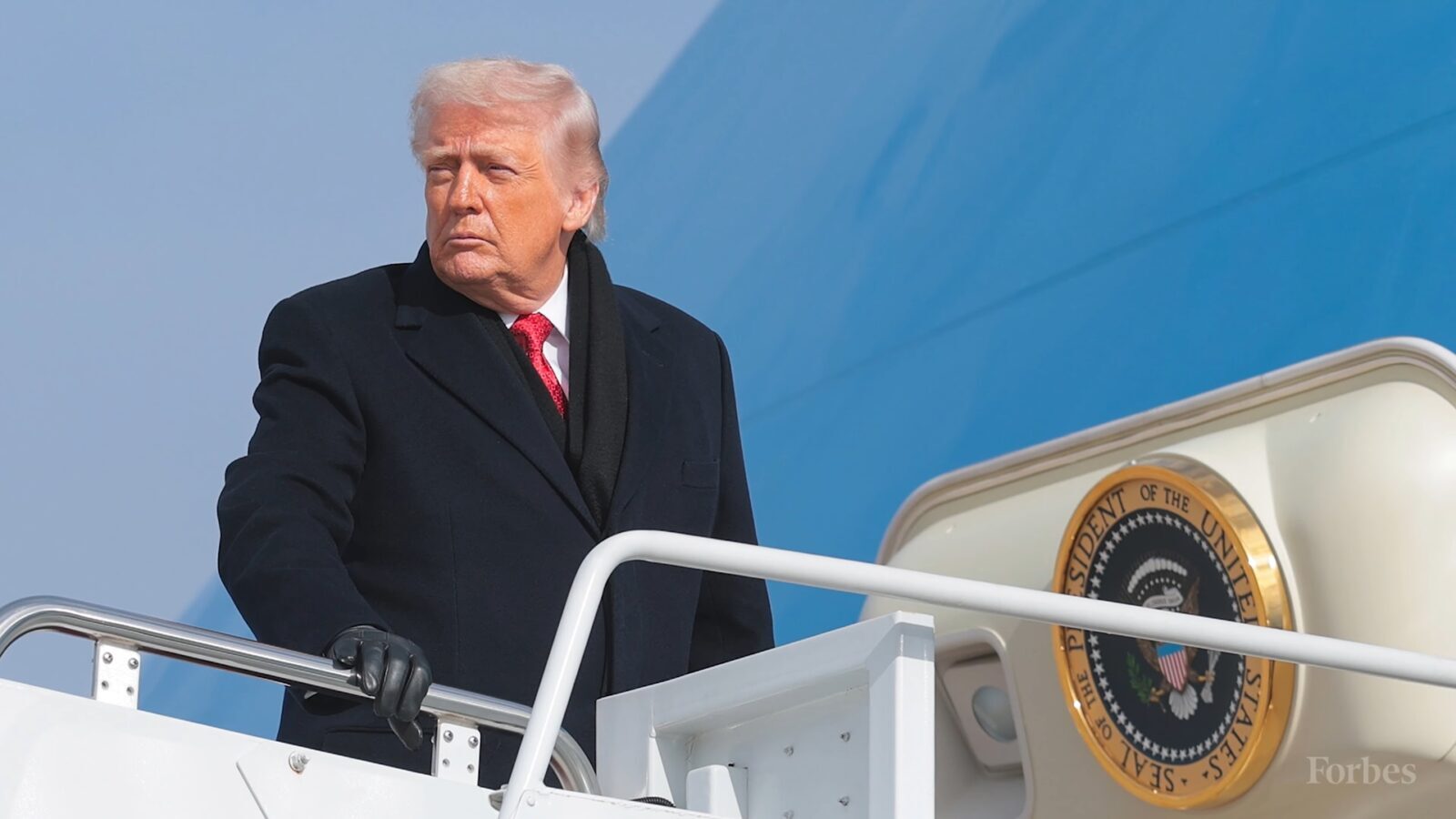
President Donald Trump is selling his sweeping tariff regime as an “American economic miracle,” crediting higher import taxes with reviving growth, taming inflation, and rescuing U.S. industry. The data now available from government agencies and independent analysts points in a very different direction, showing higher costs for households, pressure on manufacturers, and only modest movement in trade flows. The gap between the rhetoric and the numbers is no longer a technical debate about trade theory, it is a live question about who is paying the bill for Trump’s experiment.
As I sift through the latest research, a consistent pattern emerges: tariffs have functioned less like a magic growth engine and more like a broad tax on consumption and production inside the United States. Prices for core goods, effective tariff rates, and trade balances all tell a story of incremental gains at best, and in several cases outright harm, that sits uneasily beside the president’s triumphal claims.
The “miracle” narrative versus the record
Trump has framed his trade policy as a clean break with what he calls decades of failure, insisting that higher import taxes have powered a uniquely strong expansion and created an “American economic miracle.” In his telling, tariffs are a kind of cost-free leverage, forcing trading partners to pay up while American workers reap the rewards. That narrative has become central to his political identity, repeated at rallies and in official remarks as proof that tough tactics work.
The underlying record is more prosaic. Fact checks built around President Donald Trump’s own words show that his description of an American economic miracle rests on selective use of statistics and ignores the broader context of global recovery and domestic fiscal policy, as detailed in recent assessments. A separate review of the same claims concludes that the Facts Tell a fundamentally Different Story, noting that President Donald Trump has overstated both the growth impact and the distribution of benefits from his tariff strategy, according to a detailed fact focus.
Who actually pays: firms and households, not foreign governments
Trump has repeatedly argued that foreign exporters are footing the bill for his tariffs, portraying them as a kind of tribute paid into the U.S. Treasury. The economic mechanics are not that simple. Tariffs are legally levied at the border, but the cost is shared along the supply chain, from importers to wholesalers, retailers, and ultimately consumers. The key question is how much of the burden is absorbed by foreign producers through lower prices and how much is passed through into higher prices in the United States.
Researchers examining import and price data find that the impact of tariffs can be seen clearly in core goods prices, which exclude food and energy, and that the added costs have been absorbed mostly by U.S. firms rather than foreign suppliers, according to a detailed analysis. That burden does not stop at the factory gate. A separate Household Impact estimate from TPC finds that tariffs announced by the Trump administration through early December 2025 will impose an average annual cost on U.S. households, with the heaviest dollar impact on those in the top quintile but meaningful pressure across the income distribution, according to the TPC tariff tracker.
Inflation optics versus core price reality
One of Trump’s favorite talking points is that tariffs have helped cool inflation, allowing him to claim victory over rising prices while other advanced economies still struggle. Headline inflation has indeed come down from its post‑pandemic peaks, but that trend reflects a mix of easing supply bottlenecks, monetary tightening, and lower energy prices, not simply tariff policy. To understand the tariff effect, economists focus on core goods, where import costs feed most directly into what shoppers pay.
It is true that inflation has not spiraled out of control, but detailed breakdowns show that tariffs have actually increased core goods prices by several tenths of a percentage point, a nuance that is often missing from the president’s speeches, according to a careful fact check. Looking at the recent trend, Annual core inflation for the final six months of 2025 is reported at 2.6%, which is lower than the rate at the start of that year but still roughly in line with the highest readings, outside the pandemic, since 2011, according to a detailed inflation analysis. In other words, the price environment remains historically elevated, and tariffs have nudged it higher at the margin rather than delivering a clean disinflationary win.
Tariffs, trade deficits, and the limits of leverage
Trump has also cast tariffs as a powerful tool to slash the trade deficit, presenting them as proof that the United States is finally “winning” on trade. In one of his most eye‑catching boasts, he claimed that “We have slashed our monthly trade deficit by an astonishing 77%,” a figure that, if accurate, would represent a dramatic shift in the country’s external balance. That number has become a staple of his argument that tariffs are not just symbolic but transformative.
The data does not support such a sweeping claim. A close look at trade flows shows that while the deficit has fluctuated with global demand and currency moves, the overall gap between what the United States sells abroad and what it buys from other countries remains large, and the trade deficit still exceeds 2024’s level despite Trump Claim 4 that Tariffs are slashing the deficit by 77%, according to a detailed review. From January through November in the most recent data, the trade deficit narrowed only modestly and remained far from the kind of collapse implied by the president’s rhetoric, as shown in official figures summarized in a separate fact check. Tariffs have shifted some sourcing away from targeted countries, but they have not rewritten the basic arithmetic of America’s trade position.
Effective tariff rates at a postwar high
Behind the political slogans sits a structural change in how heavily the United States taxes trade. Trump has leaned on emergency authorities to expand tariffs far beyond traditional anti‑dumping or national security cases, turning them into a central pillar of economic policy. That shift shows up clearly in measures of the average tariff rate, which capture the combined effect of dozens of separate actions across sectors and partners.
Under the tariffs imposed through the International Emergency Economic Powers Act, or IEEPA, President Trump has pushed effective U.S. tariff rates to their highest average level since 1946, according to Key Findings compiled by independent tax analysts who track how the International Emergency Economic Powers Act has been used to reshape trade, as detailed in a comprehensive trade war study. A separate industry‑focused review by Laura Zindel finds that effective tariff rates hit 10.1% in 2026, the highest since 1946, and that this surge has driven margin compression across manufacturing supply chains, squeezing firms that rely on imported components as described in her manufacturing impact report. The Penn Wharton Budget Model adds that The USITC’s updated trade and tariff data, summarized in a recent Brief on International Trade, confirms how sharply effective tariff rates have changed over time, underscoring the scale of Trump’s intervention in the trading system, according to the Penn Wharton Budget.
Manufacturing jobs and investment: promises versus outcomes
From the start, Trump has sold tariffs as a way to bring factories and jobs “roaring back into our country,” promising that higher import taxes would force companies to reshore production and expand domestic capacity. That pledge resonated in communities hollowed out by decades of industrial decline, where the idea of using trade policy to reverse offshoring held obvious appeal. The question now is whether the numbers match the promise.
Federal data compiled by independent researchers shows that in key manufacturing regions, employment gains have been modest and in some cases reversed, leading one analyst to conclude that tariffs “haven’t helped” in delivering the kind of broad‑based manufacturing revival Trump described, according to a detailed manufacturing review. A separate policy brief from Stanford notes that One of the most consequential developments of 2025 was Trump’s sweeping new tariff regime, and warns that Acting through executive authority to impose broad import taxes risks doing more harm than good to long‑term investment, as firms delay or redirect capital spending in response to uncertainty, according to the policy brief. While Trump has touted headline‑grabbing investment commitments from foreign companies, detailed fact checks point out that he has not fully acknowledged how many of those projects were already in motion or tied to other incentives, as noted in a review that highlights how Trump has not said much about the conditions attached to some of these investment commitments from other countries, summarized in a recent fact check.
Public opinion and political risk
Even as Trump celebrates tariffs as a signature success, public opinion has been far more skeptical. Surveys conducted by CNN and SSRS show that, from the start of the new tariff wave, more respondents disapproved than approved of the policy, and follow‑up polling suggests that few, if any, minds have changed since, according to THE NUMBERS compiled from a survey of attitudes toward Trump tariffs. Voters in key primary states such as New Hampshire have ranked tariffs as important, but often in a bad way, reflecting concern about higher prices and trade tensions rather than enthusiasm for the strategy.
International observers have also taken note of the gap between Trump’s claims and the underlying data. A detailed review by TOI Business Desk at TIMESOFINDIA COM describes how Trump’s claim on tariffs is far from reality, recounting how he has, at several occasions, credited tariffs with delivering outsized gains during his second stint for POTUS despite evidence of rising costs and limited trade rebalancing, as outlined in a critical analysis. Domestically, multiple fact checks, including those introduced with the phrase Getting your Trinity Audio player ready and written By PAUL WISEMAN and CHRISTOPHER RUGABER, Economics Writers, have cataloged CLAIM after CLAIM about tariff‑driven miracles and contrasted them with official statistics, as seen in a series of fact checks that highlight how inflation figures are skewed by volatile components and how tariffs have actually increased core goods prices.
More From The Daily Overview
*This article was researched with the help of AI, with human editors creating the final content.

Grant Mercer covers market dynamics, business trends, and the economic forces driving growth across industries. His analysis connects macro movements with real-world implications for investors, entrepreneurs, and professionals. Through his work at The Daily Overview, Grant helps readers understand how markets function and where opportunities may emerge.


