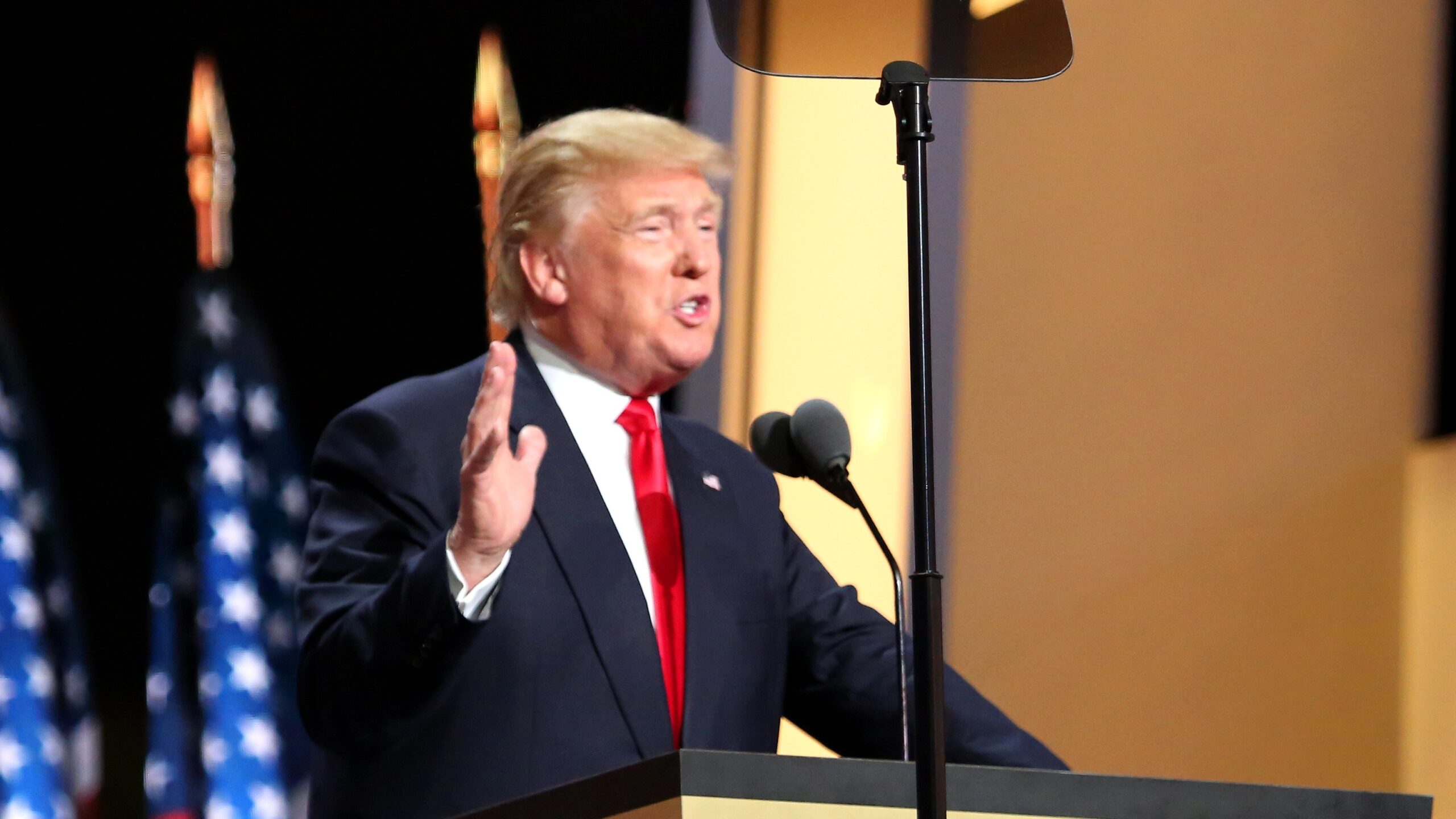
Stock investors have rarely seen a run like the one unfolding under President Donald Trump’s return to the Oval Office. Through nearly one year of his second term, the S&P 500 has delivered an annualized return of 16.7%, putting Trump in second place among modern presidents for market performance over roughly 129 years of data. The question now is whether this pace can be sustained long enough for him to overtake the long‑standing leader and claim the top spot in Wall Street history.
That chase is not just a matter of bragging rights. It crystallizes a deeper debate over how much credit any president deserves for stock gains, how durable Trump’s current rally really is, and what it would take for today’s momentum to survive the next bout of economic or political stress.
Trump’s second-term surge in context
By the numbers, Trump is presiding over one of the strongest equity rallies on record. Through nearly one year in office during his second term, the S&P 500 has posted that 16.7% annualized gain, a performance that places him second among presidents when measured over about 129 years of market history. The same period has seen broad benchmarks such as the Dow Jones Industrial Average and the Nasdaq Composite continue the pattern from his first term, when all three indices “skyrocketed” and helped cement Trump’s reputation as a market‑focused president.
What makes this stretch stand out is that it comes after an already strong first term, when Trump’s stock‑market record was interrupted but not erased by the COVID shock. Reporting that looks across more than a century of presidencies finds that he is now delivering the 2nd‑Highest Annualized Return of Any President Over 129 Years, a ranking that reflects both his first and second stints in office and that frames the possibility that he could still climb to number one if current Key Points hold.
The benchmark to beat: Bill Clinton’s stock-market reign
To understand what Trump is chasing, it helps to look at the benchmark he must surpass. Over two terms in the 1990s, President Bill Clinton presided over a powerful bull market that left him with a 17.49% annual return for the S&P 500, including dividends and capital gains, a performance that still makes Bill Clinton the stock‑market champion among modern presidents. In cumulative terms, one analysis of presidential market impact puts Clinton’s total stock price gain at 202.38%, a figure that underscores how extraordinary the late‑1990s boom was for investors.
That same review of presidential market records notes that second on the list of total stock price gains was his Democratic Party predecessor in the Oval Office, with Bill Clinton at 202.38%, and that And the shocking leader of the longer‑term ranking actually dates back to the start of the 20th century, a reminder that today’s leaders are competing with more than a century of history. Another breakdown of presidential returns reinforces that Clinton remains the champion, with his 17.49% annual return still ahead of Trump’s earlier record, even after Trump climbed into third place by the end of his first term, according to presidential rankings and a separate assessment of returns.
How Trump’s first term set up the current rally
Trump’s current standing is inseparable from the foundation laid in his first term. As he wrapped up his last day in the White House in early 2021, detailed breakdowns of stock performance by president showed that Trump had already delivered one of the stronger market runs of the post‑Reagan era, even after the pandemic crash. Analysts noted that the Dow, the S&P and the Nasdaq had all logged substantial gains from his inauguration through the final Jan trading sessions, with the S&P 500’s trajectory placing him near the top tier of modern presidents by the time he left the White House, according to a presidential market review.
That earlier record matters because the current 16.7% annualized pace is being calculated on top of an already elevated base. A separate analysis of winners and losers by stock price gain since the start of the 20th century shows how rare it is for a president to combine a strong first term with an even stronger follow‑up, listing the First, the winners – stock price gain since the start of the 20th century and highlighting how few administrations manage back‑to‑back outperformance. Trump’s ability to build on his first‑term gains is what has vaulted him into the 2nd‑Highest Annualized Return of Any President Over 129 Years and keeps alive the question, Can He Become No 1, as framed in the broader historical comparisons.
The mechanics behind the second-term boom
To gauge whether Trump can actually overtake Clinton, I have to look at what is driving the current rally. Analysts point to a mix of aggressive fiscal policy, renewed corporate tax incentives and a deregulatory push that has encouraged deal‑making and share buybacks, all of which have helped lift valuations. One detailed breakdown notes that Trump is overseeing one of the strongest stretches for large‑cap equities in modern history, with the S&P 500’s 16.7% annualized gain supported by robust earnings growth and a still‑accommodative interest‑rate backdrop, even as some sectors lag. That same review highlights that Trump is overseeing one of the best presidential stock runs while the previous long‑term leader, with an annualized return rate at 13.8%, still sets a high bar for sustained performance, according to historical data.
Another lens on the current boom comes from looking at how broad the gains really are. One assessment of the first year of Trump’s second term finds that the S&P 500 has gained about 16% since he returned to office, a figure that lines up closely with the 16.7% annualized calculation and that shows how quickly markets recovered from any election‑related jitters. That same review notes that investors who stayed invested through bouts of volatility were rewarded, even as some high‑profile names struggled. It also points out that Trump Media & Technology Group, trading under the ticker DJT, generated a total return of -61.2% for the 12 months ending in December, a reminder that not every asset tied to Trump has benefited from the broader rally, according to the comparison of presidents and a separate look at About DJT.
Headwinds, politics and the odds of grabbing No. 1
Even with those tailwinds, catching Clinton’s 17.49% annual return will be easier said than done. To close the gap, Trump would need the current 16.7% annualized pace not only to hold but to accelerate, something that becomes mathematically harder as the base level of the S&P 500 rises. Market historians note that the late‑1990s boom benefited from a unique mix of rapid productivity gains, the early internet build‑out and a benign inflation backdrop that may be difficult to replicate. Today’s environment features higher structural inflation risks, geopolitical tensions and a Federal Reserve that is more inclined to lean against overheating, all of which could cap further multiple expansion even if earnings remain solid, as suggested in the Key Points on how returns under Trump might accelerate.
Politics could also complicate the path to the top ranking. Trump’s second term began with a tough economic agenda that included renewed trade confrontations and efforts to rework supply chains, policies that some voters say have left them feeling the pinch in the form of higher prices and uncertainty. One early poll of his second term described how Trump ( President Donald Trump )’s economic gamble appeared to backfire in the first 100 days, with households reporting more strain than they did during the COVID pandemic five years ago, a sign that Main Street sentiment has not always matched Wall Street’s enthusiasm. That disconnect underscores a broader truth of presidential market rankings: while Trump’s current numbers put him within striking distance of the top spot, the final verdict will depend on whether investors continue to look past political turbulence and focus on earnings, a dynamic captured in both the early‑term polling and the broader Donald Trump Has analysis of whether he can ultimately become No 1.
More From TheDailyOverview

Elias Broderick specializes in residential and commercial real estate, with a focus on market cycles, property fundamentals, and investment strategy. His writing translates complex housing and development trends into clear insights for both new and experienced investors. At The Daily Overview, Elias explores how real estate fits into long-term wealth planning.

